
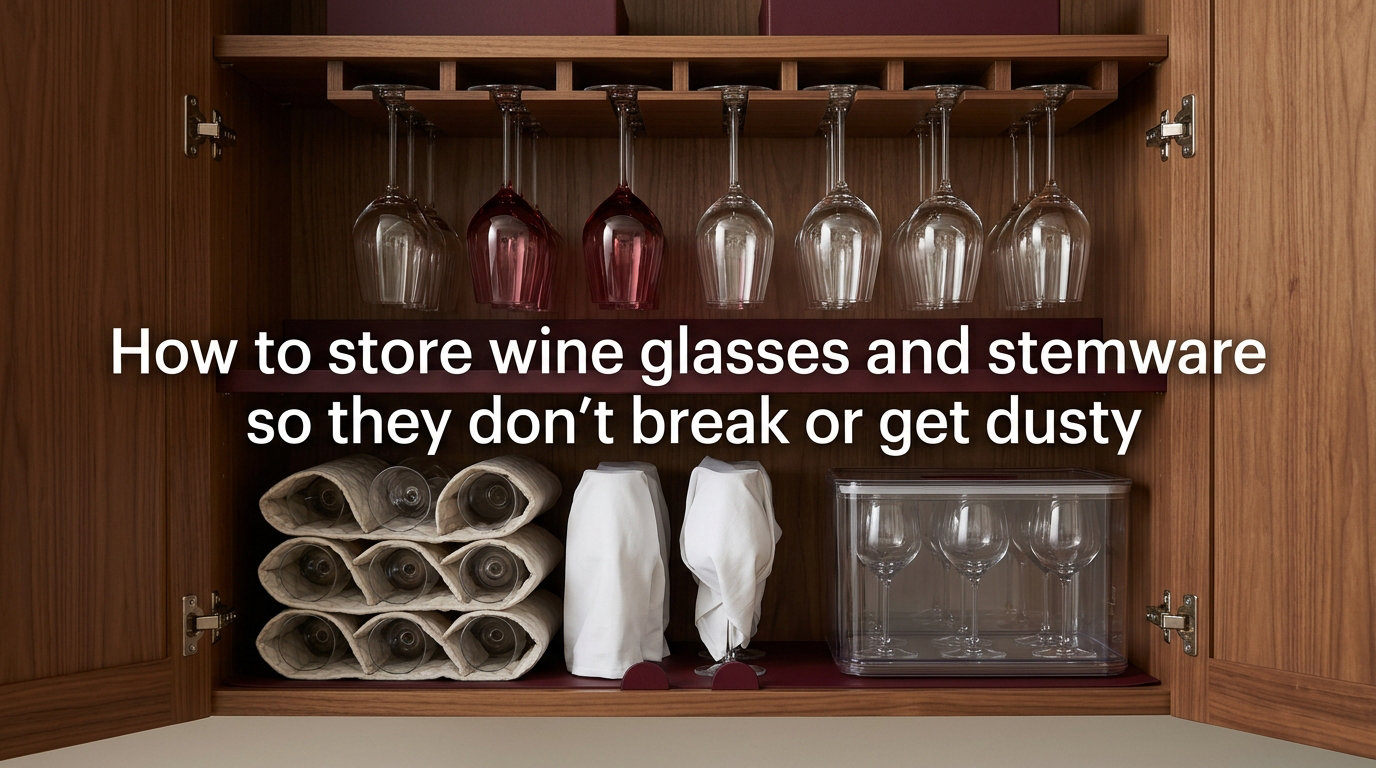
Storing wine glasses seems simple until you pull out a chipped rim or a cloudy, dust-covered bowl right before guests arrive. Learning how to store wine glasses and stemware the right way protects your investment and keeps every pour looking flawless. Our team tested different storage approaches across cabinets, racks, and boxes so you can skip the trial and error that costs money and good glassware.
Whether you have a set of everyday tumblers or hand-blown crystal worth hundreds, the principles are the same. Store them correctly and they last decades. Store them poorly and you will be shopping for replacements far sooner than you planned.
Table of Contents
Should Wine Glasses Be Stored Up or Down?
Store fine, thin-rimmed wine glasses bowl up to prevent chipping the delicate lip. The rim is the weakest point of the glass and cannot support the full weight. Everyday glasses with thicker, rolled rims can be stored bowl down if dust is your main concern, since the inverted position keeps particles out of the bowl interior.
Fine crystal and thin-lipped stemware should always go bowl up. The rim is the most fragile part of the glass by a wide margin. Resting the entire weight of the glass on that thin edge invites chips and hairline cracks that ruin the tasting experience. I learned this after flipping good glasses upside down in a cabinet and finding tiny nicks along the lip within a single week.
Everyday glasses with thicker rims have far more structural integrity at the lip. You can store these inverted to keep dust from settling inside the bowl. Several people in wine communities report success alternating upright and inverted rows to maximize cabinet space when dealing with large collections of 40 or more pieces.
Here is how the main storage orientations stack up against each other:
| Orientation | Best For | Dust Protection | Breakage Risk | Verdict |
|---|---|---|---|---|
| Bowl Up (Rim Up) | Fine crystal, thin-rimmed glasses | Low — dust settles inside bowl | Low — sturdy base supports weight | Best choice for fine glasses |
| Bowl Down (Inverted) | Everyday, thick-rimmed glasses | High — keeps bowl interior clean | Medium — rim bears full weight | Good for sturdy everyday glasses |
| Alternating Rows | Large collections, tight cabinets | Medium — mixed coverage | Medium — more handling involved | Space saver for big sets |
When in doubt, default to bowl up. The small amount of dust that settles inside an upright glass wipes away in seconds with a quick rinse. A chipped rim, on the other hand, means the glass is done for good.
How to Store Wine Glasses Properly
Proper storage comes down to four steps that protect both the glass body and the rim. Follow this sequence every time you put glasses away.
Step 1: Wash and dry completely. Hand-wash glasses in warm water with a mild, unscented detergent. Dry immediately with a lint-free microfiber towel. Never store glasses even slightly damp, since trapped moisture leads to mold growth and cloudy mineral etching over time.
Step 2: Choose a stable, enclosed location. A closed cabinet or cupboard shields glasses from dust, kitchen grease, and temperature swings. Open shelving looks attractive but leaves glassware fully exposed to everything floating in the air.
Step 3: Space the glasses apart. Leave at least half an inch between each glass so they never clink together. Glasses knocking against each other during daily cabinet use is one of the most common causes of chips and cracks that people never see coming.
Step 4: Add a non-slip shelf liner. A silicone or felt liner cushions the base and prevents glasses from sliding when you open and close the cabinet door. Forum users consistently recommend this simple addition for cutting down on rattling and vibration damage over time.
How to Keep Wine Glasses Dust-Free?
Dust is the number one complaint when it comes to stored glassware. Even inside a closed cabinet, fine particles find their way in over the course of a few weeks.
The most effective dust defense is storing everyday glasses inverted (bowl down) in a closed cabinet. This keeps the inside of the bowl clean, which is the part that matters most when you pour wine. For fine glasses that must stay bowl up, simply rinse them with warm water before use to clear any settled dust.
You can also drape a clean microfiber cloth over upright glasses to block dust without flipping them. Avoid plastic wrap at all costs, since it traps moisture and promotes condensation inside the bowl. That trapped moisture is exactly what leads to the mold problems wine enthusiasts complain about online.
Crystal and Fine Wine Glass Storage
Crystal and hand-blown glasses need extra care beyond the basics. These glasses have extremely thin walls and razor-sharp rims that chip from the slightest contact with another surface.
Always store fine crystal bowl up with generous spacing between pieces. Never stack crystal glasses, even if they appear to nest neatly inside each other. The contact points between stacked glasses create concentrated pressure that leads to hairline fractures you may not notice until the glass breaks during washing.
If you have the original boxes, use them for long-term or seasonal storage. Line each box with acid-free tissue paper rather than newspaper. Newsprint ink transfers onto glass and leaves a stubborn residue that is difficult to remove. One forum tip worth heeding: cardboard boxes can absorb and hold moisture, so check on them periodically for musty smells during humid months.
For collectible glassware you rarely use, wrap each glass individually in bubble wrap and store it in a dedicated plastic bin with cardboard dividers. Label the bin clearly so you never have to dig through it blindly and risk knocking pieces together.
Moving and Travel Storage for Wine Glasses
Moving day is when most wine glasses meet their end. The key to survival is isolating each glass so nothing can shift or press against it during transit.
Wrap each glass individually in packing paper or bubble wrap, tucking extra material inside the bowl for structural support. Use cell boxes designed specifically for stemware, which feature cardboard dividers that keep every glass separated and immobile.
Pack the heaviest, sturdiest glasses on the bottom of the box and the most delicate crystal on top. Fill any remaining empty space with packing paper or foam peanuts so nothing moves when the box tilts in transit. Mark the box clearly as fragile and indicate which side faces up.
For car travel, transport glasses in a hard-shell case lined with foam rather than loosely packed in a bag. A dedicated wine glass travel case is a worthwhile investment if you transport stemware regularly for events or tastings.
Where NOT to Store Wine Glasses?
Some storage spots do more harm than good. Avoid these locations to prevent damage, clouding, and breakage:
Near heat sources like ovens, radiators, or dishwashers, since repeated temperature swings weaken glass over time
In direct sunlight, which heats the glass unevenly and can fade any decorative or painted elements
In damp basements or garages where high humidity promotes mold and musty odors that transfer to the glass
On open shelves above the stove where grease and cooking particles settle quickly onto every surface
Loosely in drawers without dividers, where glasses roll freely and slam into each other with every movement
Humidity deserves special attention here. In humid climates, moisture condenses inside stored glasses and creates the perfect environment for mold and mildew. If your storage area tends to be damp, run a small dehumidifier nearby or tuck silica gel packets into the cabinet to absorb excess moisture. Check on your glasses every few weeks during the most humid seasons.
Wine Glass Storage Checklist
Run through this checklist before you close the cabinet:
Glasses are completely dry with no water spots or residual moisture
Fine crystal is stored bowl up to protect the rim
Each glass has at least half an inch of clearance on all sides
A non-slip silicone or felt liner covers the shelf surface
The cabinet door closes fully and seals out dust and kitchen particles
No glasses are stacked or nested inside one another
The storage area sits away from heat sources and direct sunlight
Humidity is controlled if the room tends to be damp
FAQs
How to wrap wine glasses so they don’t break?
Wrap each glass individually in packing paper or bubble wrap, tucking extra material inside the bowl for support. Use cell boxes with cardboard dividers to keep glasses separated. Fill all empty space with packing material so nothing shifts during transit.
How should you store stemware?
Store fine stemware bowl up with the sturdy base supporting the weight. Leave at least half an inch of space between each glass, use a non-slip shelf liner, and keep stemware in a closed cabinet away from heat and moisture.
Should wine glasses be stored up or down in cabinets?
Store fine, thin-rimmed wine glasses bowl up to protect the delicate rim from chipping under the weight of the glass. Everyday glasses with thicker, rolled rims can be stored bowl down to keep dust out of the bowl interior.
How to properly store wine glasses?
Clean and dry glasses completely, place them bowl up in a closed cabinet, space them apart with half-inch clearance, add a non-slip shelf liner, and keep the area away from heat and humidity. Never stack fine glasses or store them damp.
Final Thoughts
Knowing how to store wine glasses and stemware so they do not break or get dusty comes down to a handful of simple habits done consistently. Store fine glasses bowl up, give every piece room to breathe, keep them bone dry, and protect them from heat and humidity.
Run through the storage checklist each time you put glasses away, and your stemware will stay chip-free and sparkling pour after pour. The few extra seconds of care save you the cost and frustration of replacing good glassware far too soon.