
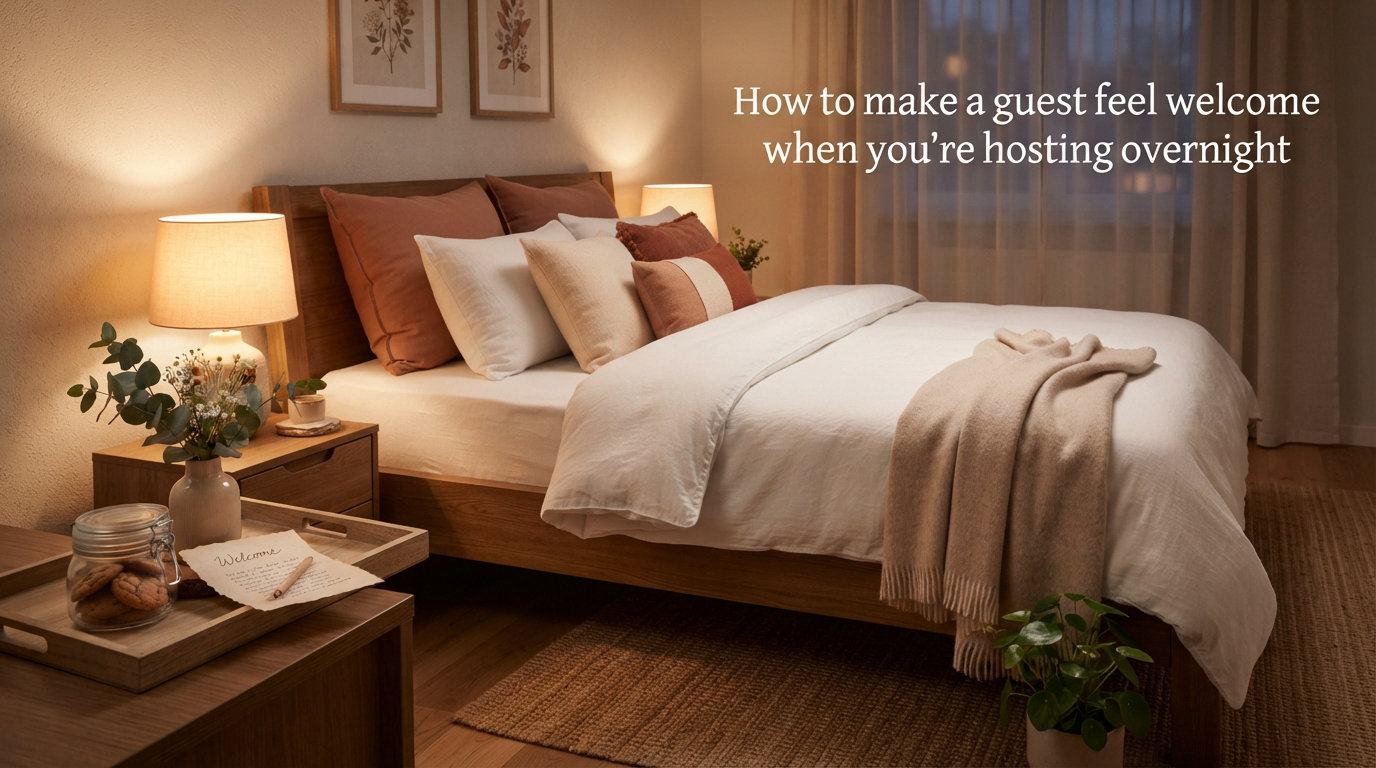
There is a specific kind of anxiety that hits about 48 hours before overnight guests arrive. You start noticing every scuff on the baseboards, every pillow that has gone flat, and every drawer that will not close properly. If you have ever found yourself reorganizing a closet at midnight before visitors come, you are in the right place.
Making a guest feel welcome when you’re hosting overnight is not about creating a five-star hotel experience in your home. It is about anticipating needs, removing small frictions, and making people feel genuinely cared for. The best hosts I have met are not the ones with the fanciest guest rooms. They are the ones whose guests never have to ask where the extra toilet paper is.
In this guide, I will walk you through everything from pre-arrival communication to the final welcome touches that make overnight guests feel at home. Whether you are hosting family for the holidays or friends for a weekend, these practical hospitality tips will help you prepare with confidence and without the stress.
The core principle is simple: think like a guest. Walk through your home through their eyes, remove anything that would make them hesitate, and add small details that say “I am glad you are here.” Everything else is just execution.
Table of Contents
Before Guests Arrive: The Planning Phase
Great hospitality starts days before anyone knocks on your door. The planning phase is where you set the foundation for a smooth, stress-free visit. A little communication goes a long way toward making guests feel considered and cared for.
Reach out a week before the visit and ask a few key questions. Find out about any dietary restrictions, food allergies, or strong preferences. Ask whether they are early risers or night owls, and whether they have any pet allergies if you have animals. These questions show you are thinking about their comfort, and they prevent awkward moments later.
I learned this the hard way after serving a beautiful breakfast spread to a friend who quietly could not eat eggs, dairy, or gluten. Now I ask ahead, and guests are always touched that I remembered.
Once you have their preferences, build a rough timeline. Plan when you will shop for groceries, when you will deep clean, and when you will set up the guest room. Spreading tasks across a few days keeps hosting from feeling like a frantic scramble.
Ask These Questions Before Guests Come
Here is a quick list of questions that take two minutes to ask but save hours of guesswork:
Any food allergies, dietary restrictions, or foods you dislike?
Are you a light sleeper or do you need white noise?
Do you have any allergies to pets, dust, or specific scents?
What time do you usually wake up and go to bed?
Do you drink coffee or tea, and how do you take it?
Any activities or local spots you are hoping to explore?
These questions make guests feel seen before they even arrive. That is the essence of good hosting.
How to Prepare the Guest Bedroom?
The guest bedroom is the heart of the overnight experience. This is where your visitors will spend a third of their stay, so it deserves the most attention. Guest bedroom preparation does not require a renovation. It requires thoughtfulness about comfort, accessibility, and small details.
Start With the Bed
Your bed is the single most important element of the guest room. If guests do not sleep well, nothing else matters. Start with clean, fresh sheets that smell like they just came off the line.
White sheets are a smart choice, and here is why: they signal cleanliness the way patterned sheets cannot. A white bed looks crisp, fresh, and hotel-level. They are also easy to bleach and keep looking new. If you only invest in one upgrade for hosting, make it a good set of white sheets.
Layer the bed for flexibility. Not everyone sleeps at the same temperature, so provide options. A light top sheet, a medium blanket, and a heavier comforter or duvet let guests adjust to their comfort. Add at least two pillows per person with different firmness levels if you can.
One of my favorite forum tips from experienced hosts: sleep in your guest room the night before visitors arrive. You will immediately notice the lumpy pillow, the drafty window, the streetlight streaming in, or the outlet that does not work. Fixing those issues ahead of time is the difference between a good host and a great one.
Lighting That Actually Works
Install or place a bedside lamp within arm’s reach of the bed. Guests should not have to cross a dark room to turn off the main light. A lamp with a warm bulb creates a cozy reading nook and makes the room feel intentional.
Add a nightlight in the hallway between the guest room and the bathroom. This is one of those small details that guests will not explicitly notice but will deeply appreciate at 2 AM. Motion-sensor nightlights are inexpensive and solve this perfectly.
Storage and Space for Belongings
Clear at least two drawers and make closet space available with hangers. One of the most common complaints from overnight guests is living out of a suitcase on the floor for days. Giving people a place to unpack, even if they choose not to, signals that they are welcome to settle in.
Add a chair, bench, or luggage rack where guests can place their bag. A simple bench at the foot of the bed or a chair in the corner gives them a surface that is not the bed or the floor. These small accommodations make a room feel like it was designed for guests, not just cleared for them.
Temperature and Air Quality
Provide a fan for guests who sleep warm and extra blankets for those who sleep cold. If the room tends to get stuffy, crack a window before they arrive or run an air purifier. A small fan with adjustable speeds costs very little but dramatically improves sleep quality for warm-natured guests.
If you have a thermostat in or near the guest room, show guests how to adjust it. People are surprisingly hesitant to touch a host’s thermostat, so giving explicit permission removes that anxiety.
Bathroom Essentials Every Guest Needs
The bathroom is the second most important space for overnight guests. A well-stocked bathroom prevents those awkward moments where someone has to ask for basics or make an emergency store run. Think of the bathroom as your chance to anticipate every possible need.
Start with towels. Set out fresh, fluffy towels in an obvious spot so guests do not have to hunt for them. I like to stack two bath towels, a hand towel, and a washcloth per guest, placed on the bed or on a visible towel rack. White towels, like white sheets, signal cleanliness and look intentional.
Stock a toiletries basket with travel-sized shampoo, conditioner, body wash, bar soap, and lotion. Add a toothbrush and travel toothpaste in case someone forgot theirs. These items cost very little but save guests from the embarrassment of asking.
Beyond the Basics
Here is where thoughtful hosts separate themselves from average ones. Include these often-overlooked items:
A hair dryer, plugged in and ready to use
Cotton swabs, cotton balls, and makeup remover wipes
A plunger in plain sight (nobody wants to ask for this)
Air freshener or matches for discreet odor control
Feminine hygiene products in a small basket or drawer
A small trash can with a liner
I once stayed at a friend’s house where the plunger was hidden in a cabinet behind cleaning supplies. Do not make your guests solve a puzzle at their most vulnerable moment. Leave it visible and accessible.
Make sure the bathroom is spotless. Scrub the toilet, wipe down all surfaces, clean the mirror, and mop the floor. A dirty bathroom will overshadow every other thoughtful thing you do. This is the one area where cleanliness standards cannot be compromised.
Welcome Touches That Make Guests Feel at Home
Welcome touches are the details that transform a functional guest space into a warm, memorable experience. These are the things guests will talk about after they leave. They do not need to be expensive or elaborate. They just need to show that you thought about their arrival.
Create a Welcome Basket
A welcome basket is one of the easiest and most appreciated gestures in hosting. Fill a small basket, tray, or bowl with snacks, treats, and a bottle of water placed in the guest room. Include a mix of sweet and savory options, and tailor it to preferences you learned during your pre-arrival conversation.
Good basket items include granola bars, mixed nuts, individually wrapped chocolates, mints, and a couple of water bottles. If you know your guest loves a specific candy or tea, including it shows you were paying attention. That personal touch is what hospitality is all about.
Place the basket on the bed or nightstand so it is the first thing guests see when they enter the room. It immediately communicates “I prepared this for you” without saying a word.
The Power of a Personal Note
Write a short handwritten welcome note and leave it on the nightstand or propped against a pillow. Keep it simple and warm. Something like “So glad you are here. The WiFi password is on the fridge, extra blankets are in the closet, and coffee is ready whenever you are. Make yourself at home.”
This note does double duty. It makes guests feel personally welcomed, and it answers practical questions without them having to ask. Include the WiFi password, house quirks they should know about, and an invitation to help themselves to anything in the kitchen.
Flowers, Scents, and Atmosphere
A small vase of fresh flowers on the nightstand or dresser adds instant warmth to a room. You do not need an elaborate arrangement. A $5 bunch of grocery store flowers in a simple jar does the job beautifully.
Be mindful of scent. Strong candles or diffusers can overwhelm guests or trigger allergies. Stick to something subtle, or skip fragrance entirely and let fresh flowers do the work. Open a window before guests arrive to make sure the room smells clean and aired out rather than stuffy.
One forum tip I love: place a framed photo of you and your guest in the room if you have one. It is a small gesture that makes people feel celebrated and known. Guests notice these personal touches more than any expensive decoration.
Technology and Practical Information
Technology is one of the most overlooked aspects of hosting, yet it is one of the most common pain points. Forum discussions consistently highlight that accessible outlets and reliable WiFi information are among the most appreciated guest room features. Getting this right removes friction from your guests’ stay.
WiFi and Connectivity
Write your WiFi network name and password clearly on a card and place it in the guest room. Do not make guests ask for it. Some hosts frame it, others write it on a small chalkboard or printed card near the bed. Whatever format you choose, make it impossible to miss.
Check that the WiFi signal is strong in the guest room before visitors arrive. If the room is far from your router, consider a WiFi extender. Dead zones in the guest room are a frustrating surprise for guests who need to work or stream during their stay.
Charging and Power Access
Make sure there are accessible outlets near the bed. This is one of the most commonly mentioned guest priorities in hosting forums. People want to charge their phone on the nightstand, not on the floor across the room.
If your outlets are behind heavy furniture or in awkward spots, add a power strip or surge protector with a long cord. Place it on the nightstand or within easy reach of the bed. Even better, invest in a charging station with built-in USB ports so guests do not need their own wall adapters.
Share the Practical Details
Beyond WiFi, there are house-specific things guests need to know. Include these in your welcome note or a small information card:
How to adjust the thermostat or heater
Where the bathroom light switches are (especially for unfamiliar layouts)
House alarm codes or key locations if guests will come and go
How to operate the coffee maker or kitchen appliances
Where extra towels, blankets, and toilet paper are stored
Any quirks like a tricky lock, a loud faucet, or a pet that might jump on the bed
Putting this information in writing prevents the awkward dance of guests trying to remember verbal instructions. It also frees them from having to track you down for every small question.
Keep Your Home Clean and Clutter-Free
Cleanliness is the foundation of hospitality. No amount of welcome baskets or fresh flowers can compensate for a dirty home. The good news is that you do not need a spotless showroom. You need a home that feels clean, comfortable, and uncluttered in the spaces guests will use.
Focus your energy on the rooms guests will actually enter: the guest bedroom, the bathroom they will use, the kitchen, and the main living areas. Pay special attention to surfaces, floors, and bathrooms. Vacuum carpets, mop hard floors, wipe down kitchen counters, and make sure trash cans are empty.
Declutter horizontal surfaces in common areas. Clear mail piles, kid’s homework, and random items off kitchen counters and coffee tables. You do not need to hide everything you own, but creating clear, open surfaces makes guests feel like they have room to exist in your space.
Pay attention to the fridge. Clear out expired food, make room for guest items, and stock it with drinks and snacks they can help themselves to. A fridge that is too full for guests to add anything sends the message that this is not their space. Make room, and tell them explicitly that they should help themselves.
Do a final walkthrough the evening before guests arrive. Walk through the front door and experience your home as a first-time visitor. You will catch things you missed from your routine perspective.
The Stress-Free Hosting Mindset
Here is the truth that most hosting articles skip: your guests do not need you to be perfect. They need you to be present. The biggest gift you can give overnight visitors is a relaxed host who is genuinely enjoying their company.
I have been to homes where the host was so stressed about every detail that the entire visit felt tense. The towels were monogrammed, the breakfast was magazine-worthy, and the experience was exhausting for everyone. Perfection is not the same as hospitality. In fact, it often gets in the way.
Let Go of the Impossible Standard
Social media has created an unrealistic picture of what hosting should look like. You do not need a Pinterest-perfect tablescape or a professionally styled guest room. Your friends and family came to see you, not to review your interior design. When you let go of the pressure to impress, you create space for actual connection.
Accept that something will probably go wrong. The casserole might burn, the dog might bark at 6 AM, or the guest room might run cold. How you handle these moments matters more than preventing them. A host who laughs and says “let me grab another blanket” is far more welcoming than one who apologizes profusely for an hour.
Prioritize Connection Over Execution
Think about your favorite memories as a guest in someone’s home. Chances are, they involve conversation, laughter, and feeling comfortable, not the thread count of the sheets. Channel your energy toward being present with your guests rather than performing for them.
Build in downtime. You do not need to entertain guests every waking moment. Giving people space to read, nap, or just decompress is one of the most generous things a host can do. Tell them explicitly that they are free to relax, and mean it.
Set Realistic Expectations for Yourself
Pick two or three things you want to nail and let the rest be good enough. Maybe you focus on a comfortable bed and a great breakfast, and you let the cluttered office stay cluttered with the door closed. Choose your priorities and give yourself permission to be imperfect everywhere else.
Your guests will remember how they felt in your home long after they forget what you served for dinner. Aim for warmth, not flawlessness, and you will be the host everyone wants to visit again.
Budget-Friendly Hospitality Tips
You do not need to spend a fortune to be an exceptional host. Some of the most memorable hospitality I have experienced cost almost nothing. What matters is the thought behind the gesture, not the price tag attached to it.
Start with what you already have. Fresh sheets from your own linen closet, flowers cut from your garden, and a handwritten note on stationery you already own. Creativity and intention matter far more than a shopping spree.
Affordable Alternatives to Common Hosting Splurges
Here are practical swaps that deliver the same warm experience without the cost:
Instead of luxury hotel robes, offer clean, soft towels folded neatly on the bed
Instead of a gourmet welcome basket, fill a bowl with fruit from your kitchen and a water bottle
Instead of expensive candles, open the windows for fresh air and place a jar of wildflowers on the nightstand
Instead of a sound machine, download a free white noise app and leave instructions for guests
Instead of fancy toiletries, buy travel-sized basics from the drugstore and arrange them in a simple basket
The welcome note costs nothing but a piece of paper and three minutes of your time, and it is often the detail guests remember most. Do not let a tight budget stop you from being thoughtful. The best hospitality is generous in spirit, not in spending.
Overnight Guest Etiquette and Boundaries
Good hosting includes setting comfortable boundaries for both you and your guests. Knowing the unwritten rules of overnight etiquette helps everyone relax and enjoy the visit. When expectations are clear, nobody feels awkward or unsure.
The Famous Three-Day Rule
You may have heard of the three-day rule for house guests. It suggests that after three days, fish and guests both begin to smell. There is real wisdom in this. Most people, even close family, start to feel like they are imposing after about three nights. If you are hosting for longer, build in more independent time and communicate openly about schedules.
For shorter visits, the key is making guests feel like they can come and go without disrupting your routine too much. Give them a key or tell them how to lock up if they leave before you are awake. Freedom and independence make guests feel trusted, not trapped.
Give Guests Space and Privacy
Do not hover. After showing guests the room and going over the basics, let them settle in on their own. Some people need an hour to decompress after travel before socializing. Knock before entering the guest room, and treat that space as theirs for the duration of the stay.
On the flip side, make sure guests know they are not confined to their room. Tell them the living room, kitchen, and garden are all theirs to use. Some guests will hesitate to leave the bedroom for fear of intruding. Explicit invitations break down that barrier.
Set Expectations on Both Sides
Communicate your schedule so guests know what to expect. Let them know when you typically eat meals, whether you are an early riser, and if you have commitments during their visit. This prevents guests from waiting around for you or feeling like they are disrupting your day.
Be honest about what you can and cannot accommodate. If you cannot cook elaborate meals, say so and suggest ordering takeout. If your pet is not great with strangers, let guests know ahead of time. Honesty builds trust and prevents resentment on either side.
Quick Overnight Hosting Checklist
Use this checklist as a fast reference before guests arrive. It covers the essentials without overwhelming you.
Guest Room
Fresh sheets on the bed, with extra blankets available
Two pillows per guest with varying firmness
Nightstand cleared with a lamp and accessible outlet
Nightlight in the hallway to the bathroom
Closet or drawer space cleared with hangers
Welcome basket with snacks and water
Handwritten welcome note with WiFi password
Bathroom
Fresh towels visible and ready
Toiletries basket stocked with basics
Hair dryer plugged in and accessible
Extra toilet paper visible
Plunger present and accessible
Bathroom cleaned top to bottom
Home and Kitchen
Common areas decluttered and clean
Fridge cleared and stocked with drinks and snacks
Coffee or tea supplies ready
WiFi password written down in the guest room
Thermostat set to a comfortable temperature
Pets managed if relevant to your guests
FAQs
How do you ensure guests feel welcome?
Ensure guests feel welcome by anticipating their needs before they have to ask. Prepare a comfortable bed with fresh sheets, stock the bathroom with essentials, provide a welcome basket with snacks and water, and write a personal note with practical information like the WiFi password. The key is removing small frictions so guests never feel awkward asking for basics.
How to welcome a guest as a host?
Welcome guests warmly the moment they arrive by greeting them at the door and helping with luggage. Give them a brief tour of the home, show them their room and bathroom, and point out where essentials are stored. Offer a drink or snack right away to help them settle. Most importantly, communicate that they should make themselves at home and mean it.
What is the etiquette for overnight guests?
Overnight guest etiquette means respecting the host’s home, schedule, and space. Guests should clean up after themselves, follow house rules, and bring a small gift as a thank you. Hosts should provide privacy, clear expectations, and comfortable accommodations. Open communication about schedules and needs prevents awkwardness for everyone.
What to have when hosting overnight guests?
Have fresh linens, extra pillows and blankets, fluffy towels, a toiletries basket, a hair dryer, accessible outlets, a WiFi password card, snacks and water in the guest room, a nightlight, storage space for belongings, and a bedside lamp. Also stock the kitchen with breakfast options and drinks guests can help themselves to.
How to be a good host for overnight guests?
Be a good host by preparing the space thoughtfully, communicating clearly, and prioritizing your guests’ comfort. Ask about preferences before they arrive, stock the bathroom with essentials so they never have to ask, and give them space to relax. Stay relaxed yourself, because a calm host creates a calm atmosphere that guests can feel.
What is the 3 day rule for house guests?
The 3 day rule is an old etiquette saying suggesting that guests, like fish, begin to lose their welcome after three days. The idea is that most overnight visits are best kept to two or three nights. For longer stays, hosts and guests should build in more independent time and communicate openly about schedules and expectations.
Conclusion
Learning how to make a guest feel welcome when you’re hosting overnight comes down to one principle: think like a guest and act like a friend. Prepare the practical things so your visitors never have to ask, add small touches that show you care, and then let go of the pressure to be perfect.
Your guests came to spend time with you, not to inspect your home. When you are relaxed, present, and genuinely glad they are there, everything else falls into place. Use the checklist above to handle the logistics, then focus your energy on what actually matters: connection, conversation, and making people feel at home.
Start with the basics this week. Make the bed, stock the bathroom, write the welcome note. The rest will come naturally.