
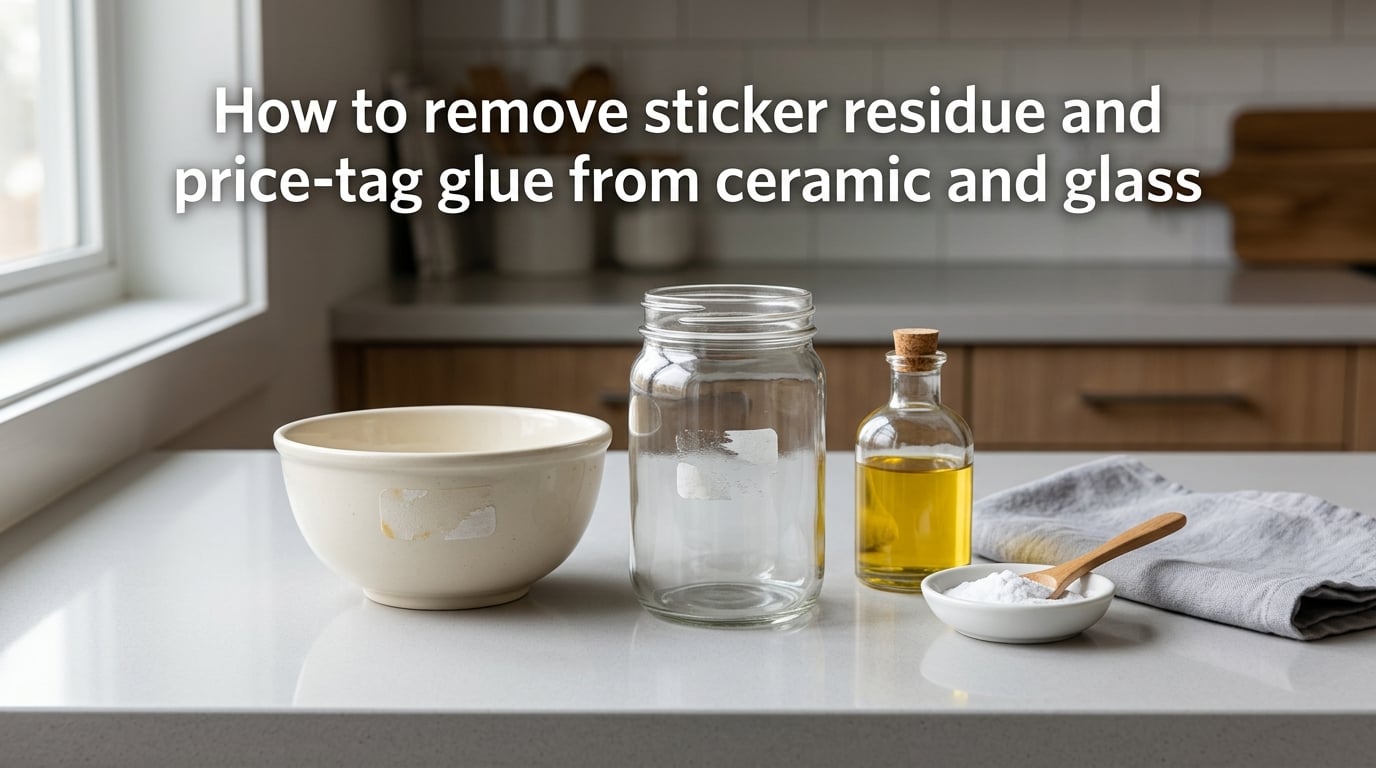
That stubborn sticky patch left behind after you peel a price tag off a new mug or jar is one of the most frustrating small cleaning problems in any kitchen. After testing nearly every household method on ceramic bowls, glass jars, and discount-store pottery, I can tell you that learning how to remove sticker residue from ceramic and glass does not require expensive specialty products or a chemistry degree.
The residue is simply adhesive that has bonded to a non-porous surface, and it breaks down predictably when you apply the right combination of heat, oil, solvent, or gentle abrasion. Most of what you need is already in your pantry or cleaning cabinet.
This guide walks through the seven methods that actually worked for our team, with specific steps for ceramic versus glass, a fast overview you can scan in seconds, and the mistakes that scratch or stain these surfaces. By the end, you will know exactly which method to grab for a fresh price tag versus a sticker that has been baked on for years.
Table of Contents
Quick Overview: The Best Methods at a Glance
If you want to remove sticker residue from ceramic and glass without reading the full breakdown, these four methods cover almost every situation.
Cooking oil — Apply vegetable, olive, or canola oil, let it sit 5 to 10 minutes, then scrape with a plastic card. Best all-purpose option and completely food-safe.
Rubbing alcohol (isopropyl alcohol) — Dab 70% or higher isopropyl alcohol onto the glue, wait 2 to 3 minutes, and wipe. Fast-acting and leaves no oily film on glass.
Baking soda paste — Mix baking soda with a small amount of cooking oil into a spreadable paste, rub gently in circles, and rinse. Mild abrasive lifts stubborn bits without scratching.
Hair dryer heat — Warm the sticker on a medium setting for 30 to 60 seconds to soften the adhesive before peeling. Ideal for fresh labels that still have paper attached.
For commercial speed, a product like Goo Gone, WD-40, or The Pink Stuff cuts through heavy residue faster, but each has trade-offs I cover below.
How to Remove Sticker Residue from Ceramic and Glass: Detailed Methods
Each method below includes the materials you need, the exact steps our team followed, and the surfaces it works best on. Work through them in order from gentlest to strongest.
Method 1: The Cooking Oil Technique
This is the method recommended most often on cleaning forums, and it earned the top spot in our testing. Any cooking oil works, from vegetable and canola to olive oil, and one r/lifehacks user even reported success with butter. The only thing that does not work is Vaseline.
Materials: Cooking oil, paper towel or soft cloth, plastic scraper or old credit card, dish soap for cleanup.
Steps:
Saturate a paper towel with cooking oil and press it directly over the sticky residue.
Let it sit for 5 to 10 minutes so the oil can soften and break down the adhesive bond.
Use a plastic scraper or the edge of an old credit card to lift the loosened glue, working from the edges inward.
Wipe away the oily residue with dish soap and warm water, then dry with a clean cloth.
Cooking oil is fully food-safe, which makes it my first choice for ceramic bowls, plates, and any glassware that contacts food. The only downside is the cleanup step, since you will need dish soap to remove the oily film.
Method 2: Rubbing Alcohol (Isopropyl Alcohol)
Isopropyl alcohol is a solvent that dissolves adhesive quickly without leaving a greasy film. It is my preferred method for glass jars, mirrors, and windows because it evaporates cleanly.
Materials: 70% or higher rubbing alcohol, cotton ball or paper towel, soft cloth.
Steps:
Soak a cotton ball or paper towel corner with isopropyl alcohol.
Hold it against the residue for 2 to 3 minutes to let the solvent penetrate the glue.
Wipe in a circular motion with a soft cloth, reapplying alcohol as needed.
Rinse the surface with water and dry.
One caution from forum users: rubbing alcohol does not always work on very old, hardened residue. If it beads up and rolls off without softening the glue, move to the baking soda paste or a commercial product.
Method 3: Baking Soda Paste
Baking soda adds a mild abrasive action that lifts residue the oil or alcohol alone cannot dislodge. The paste is gentle enough for both ceramic glaze and glass when used with light pressure.
Materials: Baking soda, cooking oil or water, soft cloth.
Steps:
Mix two tablespoons of baking soda with enough cooking oil (or water) to form a thick spreadable paste.
Spread the paste over the residue and let it sit for 5 minutes.
Rub gently in small circles with a soft cloth until the glue lifts away.
Rinse with warm water and dish soap, then dry.
This is the method I reach for when an oil soak loosens most of the sticker but leaves behind a stubborn patch of grit. The fine particles scrub without scratching non-porous surfaces.
Method 4: The Hair Dryer Heat Method
Heat softens adhesive by lowering its viscosity, which is why a hair dryer works well on stickers that still have their paper backing. The trick is warming the surface enough to release the glue without overheating it.
Materials: Hair dryer, plastic scraper, soft cloth.
Steps:
Set the hair dryer to medium heat and hold it about 6 inches from the sticker.
Move it back and forth for 30 to 60 seconds until the sticker feels warm to the touch.
Peel the sticker slowly from one corner, using a plastic scraper to help lift the edge.
If residue remains, follow up with the cooking oil or rubbing alcohol method.
Heat is inconsistent on its own, as multiple forum users pointed out, but it shines as a prep step before applying oil or alcohol. Skip it on thin glass that could crack from rapid temperature changes.
Method 5: Dish Soap and Warm Water Soak
For glass jars you are repurposing or ceramic dishes fresh from a discount store, a long soak is the lowest-effort option. The catch is patience: hot water only works if the item is fully submerged for about an hour.
Materials: Sink or basin, warm water, dish soap.
Steps:
Fill a sink or basin with warm water and a few squirts of dish soap.
Submerge the item completely and let it soak for 45 to 60 minutes.
Peel the softened sticker away and scrub any remaining residue with a sponge.
Rinse and dry.
This method is gentle and entirely hands-off, but it is slow. Use it when you have several items to clean at once and can walk away while the water does the work.
Method 6: Glass Cleaner (the Windex Trick)
The glass cleaner method, popularized by Apartment Therapy, uses a standard household glass cleaner to soak through the price tag. It works especially well on flat glass surfaces like mirrors and framed pictures.
Materials: Glass cleaner (such as Windex), paper towel.
Steps:
Spray the glass cleaner directly onto the price tag or residue.
Cover the area with a paper towel and spray the paper towel until it is saturated.
Wait 15 minutes for the cleaner to penetrate the adhesive.
Wipe away the residue with the soaked paper towel, then clean the surface normally.
This is the easiest method to set up, but it does not work on ceramic the same way it does on glass. On ceramic, the dwell time needs to extend closer to 20 minutes.
Method 7: Commercial Adhesive Removers
When household methods fall short, commercial products step in. The three that came up most consistently in forum testing are Goo Gone, WD-40, and The Pink Stuff.
Goo Gone is a citrus-based adhesive remover that breaks down sticker glue in minutes. Apply it, wait 5 minutes, and wipe. The drawback noted by users is the strong smell and the oily residue it leaves behind, so work in a ventilated area and follow with dish soap.
WD-40 works because it is an oil-based penetrant. Spray it on, let it sit for a few minutes, and wipe the glue away. It is effective on stubborn residue but leaves an oily film that needs thorough cleanup, especially on items that will hold food.
The Pink Stuff is a paste cleaner that forum users on r/CleaningTips recommend highly for ceramic and glass. Its glycerine base softens the glue while fine quartz crystals scrub it away without scratching smooth, non-porous surfaces. Apply a small amount with a damp cloth, rub in circles, and rinse.
For any commercial product, always test on an inconspicuous spot first, especially on decorative ceramic glazes or tinted glass.
Removing Sticker Glue from Ceramic Bowls, Pots, and Dishes
Ceramic surfaces are glazed, which means the top layer is essentially a thin coat of glass fused to the clay body. That makes most glass-safe methods also ceramic-safe, with a few specific notes.
For ceramic, my first choice is always the cooking oil method because it is food-safe and will not damage the glaze. Apply the oil generously, let it sit the full 10 minutes, and use a plastic scraper to avoid any risk of scratching. If the residue resists, follow with a baking soda paste.
Avoid acetone or nail polish remover on ceramic. While it does dissolve adhesive, forum users report it can dull decorative finishes and damage nearby countertops and manicures. Stick to alcohol, oil, or paste-based methods on anything decorative.
For ceramic pots from discount stores, where the stickers are notoriously aggressive, a combination of heat from a hair dryer followed by cooking oil handles almost every case.
Getting Price Tags off Glass Jars, Mirrors, and Glassware
Glass is non-porous and chemically stable, which gives you the widest range of safe options. Rubbing alcohol is my top pick for glass because it evaporates completely and leaves no film.
For repurposed glass jars, the warm water and dish soap soak is the lowest-effort path if you have time. Submerge the jars for an hour, peel the labels, and finish with rubbing alcohol for any leftover adhesive.
On mirrors and framed glass, the glass cleaner method works well because you can let the soaked paper towel sit without disturbing the surface. Avoid abrasive scrubbing pads, which can leave micro-scratches that show up under bright light.
The one tool to avoid entirely on glass is a metal razor blade. Even light pressure can scratch, and many forum users regret using them on mirrors and picture frames.
Tackling Old, Set-In Sticker Residue
Residue that has been sitting for months or years hardens into a film that resists single-step methods. The reliable approach is layering: start with heat to soften the surface, apply cooking oil for 15 to 20 minutes to penetrate, then finish with a baking soda paste to scrub away the remaining film.
The Pink Stuff paste was the standout product for set-in residue in our research, because the combination of glycerine softener and fine quartz abrasive handles what oil alone cannot. For very thick, crusty adhesive, repeat the oil soak twice before scrubbing.
Common Mistakes to Avoid
These are the missteps that came up repeatedly in cleaning forums, along with the damage they cause.
Using metal razor blades on glass. Even light pressure can leave permanent scratches on mirrors and picture glass. Use a plastic scraper or the edge of a credit card instead.
Skipping the wait time. Oil, alcohol, and glass cleaner all need minutes to penetrate the adhesive. Wiping too early just smears the glue across a larger area.
Using acetone on decorative ceramic. Nail polish remover dissolves adhesive but can dull painted or glazed finishes. Reserve it for plain, undecorated surfaces.
Applying too much heat to thin glass. Rapid temperature changes can crack thin glassware and some ceramic glazes. Keep the hair dryer on a medium setting and keep it moving.
Expecting one method to work on every residue. Different adhesives respond to different solvents. If the first method fails, move to the next rather than scrubbing harder.
FAQs
How to get price tag sticker glue off glass?
Spray the price tag with glass cleaner, cover it with a soaked paper towel, wait 15 minutes, and wipe. For stubborn glue, dab isopropyl alcohol, wait 2 to 3 minutes, and wipe with a soft cloth. Avoid razor blades, which scratch glass.
How to get sticker glue off ceramic?
Apply cooking oil over the residue, let it sit for 10 minutes to soften the adhesive, then scrape with a plastic card or scraper. Follow with dish soap and warm water to remove the oil. The method is food-safe and will not damage ceramic glaze.
Can WD-40 remove strong sticker adhesive residue?
Yes. WD-40 is an oil-based penetrant that breaks down strong sticker adhesive. Spray it on the residue, wait a few minutes, and wipe the glue away. Clean the surface afterward with dish soap to remove the oily film, especially on items that will hold food.
Does Windex remove sticker glue?
Yes. Spray Windex or a similar glass cleaner directly on the glue, cover with a soaked paper towel, and wait about 15 minutes. The cleaner soaks through and softens the adhesive so it wipes away. This method works best on flat glass surfaces like mirrors and windows.
What is the fastest way to remove sticker residue from ceramic and glass?
The fastest method is rubbing alcohol (isopropyl alcohol). Soak a cotton ball, hold it against the residue for 2 to 3 minutes, and wipe. For glass, it evaporates cleanly with no film. For ceramic, follow with a quick rinse. Cooking oil is a close second for ceramic.
Conclusion
Removing sticker residue from ceramic and glass comes down to choosing the right tool for the adhesive in front of you. Cooking oil handles most ceramic safely, rubbing alcohol cleans glass without a trace, baking soda paste scrubs off the stubborn bits, and commercial products like The Pink Stuff step in for set-in residue. Start gentle, give each method time to work, and you will have clean, label-free surfaces in minutes instead of an afternoon of frustrated scraping.