
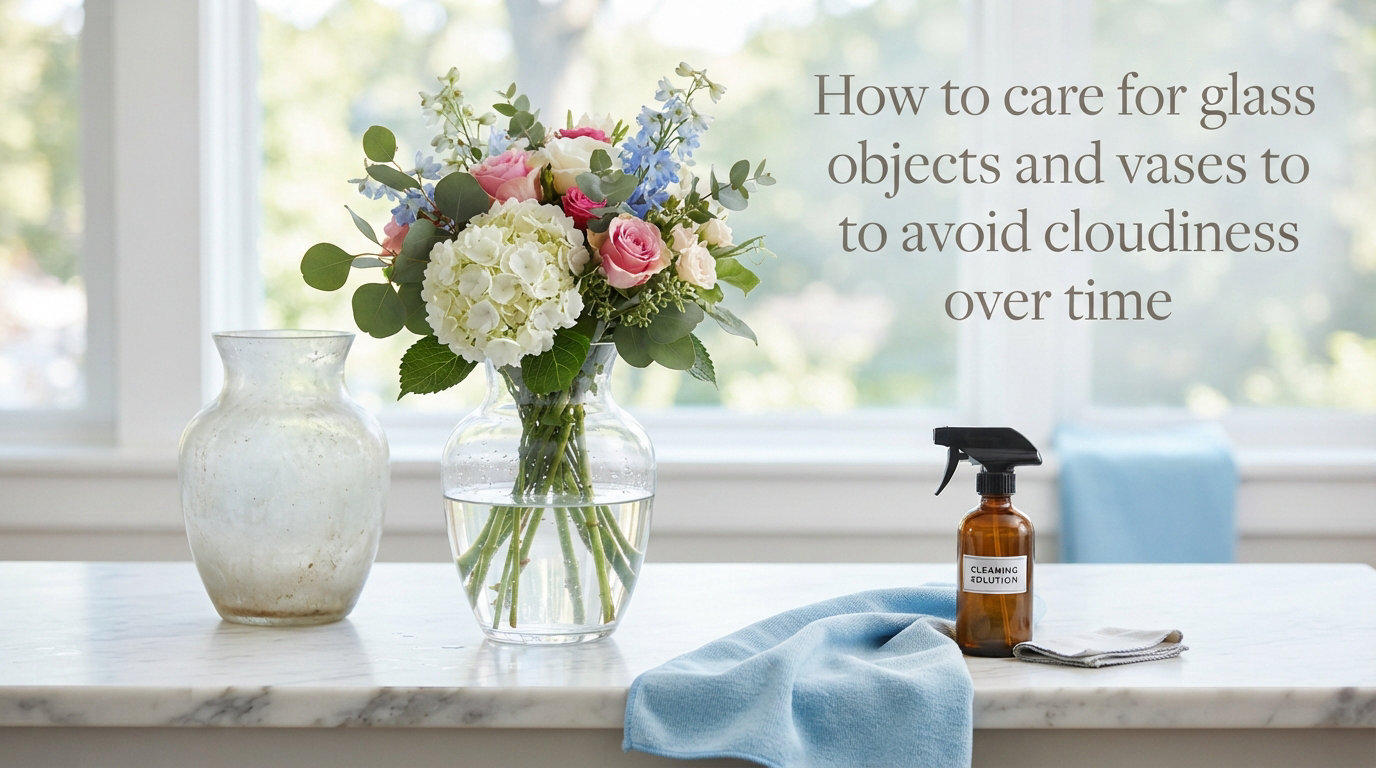
Glass vases and decorative objects lose their sparkle when minerals, water residue, and bacteria settle on the surface over months of use. If you have ever pulled a favorite vase from the cupboard only to find it covered in a stubborn white film, you know how frustrating that haze can be. The good news is that nearly all cloudiness is reversible with the right approach.
In this guide, I will walk you through exactly how to care for glass objects and vases to avoid cloudiness over time. I have tested these methods on everything from everyday flower vases to vintage crystal pieces, and I will share what actually works. We will cover why the haze forms, the most effective cleaning methods, drying techniques for tricky shapes, and the daily habits that keep glass brilliant for years.
Whether you display fresh flowers every week or rotate decorative pieces seasonally, these techniques will help your glass stay clear and beautiful well into 2026 and beyond.
Table of Contents
Why Glass Objects and Vases Go Cloudy Over Time?
Cloudiness in glass is caused by calcium and mineral deposits left behind when water evaporates, combined with organic residue from flowers and bacteria that bond to the surface. The haze builds up slowly, layer by layer, each time a vase is used and left to air-dry. Understanding the root cause is the first step to preventing it.
Hard Water and Mineral Deposits
Hard water is the number one culprit behind cloudy glass. When tap water rich in calcium and magnesium evaporates inside a vase, those minerals stay behind and form a chalky white film. Over time, this mineral layer hardens and becomes increasingly difficult to remove with regular dish soap alone.
If you live in a hard water area, you will notice cloudiness forming faster than someone with naturally soft water. The deposits also tend to concentrate near the waterline, where evaporation is most active. This is why the ring inside a flower vase often looks worse than the rest of the glass.
Flower and Organic Residue
Cut flowers contribute their own mess to the problem. As stems break down in water, they release organic compounds, plant sugars, and bacteria that cling to the interior glass surface. This biological residue mixes with mineral deposits and creates a stubborn film that simple rinsing cannot remove.
Bacteria multiply rapidly in stagnant vase water, sometimes within 24 to 48 hours. The longer you leave old water sitting in a vase, the more residue bonds to the glass. This is why florists and experienced gardeners recommend changing vase water every two days.
Dishwasher Etching and Heat Damage
Dishwashers can cause a different type of cloudiness that is permanent. The combination of harsh detergents, high heat, and abrasive water pressure can etch the glass surface over repeated washes. This etching creates microscopic scratches that scatter light and give the glass a frosted, dull appearance.
If your glass has become cloudy after going through the dishwasher, run your finger across the surface. If the haze feels rough or does not improve after a vinegar soak, it is likely etched rather than stained. Etched glass cannot be restored, which is why delicate vases and crystal should always be washed by hand.
How to Clean a Cloudy Glass Vase: Step-by-Step Methods
The fastest way to restore a cloudy glass vase is to dissolve the mineral deposits with an acidic solution, then scrub gently and dry thoroughly. I have tested four different methods, and each works best for specific situations. Choose the one that matches the severity of the cloudiness and the shape of your vase.
Method 1: White Vinegar Soak (Best for Hard Water Stains)
White vinegar is the most reliable solution for mineral deposits because its acidity dissolves calcium and lime scale on contact. This method works on most standard glass vases and tumblers.
Step 1: Fill the vase halfway with warm water, then add an equal amount of white vinegar so the liquid covers the cloudy areas completely.
Step 2: Let the solution sit for 15 to 30 minutes. For heavily stained vases, leave it soaking overnight to break down stubborn deposits.
Step 3: Swirl the liquid around, then use a bottle brush to gently scrub the interior surfaces. Focus on the waterline where deposits concentrate.
Step 4: Pour out the solution, rinse thoroughly with warm water, and dry immediately with a lint-free microfiber cloth.
One Reddit user in the r/CleaningTips community confirmed that vinegar works reliably for hard water deposits, especially when you give it enough time to break down the minerals. The key is patience—rushing the soak is the most common reason this method fails.
Method 2: Baking Soda Paste (Best for Stubborn Spots)
When vinegar alone does not fully remove the cloudiness, baking soda adds gentle abrasion to lift away tougher stains without scratching the glass surface.
Step 1: Mix two tablespoons of baking soda with a small amount of water to form a thick paste.
Step 2: Apply the paste to the cloudy areas using a soft sponge or cloth. Rub in gentle circular motions.
Step 3: For interior stains, add a splash of vinegar on top of the baking soda paste. The fizzing reaction helps lift deposits from the glass surface.
Step 4: Rinse thoroughly and dry with a microfiber cloth to prevent new water spots from forming.
Note that baking soda can also neutralize the vinegar, so if you use both together, rinse and reapply vinegar afterward if mineral deposits remain visible.
Method 3: Denture Tablet Method (Best for Hands-Off Cleaning)
Denture cleaning tablets are an surprisingly effective hack for cloudy vases. They contain effervescent cleaning agents that break down stains without any scrubbing required.
Step 1: Drop one or two denture tablets into the vase, depending on its size.
Step 2: Fill the vase with warm water to cover the cloudy areas completely.
Step 3: Let the solution fizz and work for 30 minutes to an hour, then rinse thoroughly.
Multiple forum users on Reddit recommend denture tablets with hot water for vases that have sat unused for long periods. The effervescent action reaches areas that brushes cannot, making this method ideal for wide-bottomed vases with complex shapes.
Method 4: Rice and Soap Method (Best for Narrow-Necked Vases)
Narrow-necked vases are nearly impossible to clean with a brush because you simply cannot reach inside. The rice method solves this by using uncooked rice as a gentle abrasive that you can agitate by shaking.
Step 1: Add a handful of uncooked rice, a squirt of dish soap, and warm water to the vase, filling it about one-third full.
Step 2: Cover the opening with your hand or a stopper, then shake vigorously for 60 to 90 seconds.
Step 3: The rice acts as a scrubbing agent, rubbing against the interior glass and loosening mineral deposits in hard-to-reach areas.
Step 4: Pour out the mixture, rinse well, and dry.
Another forum-tested alternative for extremely narrow necks uses coarse salt and 91 percent rubbing alcohol. Shake the mixture the same way, and the salt scrubs while the alcohol cuts through grease and residue. This technique works particularly well on vintage bottles and thrifted glass that has years of built-up grime.
Crystal vs Glass: Different Care Rules
Crystal requires gentler care than standard glass because it contains lead oxide, which makes it softer and more susceptible to etching and scratching. While glass can handle vinegar soaks and mild abrasives like baking soda, crystal needs a lighter touch to preserve its surface.
For crystal vases, use a mild dish soap solution and warm water rather than acidic cleaners. Vinegar can be used occasionally in very dilute form, but prolonged exposure to acid can dull the lead crystal surface over time. Never use abrasive powders like Bar Keepers Friend on crystal—forum users report that it can leave permanent micro-scratches.
Always wash crystal by hand and never put it in the dishwasher. The heat and detergent will etch the surface and destroy the brilliance that makes crystal special. Dry crystal immediately with a soft microfiber cloth, and store it carefully to prevent chips and cracks.
How to Dry Inside Narrow-Necked Vases
Drying the inside of a vase is the step most people skip, and it is also the reason cloudiness keeps coming back. When water droplets sit inside a vase and evaporate, they leave fresh mineral deposits behind, undoing all your cleaning work.
For wide-mouthed vases, simply roll up a lint-free microfiber cloth and wipe the interior until completely dry. For narrow-necked vases where you cannot reach inside, try one of these techniques.
The paper towel method works well for moderately narrow openings. Stuff a few sheets of absorbent paper towel into the vase and use a long-handled spoon or chopstick to press them against the interior walls. Leave them inside for a few hours to absorb residual moisture.
For extremely narrow necks, the air-dry approach is safest. Turn the vase upside down on a clean dish rack and let gravity drain the water overnight. Make sure air can circulate inside by propping the vase at a slight angle. Some people use a hair dryer on a cool, low setting to speed up the process, but avoid hot air because it can stress the glass.
Prevention Tips to Keep Glass Clear for Years
Preventing cloudiness is far easier than removing it once it forms. These habits will keep your glass objects and vases looking clear with minimal effort, and they address the root causes of haze before deposits have a chance to build up.
Daily Habits When Using Vases
Change the water in flower vases every two days to prevent bacterial growth and organic buildup. Each time you change the water, give the vase a quick rinse to flush out loose debris before refilling.
Use filtered or distilled water instead of tap water whenever possible. Distilled water contains no minerals, which means no calcium deposits will form on the glass surface. This single change makes a dramatic difference, especially in hard water areas where tap water is heavily mineralized.
Trim flower stems at an angle every few days. Freshly cut stems release fewer organic compounds into the water, reducing the residue that bonds to the glass interior.
Empty and rinse vases immediately after removing flowers. Never let old water sit in a vase for days, because the bacteria and plant matter will dry and harden onto the glass surface.
Long-Term Storage Tips
Always store vases completely dry. Even a small amount of residual moisture can lead to mineral rings and bacterial growth during storage. Run your finger inside to check for dampness before putting a vase away.
Line storage shelves with soft cloth or felt to protect glass from scratches and chips. Avoid stacking vases inside one another, as the contact points can create pressure cracks and abrasion marks.
For decorative glass objects that are displayed permanently, dust them weekly with a soft microfiber cloth. Once a month, wipe them down with a slightly damp cloth followed by immediate drying to remove any airborne residue that can accumulate and dull the surface.
If you live in a humid climate, consider storing unused vases with a small desiccant packet inside to absorb moisture from the air. This prevents condensation from forming on the interior glass surface during temperature changes.
How Often Should You Clean Glass Vases?
The frequency of cleaning depends on how often you use your vases and the quality of your water. For flower vases used regularly, a thorough clean every one to two weeks prevents significant buildup. Rinse after every use, and do a vinegar soak monthly if you live in a hard water area.
Decorative glass objects that are not exposed to water need less frequent attention. A monthly dusting and quarterly deep clean will keep them looking their best. The key is consistency—small efforts regularly are far more effective than occasional deep-cleaning sessions on badly stained glass.
Frequently Asked Questions
Why do glass vases go cloudy?
Glass vases go cloudy because of calcium and mineral deposits left behind when hard water evaporates. Bacteria and organic residue from cut flowers add to the film, creating a stubborn white haze that builds up over time.
How do you remove cloudy haze from glass?
Soak the glass in equal parts white vinegar and warm water for 15 to 30 minutes, scrub gently with a bottle brush, then rinse and dry thoroughly. For stubborn spots, use a baking soda paste or denture tablets for extra cleaning power.
How can I make a cloudy vase clear again?
Fill the vase with a vinegar and warm water solution, let it soak for at least 30 minutes, then scrub with a soft brush and rinse. For narrow-necked vases, use the rice and dish soap shaking method to scrub areas you cannot reach by hand.
How to make glass vases sparkle?
After cleaning, dry the vase immediately with a lint-free microfiber cloth to prevent water spots. Use filtered or distilled water for flowers, and wipe the exterior with a damp cloth followed by a dry one to restore maximum shine.
Can vinegar damage crystal vases?
Vinegar can dull lead crystal if used at full strength or left soaking for long periods. For crystal, use a very dilute vinegar solution or stick to mild dish soap and warm water. Never put crystal in the dishwasher.
How often should you clean glass vases?
Rinse flower vases after every use and do a thorough clean every one to two weeks. If you live in a hard water area, soak the vase in vinegar monthly. Decorative glass objects need a monthly dusting and quarterly deep clean.
Keep Your Glass Sparkling
Caring for glass objects and vases to avoid cloudiness comes down to three principles: clean with the right method, dry thoroughly every time, and prevent mineral buildup by using filtered water. The vinegar soak handles most cloudiness, the rice method tackles narrow necks, and consistent rinsing stops haze before it starts.
Start with the gentlest method and work your way up only if needed. Your glass will reward you with years of clarity and sparkle. Pick one habit from the prevention section above and begin today—your future self will thank you when you pull out a favorite vase and it still looks brand new.