
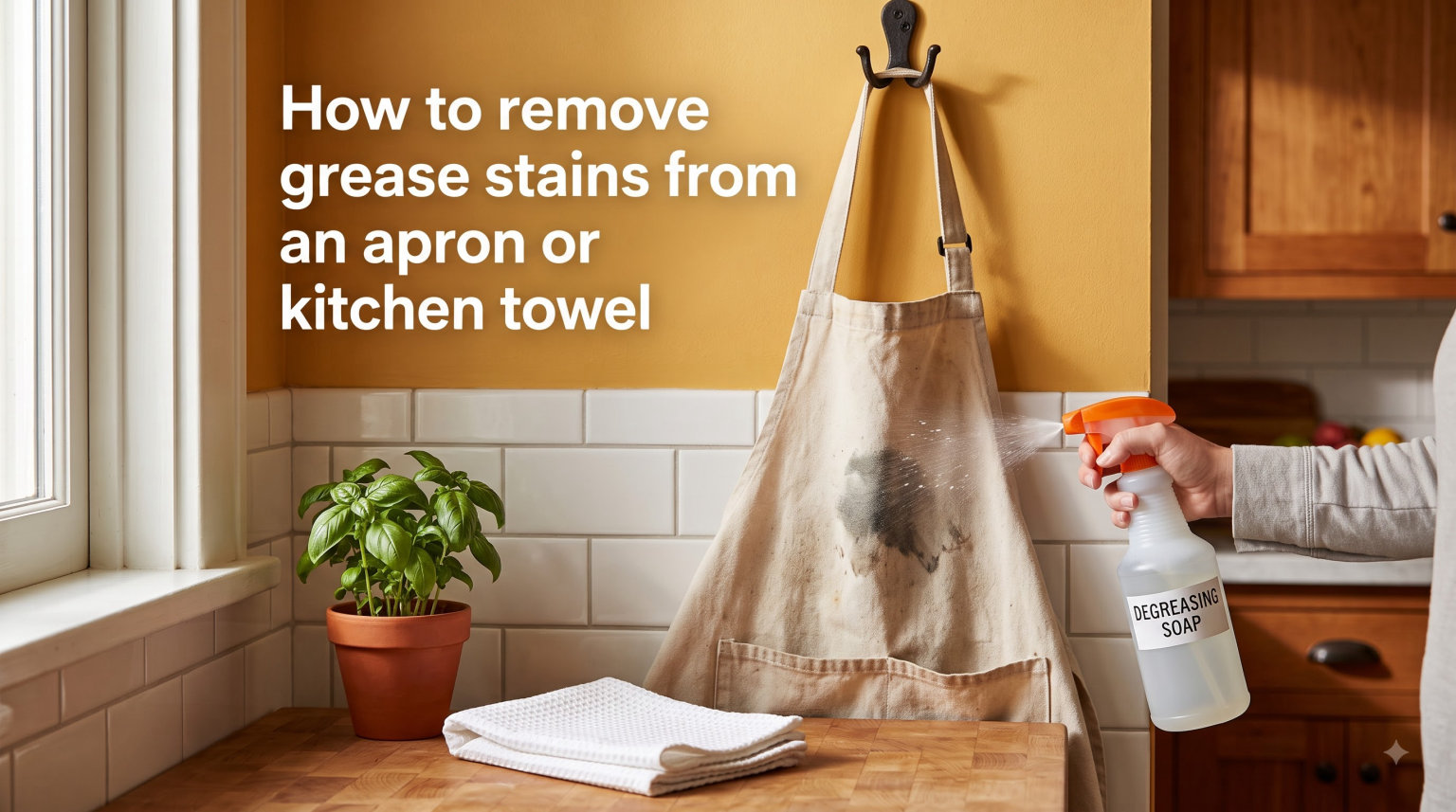
Every cook knows the moment: you grab your favorite apron or reach for a kitchen towel, and there it is — a dark, translucent blotch of cooking oil that refuses to come out in a normal wash. Learning how to remove grease stains from an apron or kitchen towel can save you from throwing away linens that still have years of life left in them.
I spent the better part of three months testing different grease removal methods on my own kitchen textiles, from cotton aprons that survived daily frying sessions to dish towels that had gone stiff and slick from months of oil absorption. Some techniques worked brilliantly. Others were a waste of time and product.
The good news is that almost every grease stain — even old, set-in ones — can be lifted with the right approach. The key is understanding why grease clings to fabric in the first place, then matching the right method to the stain’s age and the fabric type. This guide walks through everything I learned, from a quick 15-minute dish soap treatment to heavy-duty enzyme soaks for stains that have been sitting for weeks.
Table of Contents
Why Grease Stains Are So Stubborn? (The Science)
Grease and water do not mix. That simple fact is the root of every frustrating laundry moment you have ever had with oily kitchen textiles.
Cooking fats — whether from olive oil, butter, bacon grease, or deep-frying — are lipids. They are hydrophobic, meaning they actively repel water. When you toss a greasy apron into the washing machine with standard detergent and cold water, the water molecules simply slide past the fat molecules without lifting them. The stain stays put, and heat from the dryer can even bake it deeper into the fibers.
To break this bond, you need surfactants. Surfactants are compounds with a dual personality: one end is attracted to water (hydrophilic), and the other end is attracted to oil (lipophilic). When a surfactant meets a grease molecule, its lipophilic tail grabs onto the fat while the hydrophilic head stays in the water. This process, called emulsification, suspends the grease so it can be rinsed away rather than redepositing on your fabric.
Dish soap is packed with powerful surfactants — stronger than most laundry detergents — because it is designed to cut through cooking fats on plates and pans. That is exactly why it works so well on grease-stained aprons and kitchen towels. Heat also plays a role: warm water melts solid fats (like butter or lard) into a liquid state, making them easier for surfactants to grab.
How to Remove Grease Stains from an Apron or Kitchen Towel: Method 1 — Dish Soap Pre-Treatment
This is the method I reach for first, every single time. It works best on fresh grease stains — those you notice within a few hours or the same day. For set-in stains, jump to Method 3 or 4 below.
Step 1: Lay the stained fabric flat on a hard surface. Place a folded paper towel or clean rag underneath the stain to catch any grease that gets pushed through. This prevents the oil from transferring to the other side of the fabric.
Step 2: Apply a generous squirt of liquid dish soap directly onto the stain. I use original blue Dawn, but any concentrated dish soap works. You want enough to fully saturate the stained area — roughly the size of a quarter for a small spot, more for a larger stain.
Step 3: Use your fingers or a soft-bristled toothbrush to gently work the dish soap into the fabric. Do not scrub aggressively. Use small circular motions and let the soap penetrate the fibers for at least 30 seconds.
Step 4: Let it sit for 15 to 30 minutes. This waiting period is critical. The surfactants need time to surround and emulsify the grease molecules. If you wash too soon, you leave grease behind.
Step 5: Rinse the treated area under hot water — as hot as your hands can comfortably stand. Hold the fabric taut and let the water run through from the back side of the stain, pushing the loosened grease out rather than driving it deeper.
Step 6: Check the stain before drying. If you can still see it, repeat the process. Never put a grease-stained item in the dryer, because the heat will permanently set the stain into the fibers.
Step 7: Once the stain is gone (or faded significantly), wash the item in the hottest water the fabric allows with your regular laundry detergent.
Method 2 — Baking Soda Paste (For Dried-On Stains)
Baking soda is a mild abrasive and a natural grease absorber. It works especially well on stains that have already dried and set into the surface of the fabric. I have used this method on apron pockets that were caked with weeks-old oil splatter.
Step 1: Sprinkle a thick layer of baking soda directly onto the dry, greasy stain. You want enough to completely cover the affected area.
Step 2: Add a few drops of water — just enough to form a thick paste. Alternatively, mix a tablespoon of baking soda with half a teaspoon of water in a small bowl first, then spread it on.
Step 3: Gently rub the paste into the stain using your fingers or a soft brush. The baking soda will begin to clump and may take on a yellowish tint — that is the grease being drawn out of the fabric.
Step 4: Let the paste sit for 30 minutes to an hour. For very old or heavy stains, leave it on overnight.
Step 5: Brush off the dried paste (over a sink or trash can) and rinse the area with hot water. Follow up with a dish soap treatment if any grease residue remains.
One tip from my testing: baking soda works even better when combined with dish soap. Apply the dish soap first, then dust baking soda on top and let both sit together. The baking soda absorbs what the soap releases, pulling double duty on stubborn spots.
Method 3 — White Vinegar Soak (For Set-In Stains and Odor)
White vinegar is mildly acidic, which helps it break down the greasy residue that detergent leaves behind. It is also one of the best weapons against the rancid fat smell that clings to kitchen towels after repeated use. This is my go-to method for towels that feel slick or smell off even after washing.
Step 1: Fill a sink or large basin with hot water. Add one cup of white vinegar for every gallon of water. The water should be as hot as the fabric can tolerate.
Step 2: Submerge the stained apron or towels completely. Make sure they are fully saturated and not just floating on top.
Step 3: Let them soak for at least 30 minutes. For heavily soiled items or set-in stains, extend the soak to 1 to 2 hours. I have even left items overnight with good results.
Step 4: Wring out the excess liquid and transfer the items directly to the washing machine. Do not rinse first — the vinegar residue continues working during the wash cycle.
Step 5: Wash in hot water with your regular detergent. Skip the fabric softener (more on why below). Dry as usual once the stain and smell are gone.
Vinegar also acts as a natural fabric softener by breaking down detergent residue, so your towels will actually come out softer and more absorbent. This is a key advantage over commercial fabric softeners, which coat fibers in a waxy layer that traps grease and reduces absorbency.
Method 4 — Enzyme Detergent and Oxygen Bleach (For Old, Set-In Stains)
When a grease stain has been through the dryer and set into the fabric for weeks or months, basic methods may not be enough. This is where enzyme-based detergents and oxygen bleach come in. Enzymes are biological molecules that break down complex fat and protein structures, while oxygen bleach (sodium percarbonate) oxidizes the stain, literally breaking the chemical bonds that hold the discoloration in place.
I tested this method on a cotton kitchen towel that had a dark oil stain going through the dryer at least three times. After an overnight soak, the stain faded to barely visible.
Step 1: Apply a small amount of enzyme-based stain remover — such as OxiClean Max Force — directly to the dry stain. You can also use a heavy-duty biological detergent like Tide with enzymes.
Step 2: Gently work the product into the fabric with your fingers or a soft brush. Let it sit for 5 to 10 minutes to begin penetrating the fibers.
Step 3: Fill a basin or bucket with hot water and add a scoop of oxygen bleach powder (OxiClean or a generic sodium percarbonate product). Stir until dissolved.
Step 4: Submerge the stained item and let it soak for 2 to 6 hours, or overnight for severe stains. Check periodically — if the water turns grey or yellowish, that is the stain being released.
Step 5: Wash in the hottest water safe for the fabric with your regular detergent. Inspect before drying. If the stain persists, repeat the process.
Forum users on Reddit’s r/CleaningTips community frequently recommend adding a cup of Biz powder (an enzyme booster) to the soak for extra grease-cutting power. I tested this combination and it made a noticeable difference on deeply set tallow stains from meat cooking.
Washing Machine Settings by Fabric Type
Getting the water temperature right is just as important as choosing the right stain remover. Different fabrics respond differently to heat, and using the wrong setting can shrink, damage, or fail to clean your kitchen textiles.
Cotton aprons and towels: Wash at 60°C (140°F). Cotton is durable and can handle high heat, which is essential for melting and removing cooking fats. This temperature also kills most bacteria, including E. coli and Salmonella, which can linger on kitchen linens.
Polyester and poly-blend aprons: Wash at 40°C (104°F). Polyester fibers can warp or pill at higher temperatures. Pre-treat grease stains with dish soap before washing, since the lower water temperature is less effective at dissolving fat on its own.
Linen aprons and tea towels: Wash at 40°C to 50°C (104°F to 122°F). Linen is strong but can become brittle if washed too hot too often. Pre-treat stains gently to avoid damaging the weave.
Leather aprons: Do not machine wash. Wipe grease spots with a damp cloth and a small amount of saddle soap or mild dish soap, then condition the leather afterward. Machine washing will ruin the material.
Canvas and denim aprons: Wash at 50°C to 60°C (122°F to 140°F). These heavy-duty fabrics can take heat and agitation. Pre-treat grease with dish soap or baking soda paste before washing.
For all fabrics, always check the care label first. When in doubt, test any stain removal product on an inconspicuous area before applying it to the visible part of the garment.
Why Your Kitchen Towels Still Feel Greasy After Washing
This is one of the most common questions I see in cleaning forums, and almost no guide explains it properly. If your towels come out of the wash still feeling slick, sticky, or waxy, the problem is usually not leftover grease. It is detergent and fabric softener buildup.
Here is what happens: over time, laundry detergent that does not fully rinse out accumulates on towel fibers. Fabric softener makes the problem worse by coating every fiber in a thin layer of silicone wax. This waxy coating traps whatever grease is present and prevents the towel from absorbing water. The result is a towel that feels greasy, repels water, and develops a sour smell — even though it just came out of the washing machine.
The fix is a process called stripping. Here is how I strip my kitchen towels every few months:
Step 1: Fill a large pot or basin with hot water. Add half a cup of washing soda (sodium carbonate), half a cup of borax, and your regular laundry detergent.
Step 2: Submerge the towels and stir. Let them soak for 4 to 6 hours, stirring occasionally. You will see the water turn grey or brown as the trapped residue is released.
Step 3: Rinse thoroughly under running water until it runs clear. Wash in hot water with no detergent and no fabric softener.
Step 4: Dry on high heat or line dry. Your towels should feel noticeably softer, more absorbent, and free of that greasy film.
Going forward, stop using fabric softener on your kitchen towels entirely. It is the single biggest contributor to the greasy-feeling problem. Use white vinegar in the rinse compartment instead — it softens fabrics naturally without leaving a residue.
One more contributor: using too much detergent. More soap does not mean cleaner towels. Excess detergent does not rinse out fully and builds up over time. Use the minimum amount recommended on the package, especially for lightly soiled loads.
How to Keep Aprons and Towels Grease-Free? (Prevention)
Preventing grease stains is far easier than removing them. After months of testing and talking with other home cooks, I have settled on a prevention routine that keeps kitchen linens in good shape.
Wash kitchen towels every 1 to 2 days. Towels used for wiping counters, drying hands, and handling cookware collect grease and bacteria quickly. The longer they sit, the more oil oxidizes and bonds to the fibers. Daily washing prevents buildup.
Wash aprons after every cooking session. If you cook with oil daily, your apron should go in the wash daily. For lighter use, every 2 to 3 uses is fine. Do not let a greasy apron sit in a hamper for a week — the stain will set.
Keep a separate towel for greasy hands. Designate one towel or rag specifically for handling oily cookware and wiping greasy surfaces. Keep your good dish towels separate for drying clean dishes. This simple rotation extends the life of your nicer linens considerably.
Pre-treat immediately. The moment you notice a grease splatter on your apron, dab on some dish soap before the stain has a chance to dry. A 30-second pre-treatment is worth 30 minutes of scrubbing later.
Skip the dryer for stained items. Always inspect aprons and towels for residual stains before they go in the dryer. If you see a shadow of a stain, re-treat and re-wash. Heat from the dryer permanently sets grease into fibers.
Avoid fabric softener and dryer sheets on kitchen linens. As explained above, these products coat fibers in wax and make grease problems worse over time. Use vinegar in the rinse cycle instead.
Rotate your towel supply. Having 7 to 10 kitchen towels in rotation means each one gets used less frequently and washed more thoroughly. You will not be tempted to reuse a greasy towel because a clean one is always available.
When to Replace Instead of Clean
Sometimes a kitchen towel or apron has simply reached the end of its useful life. Knowing when to let go saves you frustration and keeps your kitchen hygienic.
Replace a towel if it remains greasy and non-absorbent after stripping and multiple washes. If the fabric feels permanently stiff or slick even when wet, the fiber structure has been damaged by repeated grease and detergent buildup.
Replace aprons with permanent staining on more than 30 percent of the surface. At that point, the fabric is saturated with oxidized oils that will continue to attract dirt and bacteria.
If a towel develops a persistent sour or rancid smell that survives vinegar soaks and hot washes, bacteria have likely colonized deep in the fibers. This is a hygiene issue, not just a cosmetic one — replace it.
As a general rule, kitchen towels should be replaced every 3 to 6 months with regular use. Aprons can last 1 to 3 years depending on frequency of use and fabric quality.
Frequently Asked Questions
How to get grease off kitchen towels?
Apply liquid dish soap directly to the grease stain, work it in with your fingers, and let it sit for 15 to 30 minutes. Rinse under hot water from the back of the fabric, then wash in the hottest water the towel can tolerate. For stubborn stains, soak the towel in hot water with one cup of white vinegar per gallon for 30 minutes before washing.
How to get grease stains out of an apron?
Pre-treat the stain with dish soap or a baking soda paste, let it sit for 30 minutes, then wash at the temperature appropriate for the fabric type (60 degrees C for cotton, 40 degrees C for polyester). Never put a stained apron in the dryer until the stain is fully removed, as heat permanently sets grease.
Does Dawn dissolve grease?
Yes, Dawn dish soap contains concentrated surfactants that emulsify cooking fats, surrounding grease molecules so they can be suspended in water and rinsed away. This is the same chemistry that makes it effective on dishes, and it works equally well on grease-stained kitchen textiles.
Can old grease stains be removed?
Yes, even set-in grease stains that have gone through the dryer can often be removed. Apply an enzyme-based stain remover or oxygen bleach (OxiClean), soak the item in hot water for 2 to 6 hours or overnight, then wash in hot water. Repeat the process if the stain persists. Very old stains may take 2 to 3 treatments.
Is it better to wash towels with vinegar or baking soda?
Both work, but they serve different purposes. Baking soda is best for absorbing and lifting grease from the fabric surface, while white vinegar breaks down detergent residue and removes odors. For best results, use baking soda as a paste pre-treatment on grease stains, and add vinegar to the rinse cycle to soften towels and cut leftover residue.
What dissolves grease naturally?
White vinegar, baking soda, and lemon juice all dissolve grease naturally. Dish soap (while not purely natural) is the most effective everyday option because of its surfactant content. For a fully natural approach, a paste of baking soda and vinegar applied to the stain for 30 minutes can lift fresh grease effectively.
Why are my kitchen towels still greasy after washing?
In most cases, the greasy feeling is not leftover cooking grease but a buildup of detergent and fabric softener on the towel fibers. Fabric softener coats fibers in a waxy layer that traps residue and prevents absorbency. Strip the towels by soaking in hot water with washing soda and borax for 4 to 6 hours, then stop using fabric softener on kitchen linens entirely.
Conclusion
Grease stains on kitchen textiles are frustrating, but they are almost never permanent. Whether you are dealing with a fresh oil splatter on your apron or a kitchen towel that has gone stiff and slick from months of use, there is a method that will work.
Start with dish soap for fresh stains, move to baking soda paste for dried-on spots, and reach for enzyme detergents or oxygen bleach when the stain has been set in by the dryer. And if your towels feel greasy no matter how many times you wash them, the culprit is likely detergent and fabric softener buildup — strip them and stop using softener on kitchen linens.
Now that you know how to remove grease stains from an apron or kitchen towel, you can extend the life of your kitchen textiles and keep them looking and smelling fresh. The key is acting quickly, choosing the right method for the stain’s age, and never putting a stained item in the dryer until the grease is fully gone.