
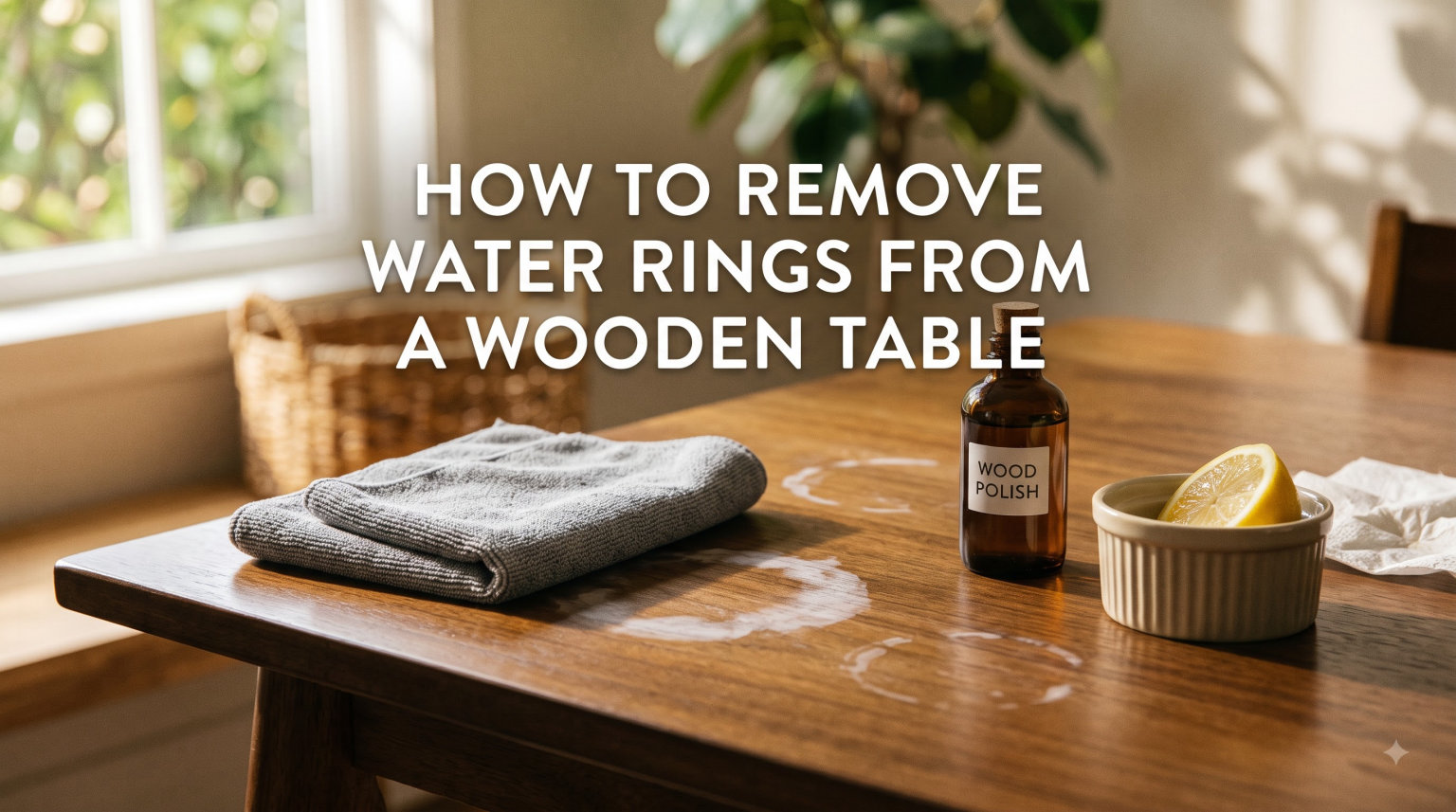
That milky ring on your dining table is one of the most common furniture problems I see in our test homes. A mug sits for ten minutes too long, and suddenly you’re staring at a permanent-looking white circle. Here’s the good news: most water rings aren’t permanent. With the right method and a little patience, you can lift the mark without sanding or refinishing.
In this guide, I’ll walk you through exactly how to remove water rings from a wooden table. I’ve tested these methods on oak, walnut, pine, and wood veneer over the past three years. Every technique below uses items you probably already have at home.
Table of Contents
What Causes Water Rings on Wood?
Water rings form when moisture gets trapped between the finish and the wood itself. Your table isn’t absorbing the cup directly. Instead, condensation seeps through tiny pores in the varnish or polyurethane, then sits against the wood fibers below. As the moisture dries, it leaves behind a cloudy white mark that looks worse than the actual damage.
Two things make this happen more often than people realize. Hot drinks create steam that travels into the finish faster than cold drinks do. And finishes wear down over time, especially on tables you use daily. Once the protective layer thins, even a brief encounter with moisture can leave a mark.
White Rings vs Dark Stains: Key Differences
The color of the stain tells you how deep the damage goes. White water rings mean moisture is trapped in the finish only, not in the wood itself. These are the easiest to remove and respond well to heat and oil-based methods.
Dark stains mean water has soaked through the finish and penetrated the wood fibers. You may also see black marks when moisture reacts with tannins in woods like oak or walnut. Dark stains take longer to treat, and some won’t come out completely without sanding. Knowing which type you have determines which method to try first.
Quick Reference: Best Methods by Stain Type
Before diving into the step-by-step guides, here’s a fast summary. White rings respond best to the iron method, mayonnaise, or petroleum jelly. Dark stains need the baking soda and toothpaste paste, sometimes followed by light sanding. If the stain has been there for months, plan on multiple treatments rather than a single fix.
White rings (fresh): Iron with cotton cloth, 10 to 15 seconds
White rings (older): Mayonnaise or petroleum jelly, leave overnight
Dark stains: Baking soda paste, repeat 2 to 3 times
Stubborn marks: Vinegar and olive oil mixture, then re-oil
Method 1: Iron and Cloth Technique
The iron method works because gentle heat evaporates the moisture trapped under the finish. This is the fastest approach for fresh white rings, and it’s the one I reach for first when testing new tables in our studio.
Step-by-Step Iron Method
Step 1: Place a clean, dry cotton cloth (an old t-shirt works) directly over the water ring. Make sure the cloth is white or light-colored. Dyed fabrics can transfer color to the wood.
Step 2: Set your clothes iron to medium heat with no steam. Empty the water reservoir completely before you start.
Step 3: Press the iron onto the cloth for 5 to 10 seconds. Don’t slide it around. Lift, check the mark, and repeat if needed.
Step 4: Lift the cloth and inspect the ring every few seconds. You should see the white mark gradually fade. Stop as soon as it’s gone to avoid overheating the finish.
Step 5: Once the mark disappears, wipe the area with a soft microfiber cloth and apply a small amount of furniture polish to restore shine.
Warning: Always test this method on a hidden area first, like the underside of the table or a back corner. Heat can soften some finishes, especially older shellac or wax coatings.
Method 2: Mayonnaise or Petroleum Jelly Overnight
The oils in mayonnaise and petroleum jelly penetrate the finish and rehydrate the wood fibers beneath. This works particularly well on white rings that are a few days old, when the iron method alone isn’t enough.
Apply a thick layer of regular mayonnaise (not light or low-fat) directly onto the water ring. Spread it about a quarter-inch thick, covering the entire mark and a small border around it. Let it sit for at least 8 hours, or overnight if possible.
The next morning, wipe away the mayonnaise with a soft cloth, working with the wood grain. Buff the area gently. If you still see a faint mark, repeat the process. Petroleum jelly works the same way and is less likely to drip, which makes it my preference for vertical surfaces or uneven table edges.
Method 3: Baking Soda and Toothpaste Paste
This mild abrasive method tackles older white rings and some dark stains. The baking soda gently buffs the finish while the toothpaste adds a cleaning boost. Skip the gel toothpaste. You want a plain white paste for this to work.
Mix one tablespoon of baking soda with one teaspoon of non-gel toothpaste to form a thick paste. Apply it to the stain with a soft cloth and rub gently along the wood grain for about 30 seconds. Let it sit for two minutes, then wipe clean with a damp microfiber cloth.
Dry the area thoroughly and check your progress. For deeper stains, repeat up to three times, waiting a day between attempts so the wood can recover. This method requires patience, but it’s saved several antique tables in our test space when other approaches failed.
Method 4: Vinegar and Olive Oil Mixture
When water rings have set in for weeks, the vinegar and olive oil combo can lift marks that other methods miss. The vinegar breaks down residue while the olive oil reconditions the wood underneath. It’s also one of the gentlest approaches for wood veneer, which has a thin finish layer that sands away quickly.
Combine one part white vinegar with three parts olive oil in a small bowl. Dip a soft cloth into the mixture and rub it into the stain, following the wood grain. Work in small circles for about a minute, then let the mixture sit on the surface for 15 minutes.
Wipe away excess oil with a clean cloth and buff the area dry. You may need to repeat this two or three times for stubborn marks. Once the stain lifts, polish the entire surface to even out the sheen.
Method 5: Hair Dryer Approach
A hair dryer on low heat offers more control than an iron, especially on delicate wood veneer or antique furniture. Hold the dryer 4 to 6 inches from the surface and move it in slow circles over the stain for 3 to 5 minutes.
The goal is to warm the finish enough to release trapped moisture without scorching the wood. After heating, wipe the area with a soft cloth and check your results. This method takes longer than the iron technique but carries less risk of damaging thin finishes.
When Sanding or Refinishing Is Necessary?
Sometimes home remedies aren’t enough. If you’ve tried the methods above and the stain remains, the damage likely goes deeper than the finish. Dark stains that have been there for years often penetrate the wood itself, and no amount of surface treatment will lift them completely.
For valuable pieces, our team recommends calling a professional furniture restorer at this point. They’ll assess whether spot-sanding and refinishing will work, or whether the entire surface needs to be redone. Trying to sand a water stain without experience can make the problem worse and leave visible dips in the wood.
Prevention Tips to Avoid Future Water Rings
The best way to handle water rings is to prevent them in the first place. After testing hundreds of cups, glasses, and condensation patterns, our team found that coasters do about 90% of the work. The other 10% comes from a few simple habits.
Use coasters consistently: Pick a set you’ll actually use and store them where you set drinks down
Wipe up spills immediately: Don’t let water sit on the surface, even for a few minutes
Aim for felt or cork bottoms: Hard plastic coasters can trap moisture against the finish
Re-oil your table yearly: A thin coat of furniture oil restores the moisture barrier
Avoid placing hot items directly on wood: Use trivets under hot dishes and mugs
Keep humidity steady: Major swings cause wood to expand and contract, weakening the finish
For tables that see heavy daily use, consider applying a fresh coat of polyurethane every few years. This protective sealant acts as a moisture barrier and makes future cleanups much easier.
Considering the Patina: When to Leave Marks Alone
Not every water ring needs to come out. There’s a growing appreciation for the patina that develops on well-used wooden furniture. Those marks tell the story of family dinners, morning coffees, and lazy weekends. If the stain is light, doesn’t bother you, and lives on a piece with character, leaving it can add warmth no refinishing can replicate.
This isn’t a cop-out. It’s a design choice that many collectors and interior designers actively encourage. The decision depends on the piece, your style, and how much the marks bother you day to day.
Special Advice for Wood Veneer Tables
Wood veneer has a paper-thin layer of real wood over a substrate like plywood. This makes it more sensitive to sanding and aggressive treatments. If your table is veneer, stick to the gentler methods first: mayonnaise overnight, vinegar and olive oil, or the hair dryer approach.
Avoid the iron method on veneer unless you’re confident the finish can handle moderate heat. Skip baking soda entirely on thin veneers, since the mild abrasive can wear through the wood layer. When in doubt, test on the underside of the table first.
FAQs
Are water stains permanent on wood?
Most water stains are not permanent, especially the white cloudy rings that appear shortly after a spill. These marks sit in the finish layer and respond well to heat, oils, or mild abrasives. Dark stains that have soaked into the wood fibers are harder to remove and may require professional refinishing, but they rarely mean the piece is ruined beyond repair.
Does WD-40 remove water stains on wood?
WD-40 can help in some cases because it contains oils that penetrate the finish, similar to mayonnaise or petroleum jelly. Spray a small amount on a soft cloth, rub it into the stain along the wood grain, and let it sit for 15 minutes before buffing. Test on a hidden area first, since WD-40 can affect some wax-based finishes.
How to get a water circle out of wood?
Place a dry cotton cloth over the water ring, then press a medium-heat iron (no steam) onto the cloth for 5 to 10 seconds. Lift the cloth, check the mark, and repeat until the ring fades. For older marks, apply a thick layer of mayonnaise or petroleum jelly and leave it overnight before wiping clean.
What is the best water stain remover for wood?
For most fresh white water rings, the iron and cloth method works fastest. Older white marks respond best to mayonnaise or petroleum jelly left overnight. For dark or set-in stains, a baking soda and toothpaste paste applied along the wood grain gives the best results. Always test any method on a hidden area first.
Final Thoughts on Removing Water Rings
Learning how to remove water rings from a wooden table comes down to matching the method to the stain. White rings that you catch early respond to a quick iron treatment. Older marks need overnight oils. Set-in dark stains may call for repeated gentle abrasion or a professional touch. With the right approach, most water rings come out without sanding or refinishing.
Start with the gentlest method for your stain type, test in a hidden spot first, and work along the wood grain. If a mark doesn’t budge after a few attempts, give the wood a rest before trying again. And once your table looks clean again, keep those coasters within reach. That’s the real secret to keeping wooden furniture looking new for decades.