
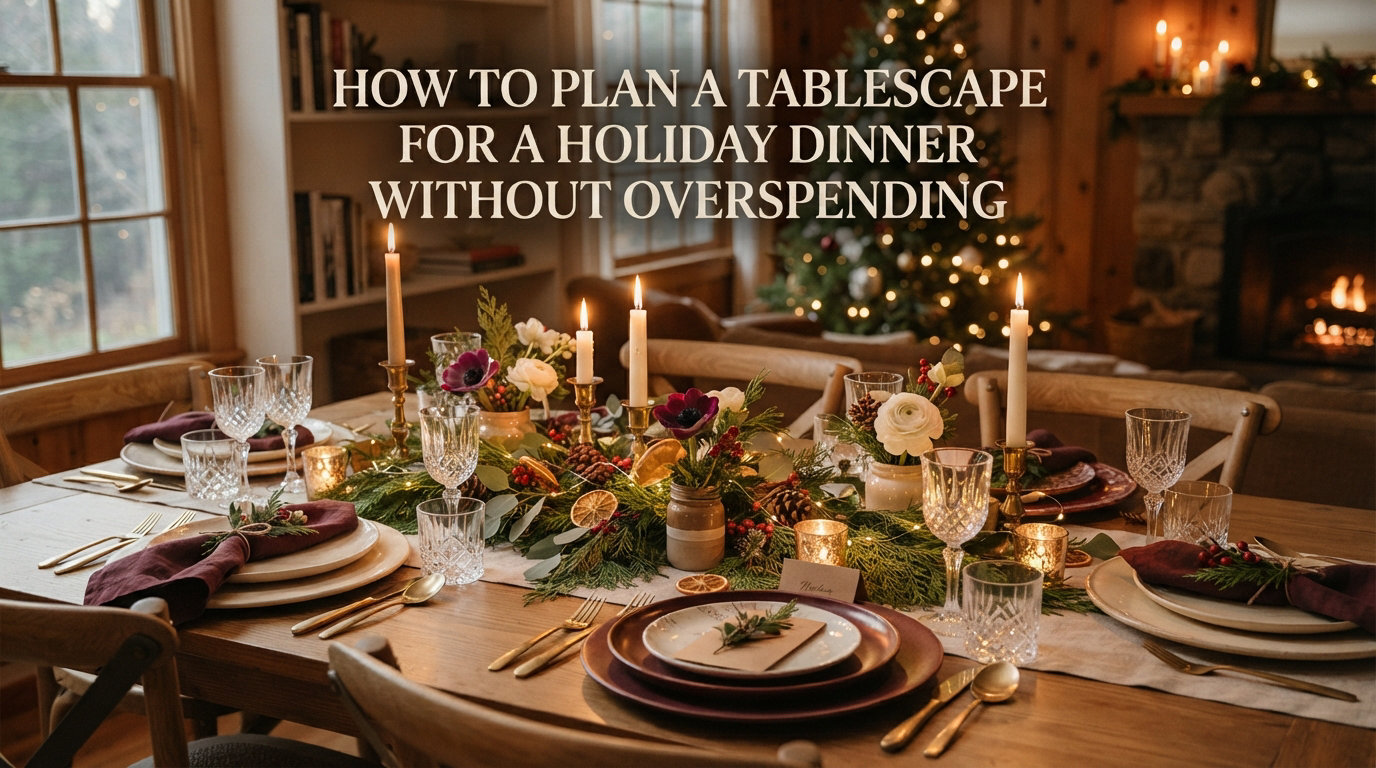
I hosted my first holiday dinner with a grocery store bouquet, two mismatched napkins, and a candle I found in a kitchen drawer. The guests raved about it. That experience taught me something: you do not need a big budget to pull off a beautiful holiday table. What you need is a plan.
If you have ever stood in the holiday decor aisle staring at glittering charger plates and thought, “this is going to cost a fortune,” this guide is for you. I am going to walk you through exactly how to plan a tablescape for a holiday dinner without overspending. By the end, you will know which items matter, which items you can skip, and where to find the rest for a fraction of the price. Expect real costs, real stores, and zero fluff.
Table of Contents
What Is a Tablescape and Why It Matters?
A tablescape is the complete visual setup of your dining table, including the runner, plates, napkins, centerpiece, candles, and any decorative accents. Think of it as styling the way a set designer would dress a stage. Your goal is to set a mood so guests feel welcome the moment they sit down.
I think of it as the cheapest room upgrade you will ever buy. A few well-chosen pieces can transform a plain table into something that feels intentional and festive. And unlike painting a wall or buying new furniture, you can change the look every single year without much effort.
Holiday tablescapes matter because dinner is the centerpiece of the season. Whether it is Thanksgiving, Christmas, or New Year’s Eve, the table is where your family gathers. A styled table tells your guests, “I planned this. You matter.” That kind of warmth is worth way more than the dollar amount you spent.
The Essential Tablescape Checklist (6 Items You Need)
Before you buy anything, lock down the basics. These six elements form the skeleton of any good holiday table. If you have them, you can style almost any theme.
Table runner or tablecloth: Sets the base color and ties the whole look together.
Chargers or placemats: Frames each place setting and adds texture under the plates.
Dinnerware and flatware: The everyday set you already own is fine.
Napkins: Cloth or paper, folded or loose, in a color that complements the runner.
Centerpiece: A focal point made of greenery, candles, flowers, or ornaments.
Lighting: Taper candles, tea lights, or string lights to warm the room.
Most of these items already live in your home. I start every tablescape by laying out what I own and figuring out what is missing. This simple habit cuts my spending roughly in half each year.
Step-by-Step: How to Plan a Tablescape for a Holiday Dinner Without Overspending
Here is the formula I use every single season. I have tested it for small family dinners of four and bigger gatherings of twelve. It works because it forces you to plan before you spend.
Step 1: Pick a simple theme. Choose two colors and one accent. Rustic red and gold. Winter white and silver. Green and copper. Write it down before you shop. A clear theme stops impulse buys cold.
Step 2: Set a hard budget. I usually cap my holiday table spend at $50 for everything new. For larger gatherings of eight or more, I stretch to $75. Treat this number like a ceiling, not a goal.
Step 3: Inventory what you already own. Pull out your runners, chargers, candles, and napkins. Photograph what works and note what is missing. This list becomes your shopping list, nothing more.
Step 4: Shop the discount sources first. Before touching any full-price store, check dollar stores, thrift shops, and end-of-season clearance bins. I once scored six mercury glass votives for under $5 at a post-Christmas clearance.
Step 5: Build outward from the centerpiece. Place the centerpiece first, then the runner, then the chargers, then the plates. Layering in this order prevents you from cluttering the table.
Step 6: Add height, then softness. Taper candles give vertical interest. Greenery and ribbon bring warmth. Skip anything taller than 12 inches so guests can actually see each other across the table.
Step 7: Step back and edit. Coco Chanel’s rule applies here too: take something off before you add more. If a piece does not serve your theme, it does not belong on the table.
Following this exact sequence keeps me focused and on budget. Last year, my entire Christmas table cost me $42, and most guests assumed I had spent three times that.
Budget-Friendly Centerpiece Ideas You Can Make Tonight
The centerpiece is the visual anchor of your table, but it does not need to cost a fortune. I love using what I already have or what I can forage for free.
Greenery from the yard: Snip pine, eucalyptus, holly, or magnolia leaves from your own garden. Arrange them down the center of the table on their own, or anchor them in a wooden dough bowl. Cost: free.
Dollar store candleholders: Pick up three glass votives in different heights. Cluster them on a small mirror or a piece of cardboard wrapped in fabric. The reflection doubles the visual impact.
Citrus and cloves: Stud whole oranges with whole cloves for a fragrant, old-fashioned touch. Stack two or three in a shallow bowl. They smell incredible and cost about $1 per orange.
Mini pumpkin or gourd tower: For Thanksgiving, stack three small pumpkins in graduating sizes. Tie a ribbon around the base. Done in five minutes.
Repurposed ornaments: After Christmas, save a few ornaments in good shape. Drop them into a clear glass bowl next year for an instant centerpiece. No one has to know they are leftovers.
Foraged pine cones: Collect pine cones in autumn and store them in a box. In December, fill a wooden bowl or bread loaf pan with them. Add a couple of battery tea lights and you have a warm, rustic look.
Pick one of these ideas. That is enough. A single thoughtful centerpiece always beats three competing ones.
Where to Shop for Cheap Holiday Table Decor?
Where you shop matters more than what you buy. Here are the spots I trust, ranked by what they do best.
Dollar stores (Dollar Tree, Dollarama): Glass votives, taper candles, basic chargers, and seasonal napkin rings are all here for around a dollar each. Quality has improved a lot in the last few years. I stock up here for non-perishable basics.
Thrift stores (Goodwill, Savers, local charity shops): This is where you find unique pieces nobody else has. Vintage silverware, embroidered linens, and glass cake stands all show up here for under $5. I hit my local shop every Sunday morning during November.
End-of-season clearance (late December and early January): The day after Christmas, stores slash holiday decor by 50 to 75 percent. Stock up on items you can use next year. I have a labeled bin in the garage just for this.
Walmart and Target seasonal aisles: Skip the everyday prices, but watch for the $5 and under holiday bins. They appear mid-November and disappear fast.
IKEA: Their VINTER and STRALA collections are famously affordable. Stock up on candle holders, runners, and basic serveware during their January sales.
Facebook Marketplace and Craigslist: Search “wedding decor” and “holiday decor” the week after any major holiday. People offload bulk lots for pennies on the dollar.
Stick to two or three of these sources per season. Spreading yourself too thin leads to impulse purchases, and that is where the overspending sneaks in.
5 Common Tablescape Mistakes That Drain Your Budget
I have made every one of these mistakes. Learn from my errors so you do not have to spend the money to find out.
Mistake 1: Buying before planning. Walking into a store without a list is the fastest way to blow your budget. Decide on your theme and your colors first, then shop.
Mistake 2: Overcrowding the table. More is not better on a holiday table. Every guest should have elbow room and a clear sightline to the person across from them.
Mistake 3: Buying fragile decor you will only use once. If it does not fit in your regular storage bin, skip it. Cheap does not mean disposable, but it should mean reusable.
Mistake 4: Ignoring lighting. A $5 pack of taper candles transforms a table more than a $50 floral arrangement. Never skip the warm glow.
Mistake 5: Forgetting to test the layout a day early. Set your table 24 hours before the event. You will spot the wobbling candle, the missing plate, and the awkward empty corner while you still have time to fix them.
Avoid these five traps and your tablescape will look more polished than 90 percent of what shows up on Pinterest. I promise.
Storage Tips: Reuse Everything Next Year
The single biggest budget saver is not what you buy. It is what you save. I treat every holiday table purchase as a multi-year investment.
Wrap each item in plain newsprint or tissue paper, then drop it into a labeled bin by category: candles, ribbons, greenery, ornaments. Stack the bins on a closet shelf. Next November, you will thank yourself when setting up takes an hour instead of an afternoon.
Choose versatile pieces. A plain white runner works for Christmas, Easter, and summer dinners. A set of brass candlesticks works for any holiday you can name. The more uses an item has, the better deal it really was.
If you build a small reusable kit over three or four years, you will find that holiday tablescaping becomes nearly free. Last year, I spent about $8 on a single new ribbon. That was it.
FAQ
How to create a holiday tablescape?
Start with a clear theme and two colors. Lay down a runner, add chargers and plates at each setting, then build a centerpiece using greenery, candles, or a few ornaments. Finish with napkins and soft lighting. The whole process takes about 30 minutes once you have your supplies.
What are some common table decor mistakes to avoid?
Avoid buying before picking a theme, overcrowding the table, choosing fragile decor, forgetting candles or warm lighting, and skipping a test layout the day before. Each of these drains your budget or your time.
How to set a Christmas table on a budget?
Set a hard spending limit, shop dollar stores and thrift shops first, and lean on natural greenery, taper candles, and citrus decorations. Reuse last year’s ribbons and ornaments. Most budget Christmas tables come in under $50.
What are some tips for setting a tablescape?
Pick a theme and color palette first. Build outward from the centerpiece. Keep decor under 12 inches tall so guests can talk across the table. Step back and edit before the guests arrive. Always do a dry run the day before.
Conclusion
Learning how to plan a tablescape for a holiday dinner without overspending is really about one thing: planning before spending. Pick your theme, set your budget, inventory what you own, and shop with intention. The rest is just styling.
Start small this year. Pick two items from this guide, then add more next season. Within a few years, you will have a full holiday kit that costs almost nothing to refresh. Your guests will never know how little you spent, and that is the whole point.