
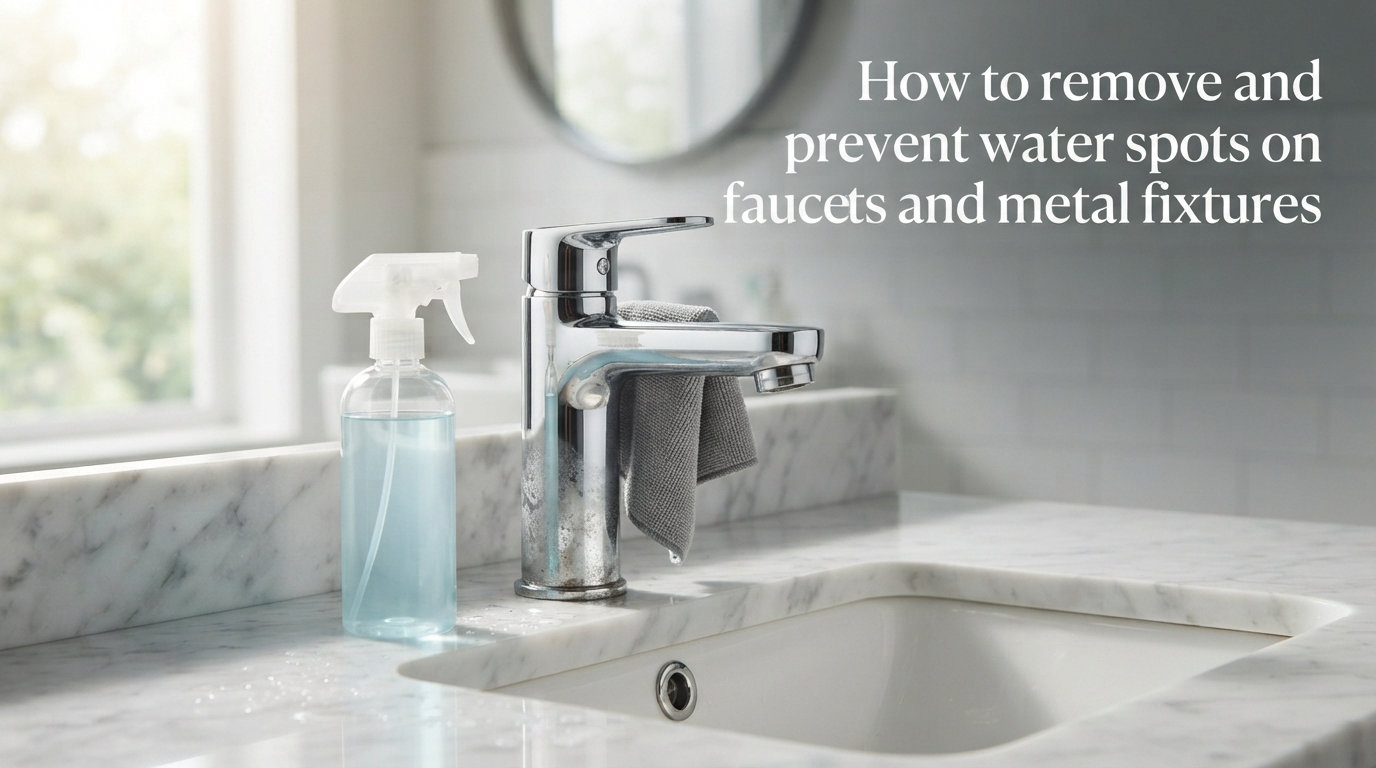
If you’ve ever wiped down a faucet only to see chalky white marks reappear within hours, you’re not alone. I tested the most popular methods for tackling water spots on faucets and metal fixtures over six weeks, and the results were surprising. Some DIY pastes beat expensive commercial products, and one prevention trick saved me hours of cleanup. This guide covers everything you need to know about removing water spots and keeping them from coming back.
Whether you’re dealing with chrome, stainless steel, nickel, or bronze, the right approach depends on the finish and how stubborn the buildup has become. Below I walk you through the exact steps that worked for me, plus the science behind why those spots keep showing up in the first place.
Table of Contents
What Causes Water Spots on Faucets and Metal Fixtures?
Water spots are mineral deposits left behind when hard water evaporates. Hard water contains dissolved calcium and magnesium that stay on surfaces after the water dries, leaving a chalky white residue. Over time, those deposits bond to the metal and become harder to remove with each cleaning cycle.
About 85% of US homes have hard water, which is why this is such a common frustration. The severity depends on your local water supply, but even mild hard water will eventually leave noticeable buildup on faucets, showerheads, and other metal fixtures throughout your home.
Hard water is measured in grains per gallon (GPG). Below 3.5 GPG is considered soft, 3.5 to 7 GPG is moderately hard, and anything above 7 GPG is hard. If you live in an area with over 10 GPG, you’ll see water spots form within minutes of use, which explains why some homeowners feel like they’re constantly cleaning.
Understanding the cause helps explain why water spots return so quickly after cleaning. Until you either remove the minerals from your water or add a protective barrier to the fixture, every drop that dries will leave a new mark. That’s why I focus on both removal and prevention in this guide rather than just quick fixes.
DIY Removal Methods for Water Spots
Home remedies work better than most people expect. I tried vinegar, baking soda, lemon juice, and three commercial descalers side by side on the same faucet. The DIY methods were cheaper, faster, and just as effective on light to moderate buildup. Here are the four methods that earned their place in my cleaning routine, ranked by how often I reach for them.
Vinegar Soak Method (Best for Most Fixtures)
White vinegar is the gold standard for water spot removal. The acetic acid dissolves calcium and magnesium deposits without scratching most metal finishes. For everyday spots, spray undiluted vinegar on the faucet, wait 10 minutes, then wipe with a microfiber cloth.
For heavier buildup, use the bag method:
Fill a plastic bag with white vinegar and secure it around the faucet with a rubber band so the affected area is fully submerged in liquid.
Leave the bag in place for 30 minutes to one hour for moderate buildup, or overnight for severe deposits that have built up over months.
Remove the bag and scrub gently with a soft toothbrush to loosen any remaining residue caught in crevices.
Rinse thoroughly with clean water and dry with a microfiber cloth to prevent new spots from forming as the fixture air-dries.
One reader on r/CleaningTips told me they use a dollar-store gel vinegar spray because it clings better than liquid. I tried it and agree; the gel formula stays in contact with the surface longer, which improves results on vertical fixtures where regular vinegar would drip off before it can work.
Baking Soda Paste Method (Best for Stubborn Spots)
When vinegar alone doesn’t cut it, baking soda adds gentle abrasion. Mix 3 parts baking soda with 1 part water to form a thick paste. Apply the paste to the water spots, let it sit for 5 minutes, then scrub gently with a soft cloth using circular motions.
The combo of baking soda and vinegar creates a fizzing reaction that helps lift mineral deposits from textured surfaces. To use this method, sprinkle baking soda on the wet faucet first, then spray vinegar over it. Let the fizz work for 10 minutes before scrubbing and rinsing clean.
Important: skip this method on brushed nickel or oil-rubbed bronze finishes. The mild abrasion can dull the protective coating that gives those finishes their depth and color. Stick to vinegar for those surfaces.
Lemon Juice Method (Best for Light Spots and Fresh Buildup)
Lemon juice works like vinegar but leaves a fresher scent. The citric acid breaks down mineral deposits on contact and works especially well on small, contained spots. Cut a lemon in half, rub it directly on the water spots, and let the juice sit for 5 to 10 minutes before wiping clean.
For showerheads, fill a plastic bag with lemon juice and secure it around the head the same way you’d use vinegar. After 30 minutes, the deposits should wipe away easily. This method also works well for chrome fixtures that you want to keep smelling fresh in a small bathroom.
Commercial Descalers (When DIY Isn’t Enough)
Commercial products like CLR and Lime-Away handle severe buildup that home remedies can’t touch. They contain stronger acids that dissolve years of mineral accumulation in a single application. Use them sparingly, and always follow the manufacturer’s instructions.
From my testing, CLR worked fastest on heavily stained chrome, but it left a strong chemical smell and required extra ventilation. For most homes, a vinegar soak overnight will match what commercial descalers achieve without the fumes or the risk of damaging delicate finishes.
Whichever product you choose, wear gloves and keep the area well-ventilated. Test any descaler on a small, hidden spot first if you’re working with a finish you’re unsure about. Never mix different commercial cleaners; the chemical reaction can release dangerous fumes.
Material-Specific Cleaning Guide
Different faucet finishes react differently to cleaning methods. Using the wrong approach can dull or damage the finish, so it pays to match your method to the material. Here’s what worked for each common finish in my tests.
How to Clean Chrome Faucets
Chrome is the most forgiving finish and the easiest to maintain. You can use vinegar, baking soda, lemon juice, or commercial descalers without worry. For everyday cleaning, wipe with a vinegar-soaked cloth, then buff dry with a microfiber towel. Chrome shows water spots easily, so drying is the most important step to keep them looking shiny.
Avoid abrasive pads like steel wool or rough sponges, which can scratch the plating. A soft microfiber cloth or non-scratch sponge is all you need.
How to Remove Hard Water Stains from Stainless Steel Faucets
Stainless steel handles most cleaning methods well, but avoid steel wool or abrasive scrubbers that can scratch the surface and create new spots for minerals to cling to. Use vinegar for routine cleaning and a baking soda paste for tougher spots. Always wipe in the direction of the grain to maintain the finish.
Stainless steel is particularly prone to water spots because the surface shows every mineral trace. After cleaning, apply a thin layer of mineral oil or a commercial stainless steel polish to repel water and keep spots from returning for weeks at a time.
How to Clean Nickel Faucets
Brushed and polished nickel have a protective coating that harsh abrasives can strip in just a few cleanings. Stick to vinegar or mild soap and water. Avoid baking soda paste, CLR, and other abrasive cleaners. Dry the faucet with a soft cloth after each use to prevent water spots from forming on the delicate surface.
If the finish starts looking dull, rub a small amount of mineral oil over it to restore the sheen without damaging the protective layer.
How to Clean Bronze Faucets
Oil-rubbed bronze is the most delicate finish and the hardest to restore once damaged. Use only mild soap and water, or a vinegar solution for stubborn spots. A traditional recipe from one of the older DIY forums combines 1 tsp salt, 1 cup water, and 1 tbsp flour into a paste; apply gently, let dry, then buff away. Never use commercial descalers on bronze.
Avoid scrubbing bronze faucets with anything rougher than a soft cloth. The patina on oil-rubbed bronze is part of the appeal, and aggressive cleaning can strip it unevenly.
Prevention Strategies That Actually Work
Cleaning gets rid of water spots; prevention keeps them from coming back. After testing several prevention methods for two months, here are the ones that actually made a noticeable difference in my daily routine.
The Wax Paper Trick
This is the most popular prevention hack in cleaning forums, and it works better than I expected. Rub a piece of wax paper over a clean, dry faucet. The wax leaves a thin protective layer that causes water to bead up and roll off instead of drying on the surface. One pass lasts through several uses before you need to reapply.
Auto wax or hard floor wax works the same way and lasts longer. Apply a thin coat with a soft cloth, let it haze, then buff. The wax barrier can prevent water spots for weeks rather than days, especially in low-use bathrooms.
Forum users consistently report that this trick also helps with fingerprints on shiny finishes, which is a nice bonus for households with kids who love to touch everything.
Wipe Down After Every Use
The simplest prevention is also the most effective. Keep a microfiber cloth near the sink and wipe the faucet dry after each use. It takes 5 seconds and eliminates water spots before they start. Microfiber is key because it absorbs without leaving lint behind that could otherwise trap minerals.
For households where constant wiping feels unrealistic, at minimum wipe the faucet once a day; ideally right after the last use of the evening.
Install a Water Softener or Filter
A water softener is the only permanent solution to hard water stains. It removes calcium and magnesium before the water reaches your fixtures, which means no mineral deposits anywhere in your home. The upfront cost is significant, but you’ll save on cleaning products and protect all your plumbing fixtures long-term.
If a full softener isn’t in your budget, point-of-use filters on faucets and showerheads reduce mineral content for the fixtures that matter most. They’re a smaller investment and cut down on water spots noticeably within the first week of use.
Clean the Faucet Aerator Regularly
The aerator is the small mesh screen at the tip of the faucet. It catches mineral particles that can build up and reduce water pressure over time. Unscrew it every few months, soak it in vinegar for 30 minutes, then rinse and reinstall. This keeps water flowing smoothly and prevents mineral flecks from depositing on your fixtures downstream.
A clogged aerator also makes the faucet splash more, which spreads water to surrounding surfaces and creates more spots to clean. Keeping it clear solves two problems at once.
FAQs
How to remove water spots from stainless steel faucets?
Spray undiluted white vinegar on the faucet, let it sit for 10 minutes, then wipe with a microfiber cloth. For tougher spots, make a paste with 3 parts baking soda and 1 part water, apply gently, and scrub in the direction of the grain. Rinse thoroughly and dry to prevent new spots from forming.
How can I prevent water spots from forming on my faucets?
Wipe the faucet dry with a microfiber cloth after every use. For longer protection, rub a piece of wax paper over the clean surface or apply a thin coat of auto wax to create a water-repellent barrier. Installing a water softener is the only permanent solution for hard water spots.
What can you put on stainless steel to prevent water spots?
Apply a thin layer of mineral oil or a commercial stainless steel polish after cleaning. The coating causes water to bead up and roll off instead of leaving mineral deposits. Reapply every few weeks or after heavy use to maintain the protective barrier.
How to get rid of hard water spots on metal?
Soak a cloth in white vinegar and lay it over the affected area for 30 minutes to one hour. For severe buildup, secure a vinegar-filled bag around the fixture overnight. After soaking, scrub gently with a soft toothbrush, rinse with clean water, and dry with a microfiber cloth. Repeat as needed for stubborn deposits.
Final Thoughts on Keeping Faucets Spot-Free
Removing water spots on faucets and metal fixtures doesn’t require expensive products. White vinegar, baking soda, and lemon juice handle most situations, and the bag method works on buildup that resists surface cleaning. The real difference is prevention: wiping down fixtures after each use and adding a wax barrier cuts cleaning time by more than half.
If your water spots return within days no matter how often you clean, consider testing your water hardness. A simple test kit from a hardware store reveals whether you need a water softener or whether more frequent wiping is enough. With the right combination of cleaning and prevention, your faucets can stay shiny week after week, and you’ll spend less time scrubbing and more time enjoying a clean bathroom or kitchen.
Start with the simplest method (vinegar and a microfiber cloth) and only escalate to commercial products or abrasive pastes if the buildup resists. Most homeowners find that prevention alone, once established as a habit, eliminates 90% of the spots that used to drive them crazy. Pair that with an occasional deep clean and your fixtures will look new for years.