
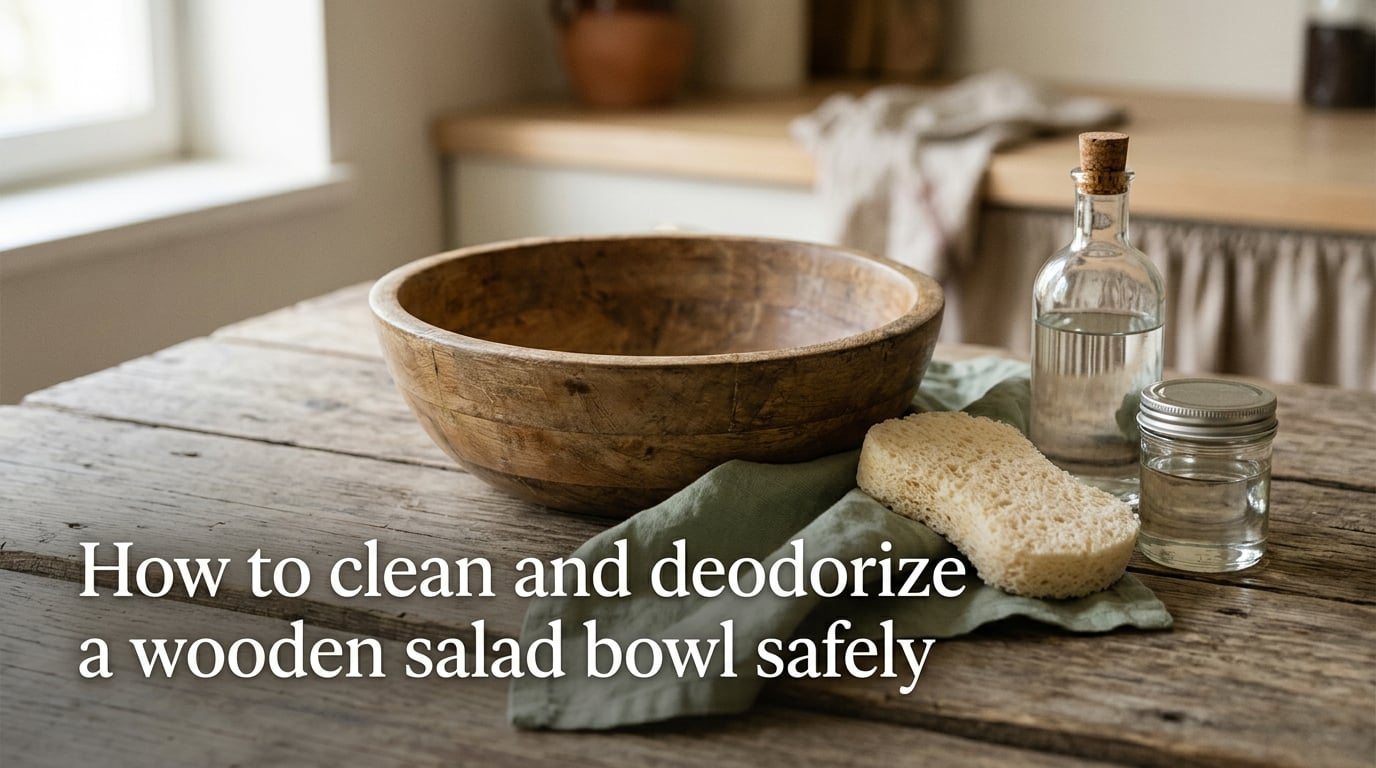
If you have ever held a beautiful wooden salad bowl over the sink and hesitated before running the tap, you are not alone. I have talked with plenty of home cooks on forums who feel nervous about washing wooden bowls with soap and water, worried they might ruin the finish or trap bacteria inside the grain. The good news is that learning how to clean and deodorize a wooden salad bowl safely is surprisingly straightforward once you understand how wood behaves. With the right routine, your bowl stays beautiful, food-safe, and odor-free for decades.
I have spent years testing different cleaning methods on my own collection of maple, cherry, and walnut bowls. Some techniques I learned from professional woodturners, others from trial and error after a few sticky, smelly mishaps of my own. This guide walks you through everything from quick daily cleaning to deep deodorizing and full restoration, using simple household ingredients you probably already have in your kitchen.
Whether you just brought home a brand-new bowl or inherited a neglected one that smells like last year’s garlic dressing, the steps below will help you clean wooden salad bowl surfaces without causing damage. You will learn how to sanitize safely, remove stubborn odors, prevent cracking, and keep that rich natural finish looking fresh.
Table of Contents
Why Wooden Salad Bowls Need Special Care?
Wood is a natural, porous material that absorbs moisture, oils, and odors more readily than glass or ceramic. That porosity is exactly what makes wooden bowls feel warm and beautiful in your hands, but it also means they cannot handle the same cleaning methods as your everyday dinner plates. When water seeps into the wood fibers and stays there, it causes swelling, warping, and eventually cracking along the grain.
Most wooden salad bowls are turned from dense hardwoods like maple, cherry, walnut, or beech. These tight-grained woods resist moisture better than softwoods, but they still need protection. A well-seasoned bowl has a thin layer of food-safe oil that fills the pores and creates a barrier against liquids and bacteria. Strip that protective layer through harsh cleaning, and the wood becomes vulnerable.
The key to safe cleaning is speed and gentleness. You want to remove food residue quickly, use minimal water, and dry the surface immediately. Skip the soaking, skip the dishwasher, and never use harsh chemicals that can eat through the oil finish and leave the wood exposed.
Supplies You Need to Clean a Wooden Bowl
You do not need any specialty products to clean wooden salad bowl surfaces properly. Here is what I keep on hand for routine cleaning and occasional deep treatments:
Soft sponge or clean microfiber cloth
Mild dish soap (a basic, unscented formula works best)
Warm water (never hot)
Clean, absorbent kitchen towel
White vinegar for sanitizing
Baking soda for odor removal
Coarse salt and a fresh lemon for stain treatment
Food-grade mineral oil for re-seasoning
Optional: beeswax-based board butter or cream
That is it. Most of these items cost under ten dollars combined, and they will keep your bowls in excellent shape for years.
How to Clean and Deodorize a Wooden Salad Bowl Safely
The safest way to clean a wooden salad bowl is a fast five-step process: rinse, wash, rinse, towel dry, and air dry. Each step takes only seconds, and doing them in order prevents the moisture damage that ruins wooden bowls over time.
Step 1: Rinse Immediately After Use
As soon as you finish serving, empty the bowl and give it a quick rinse under warm running water. The goal here is to flush away loose food particles before they have a chance to dry and stick to the wood surface. Oily dressings, in particular, can seal themselves onto the bowl if left sitting, and once they harden they become much harder to remove without aggressive scrubbing.
I have made the mistake of leaving a dressing-coated bowl overnight, and the cleanup the next morning took three times as long. A ten-second rinse right after dinner saves you real effort later. Keep the water warm, not hot, because high temperatures can soften the oil finish and drive moisture deeper into the grain.
Step 2: Wash Gently with Mild Dish Soap
Apply a small drop of mild dish soap to a damp soft sponge and wipe the inside and outside of the bowl in gentle circular motions. A surprising number of people worry that soap will damage wooden bowls, but a mild, diluted detergent used briefly is perfectly safe. The soap lifts residual oils and food films without penetrating the wood if you work quickly.
Avoid abrasive scouring pads, steel wool, or scrubbing brushes with stiff bristles. These scratch the wood surface and strip away the protective oil layer faster than you might expect. A soft sponge or microfiber cloth is all you need for everyday washing.
Step 3: Rinse Thoroughly with Warm Water
Rinse the bowl under warm water until no soap residue remains. Any leftover detergent can leave a faint film that affects the taste of your next salad and slowly degrades the oil finish. Run your fingers along the inside surface to check for slickness, which indicates soap is still present.
Keep the rinse brief. You are flushing the surface, not soaking the bowl. Total contact time with water from start to finish should stay under a minute for routine cleaning.
Step 4: Towel Dry Right Away
This step matters more than most people realize. The moment you finish rinsing, grab a clean, absorbent kitchen towel and wipe the entire bowl dry, inside and out. Do not set it in a drying rack to drip-dry, and never leave it sitting wet on the counter. Standing water is the number one cause of warping, cracking, and mold growth in wooden bowls.
I dry my bowls immediately, then give them one more wipe about five minutes later to catch any residual moisture that wicks back to the surface from inside the grain. That second pass takes seconds and makes a real difference over time.
Step 5: Air Dry Completely Before Storing
After towel drying, stand the bowl upright on the counter or place it upside down on a clean towel in a well-ventilated spot. Let it air dry for at least an hour, ideally overnight, before putting it away in a cabinet. This gives any moisture trapped deep in the grain time to evaporate fully.
Never stack a freshly washed wooden bowl inside another bowl or store it in an enclosed space while damp. Trapped moisture creates the perfect environment for mold and mildew, and it can leave your bowl smelling musty within days.
How to Sanitize a Wooden Bowl Safely
The most reliable way to sanitize a wooden bowl is with a 50/50 solution of white vinegar and water. Vinegar is naturally antimicrobial, food-safe, and gentle enough that it will not damage an oil finish when used occasionally.
To sanitize your bowl, mix equal parts white vinegar and warm water in a small bowl or spray bottle. Wipe or spray the solution over the entire surface of the wooden bowl, inside and out, then let it sit for one to two minutes. Rinse briefly with warm water, towel dry immediately, and allow the bowl to air dry completely.
You can also use 3 percent hydrogen peroxide as an alternative sanitizer. Apply it the same way, let it sit briefly, then rinse and dry. I use the vinegar method after preparing raw meat in a wooden bowl, or any time I am serving food to guests and want extra peace of mind. For everyday salad use, sanitizing once every week or two is plenty.
Avoid bleach at all costs. Bleach is too harsh for wood, dries out the fibers, and can leave toxic residue in the porous grain. Stick with vinegar or hydrogen peroxide for food-contact surfaces.
How to Remove Odors from a Wooden Salad Bowl
Wooden bowls absorb odors over time, especially from pungent ingredients like garlic, onion, and certain dressings. If your bowl has developed a noticeable smell, a few household ingredients can neutralize it without any harsh chemicals.
The baking soda paste method is my go-to solution for persistent odors. Mix two tablespoons of baking soda with just enough water to form a thick paste. Spread the paste evenly across the inside of the bowl, covering the entire surface. Let it sit for 15 to 30 minutes so the baking soda can absorb trapped odors from the wood. Rinse with warm water, wash gently with mild soap, and dry immediately.
For lighter odors, the lemon and salt technique works wonders. Cut a fresh lemon in half and dip the cut side in coarse salt. Rub the salted lemon over the inside of the bowl using circular motions, squeezing gently to release the juice. The citric acid neutralizes odors while the salt provides gentle abrasion to lift residue. Rinse, wash, and dry as usual.
If a particularly strong smell persists after one treatment, repeat the process the following day. In my experience, two rounds of baking soda paste handle even the most stubborn garlic odors in older bowls.
One important note: never try to deodorize a wooden bowl by soaking it in a vinegar bath or submerging it in water. Prolonged liquid exposure causes more damage than the odor ever could. Always apply treatments to the surface and rinse quickly.
How to Remove Stains from Wooden Bowls
Stains from berries, beets, tomato-based dressings, and other colorful foods can leave dark patches on lighter woods like maple and beech. These stains sit in the surface layer of the grain and usually respond well to gentle treatment.
The salt and lemon method described above doubles as an effective stain remover. The mild acidity of the lemon juice breaks down pigment compounds while the coarse salt lifts them from the wood surface. Rub the stained area firmly but gently, then rinse and dry.
For deeper stains, make a paste of baking soda and a small amount of hydrogen peroxide. Apply it to the stained area only, let it sit for 10 minutes, then wipe away and rinse. This combination has a mild bleaching effect that can lighten stubborn discoloration without damaging the wood.
If stains have penetrated too deeply for surface treatments to reach, you may need to sand the bowl lightly. Use fine-grit sandpaper (400 grit or higher) and sand only the stained area in the direction of the grain. Wipe away dust, then re-oil the entire bowl to restore the finish. I cover this process in detail in the restoration section below.
How to Restore an Old or Sticky Wooden Bowl
One of the most common questions I see in woodworking forums is how to fix a wooden salad bowl that has become sticky, dull, or coated in rancid oil buildup. This happens when the wrong oils are used over time, or when the original finish has broken down and turned gummy. The good news is that most neglected bowls can be brought back to life with a straightforward restoration process.
Step 1: Assess the Damage
Run your hand over the surface of the bowl. If it feels tacky, waxy, or rough, the finish has degraded and needs to be removed. If the wood looks dry and pale with visible cracks, it needs oil rather than stripping. Some bowls need both, and that is fine.
Step 2: Remove Sticky Buildup
For sticky, gummy residue, the most effective approach is to scrub the surface with coarse salt and a small amount of warm water. Pour a tablespoon of coarse salt into the bowl, add just enough warm water to make a paste, and scrub with a soft sponge in circular motions. The salt acts as a gentle abrasive that lifts old oil without scratching the wood.
If salt alone does not break through the buildup, use a Scotch-Brite pad or fine steel wool (grade 0000) with a little mineral oil as a lubricant. Work in the direction of the grain and apply light pressure. Rinse away all residue and dry thoroughly.
Step 3: Light Sanding for Deep Restoration
For bowls with deep stains, rough patches, or heavy grime, light sanding is the next step. Start with 220-grit sandpaper and sand the entire surface evenly, always moving with the grain. Follow up with 320 or 400 grit to smooth the surface further. Do not over-sand; the goal is to remove the damaged top layer, not reshape the bowl.
Wipe away all sanding dust with a barely damp cloth, then dry immediately. The bowl should now look fresh, with clean, bare wood ready to accept a new oil finish.
Step 4: Re-Oil the Bowl
Apply a generous amount of food-grade mineral oil to the entire bowl, inside and out. Let it soak in for at least 30 minutes, or overnight for very dry wood. Wipe off any excess oil that has not absorbed, then apply a second coat. I cover the full oiling process in the next section.
Once the oil has fully absorbed and the surface is no longer tacky, your restored bowl is ready to use. A properly restored wooden bowl looks almost new and will provide years of additional service with regular care.
Seasoning and Oiling Your Wooden Bowl
Seasoning is the process of applying food-safe oil to a wooden bowl to protect the wood, enhance its natural color, and create a moisture barrier. Think of it as moisturizer for your bowl. Without regular oiling, the wood dries out, becomes brittle, and cracks along the grain lines.
The best oil for wooden salad bowls is food-grade mineral oil. It is inexpensive, odorless, tasteless, and will not go rancid over time. Apply a generous amount to a clean cloth or paper towel and rub it evenly over the entire surface of the bowl, inside and out. Let the oil soak in for at least 30 minutes, though overnight is ideal for dry bowls. Buff off any excess with a clean cloth.
For new bowls, I recommend oiling once a week for the first month to build up a solid protective layer. After that, oil once a month for bowls used daily, or every two to three months for occasional use. You will know it is time to re-oil when the wood looks pale, dry, or slightly rough to the touch.
Some people prefer a beeswax-based board butter or cream as a top coat over mineral oil. These products combine mineral oil with beeswax or carnauba wax, creating a harder, more durable surface layer. They are excellent for bowls that see heavy use, but mineral oil alone is perfectly adequate for most home kitchens.
Avoid olive oil, vegetable oil, and other cooking oils at all costs. These oils go rancid over time, causing the sticky, smelly buildup that leads to the restoration nightmare described above. Stick with mineral oil or a dedicated food-safe board cream.
Common Mistakes to Avoid When Cleaning Wooden Bowls
Most damage to wooden salad bowls comes from a handful of avoidable mistakes. Here are the ones I see most often:
Putting the bowl in the dishwasher. The combination of prolonged heat, steam, and detergent will warp, crack, and destroy a wooden bowl in a single cycle. This is the fastest way to ruin a good bowl permanently.
Soaking the bowl in the sink. Leaving a wooden bowl submerged in water allows moisture to penetrate deep into the grain, causing swelling and warping. Even a brief soak of 15 minutes can cause visible damage.
Using hot water. Hot water softens the oil finish and opens the wood pores, allowing more moisture to seep in. Always use warm water, and keep contact time short.
Letting the bowl air dry in a rack. Standing water on the surface and trapped moisture underneath the bowl lead to mold, mildew, and warping. Always towel dry first, then air dry in an open position.
Using cooking oils instead of mineral oil. Olive oil, coconut oil, and vegetable oil all eventually go rancid and turn sticky. Only use food-grade mineral oil or a beeswax-based product formulated for wooden kitchenware.
Storing while damp. Even slightly damp bowls stored in enclosed cabinets develop musty odors and mold. Always allow a full hour or overnight drying before putting bowls away.
Are Wooden Bowls Actually Sanitary?
Many people assume that porous wood must be less sanitary than glass or plastic, but research suggests the opposite. Studies dating back to the 1990s found that bacteria, including salmonella and E. coli, survive far longer on plastic cutting surfaces than on wood. Wood appears to draw bacteria into its interior through capillary action, where they die off as the wood dries, unable to multiply.
Hardwoods like maple and walnut also contain natural compounds with mild antimicrobial properties. Combined with proper cleaning and occasional vinegar sanitizing, a well-maintained wooden bowl is a safe, hygienic surface for serving salads and other foods.
The key is consistent care. A bowl that is cleaned promptly, dried fully, and oiled regularly will resist bacteria naturally. A neglected, sticky, cracked bowl creates crevices where food and bacteria can accumulate, so maintenance is what keeps wooden bowls sanitary.
Storage and Long-Term Care Tips
Proper storage extends the life of your wooden bowls significantly. Store them in a cool, dry place away from direct heat sources like stoves, radiators, and sunny windowsills. Heat dries out the wood and accelerates cracking, while humidity fluctuations cause repeated expansion and contraction that stresses the grain.
If you stack bowls, place a soft cloth or felt pad between them to prevent scratching. Avoid stacking more than two or three bowls deep, as the weight can compress and distort thinner bowls over time.
I give my wooden bowls a seasonal check-up four times a year. I inspect for any cracks, dry spots, or sticky patches, then re-oil as needed. This takes about ten minutes per bowl and catches small issues before they become serious problems. A bowl that receives this minimal attention can easily last a lifetime.
If you live in a very dry climate, consider oiling more frequently and storing bowls away from heating vents. In humid climates, pay extra attention to thorough drying and ventilation to prevent mold.
FAQs
How do you remove the smell from a wooden bowl?
Mix two tablespoons of baking soda with enough water to form a paste, spread it inside the bowl, and let it sit for 15 to 30 minutes. Rinse with warm water, wash with mild soap, and dry immediately. For lighter odors, rub the inside with a lemon half dipped in coarse salt, then rinse and dry.
Are wooden salad bowls sanitary?
Yes. Research shows that bacteria survive longer on plastic surfaces than on wood. Hardwoods like maple and walnut draw bacteria into their interior where the organisms die off as the wood dries. With proper cleaning, drying, and occasional vinegar sanitizing, wooden bowls are a safe, hygienic serving surface.
How do you sanitize a wooden salad bowl?
Mix equal parts white vinegar and warm water. Wipe or spray the solution over the entire bowl surface, let it sit for one to two minutes, then rinse briefly with warm water and towel dry immediately. Hydrogen peroxide at 3 percent concentration works as an alternative. Never use bleach on wooden bowls.
Do wooden salad bowls need to be oiled?
Yes. Food-grade mineral oil keeps the wood hydrated, prevents cracking, and maintains the moisture barrier that protects against stains and bacteria. Oil new bowls once a week for the first month, then monthly for daily use or every two to three months for occasional use. Avoid olive oil and other cooking oils, which go rancid.
How do you restore an old wooden salad bowl?
Scrub the surface with coarse salt and warm water to remove sticky buildup, sand lightly with 220 to 400 grit sandpaper in the direction of the grain, wipe away all dust, then apply food-grade mineral oil generously and let it soak in overnight. Buff off excess oil and repeat with a second coat if the wood still looks dry.
Can you put a wooden salad bowl in the dishwasher?
No. The heat, steam, and detergent in a dishwasher will warp, crack, and destroy a wooden bowl in a single cycle. Always wash wooden bowls by hand with warm water and mild dish soap, then towel dry immediately and air dry completely before storing.
Keep Your Wooden Bowl Beautiful for Years
Knowing how to clean and deodorize a wooden salad bowl safely comes down to a few simple principles: wash quickly with mild soap and warm water, dry immediately, sanitize occasionally with vinegar, and oil regularly with food-grade mineral oil. Avoid the dishwasher, never soak, and steer clear of cooking oils that go rancid.
Treat your bowl with this routine and it will reward you with decades of beautiful, food-safe service. A well-cared-for wooden salad bowl actually improves with age, developing a richer patina that no factory finish can replicate. Start with the daily five-step cleaning process, add vinegar sanitizing when needed, and give your bowl a seasonal oil check-up four times a year.
If you are dealing with a sticky, neglected, or odorous bowl right now, do not throw it out. Work through the restoration steps above, and you will likely bring it back to looking and smelling like new. Your wooden bowl has a lot of life left in it, and now you have everything you need to care for it properly in 2026 and beyond.