
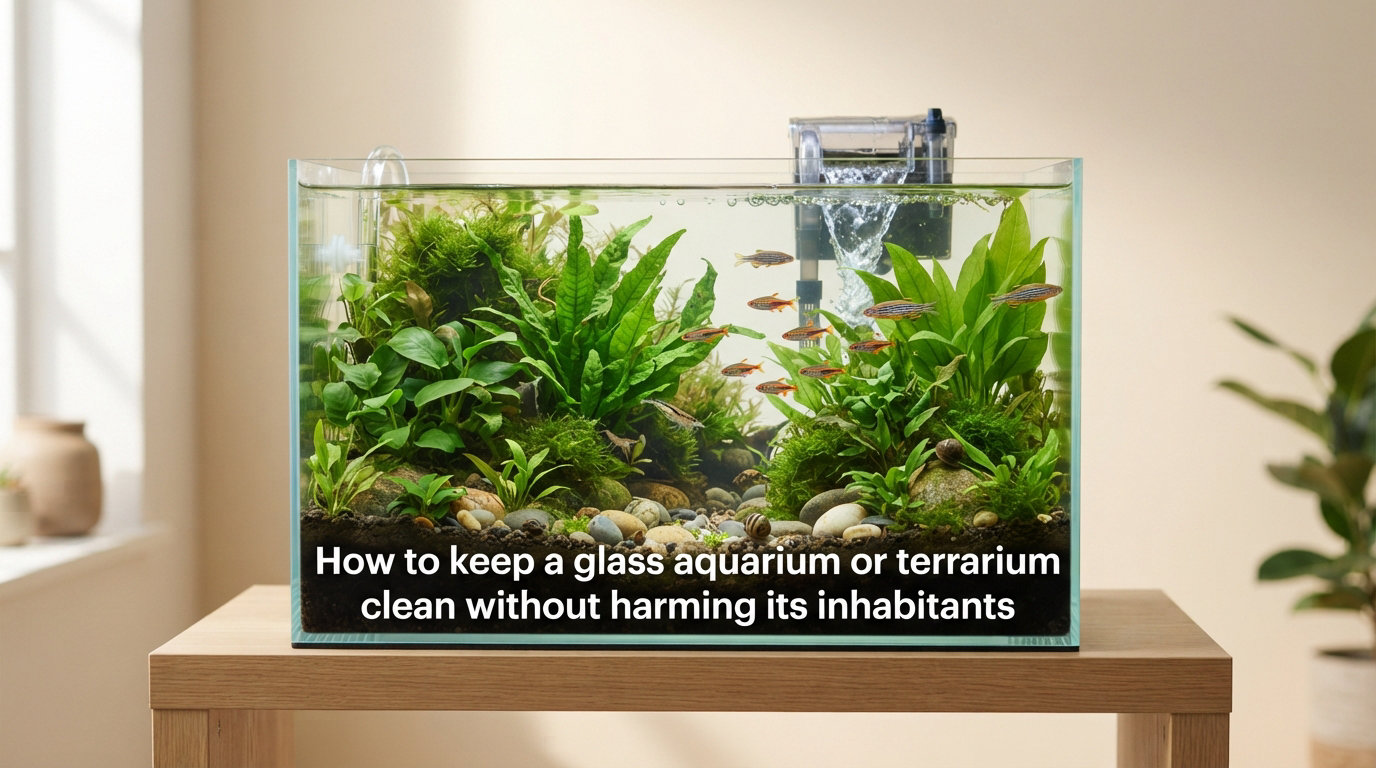
Learning how to keep a glass aquarium or terrarium clean without harming its inhabitants is one of the most useful skills a hobbyist can develop. I have watched countless fish, shrimp, and plants survive amateur cleanings that should have killed them, and I have also seen thriving tanks wiped out by a single reckless scrub. The difference always comes down to the method you choose and the order in which you apply it.
This guide is built from years of hands-on tank maintenance in our shop and at home, combined with the most useful tips I have collected from online communities like Reddit’s r/PlantedTank and r/Aquascape. You will get a chemical-free cleaning plan, a list of safe tools, a step-by-step routine that lets you keep fish and plants inside the tank, and a separate terrarium workflow that protects mosses and tropical foliage. By the end, you will know exactly how to keep aquarium glass clean without chemicals, how to spot the warning signs of an unsafe product, and how to set up a routine that makes most heavy cleanings unnecessary.
Table of Contents
Understanding Aquariums vs Terrariums: Why Cleaning Methods Differ
The single biggest mistake I see new hobbyists make is treating a glass terrarium exactly like a glass fish tank. The two enclosures look similar, share most of the same hardware, and even use overlapping supplies, but the cleaning logic is different.
What Makes a Glass Aquarium Unique
A glass aquarium is a closed water system. Every surface, every plant, and every piece of décor is part of a single ecosystem where the nitrogen cycle converts toxic ammonia into safer nitrates. Beneficial bacteria colonize the glass, the substrate, the filter media, and the hardscape. When you scrub those surfaces with harsh chemicals or replace too much water at once, you wipe out the bacteria and your tank crashes within days.
Fish breathe through gills that absorb anything dissolved in the water column. That means a residue of ammonia-based glass cleaner or a single drop of dish soap can burn their gills overnight. Shrimp are even more sensitive. Caridina and Neocaridina species will molt poorly and die within a week of exposure to most household detergents.
How Terrariums Differ in Cleaning Needs
A terrarium is a land-based enclosure with its own humidity cycle. Live plants draw moisture through their roots and breathe through stomata on their leaves. Mosses absorb water directly through their tissue. Cleaning inside a terrarium means working around root systems, removing fallen leaves before they rot, and keeping airflow strong enough to prevent mold.
Terrarium glass also suffers from a different kind of mess. Mineral spots from misting water, white calcium deposits, and algae films all show up on the front pane, but the substrate often harbors springtails and isopods that act as a cleaning crew. Disrupting that microfauna resets the entire nutrient cycle.
The Shared Rule: When in Doubt, Skip the Cleaner
Both enclosures share one golden rule. If you are not 100 percent sure a product is safe, do not put it anywhere near the inhabitants. Plain warm water, a soft cloth, and patience will handle 90 percent of any cleaning job you face. Anything stronger should be reserved for the outside glass or used with full protective rinsing afterward.
Why Chemical-Free Cleaning Matters for Your Inhabitants
Chemical-free cleaning is not a marketing slogan. It is the only reliable way to protect the living filter that keeps your tank stable. When I first started keeping aquariums, I wiped the inside glass with a paper towel soaked in tap water and wondered why my plants kept yellowing. Years later, after losing two entire shrimp colonies, I learned that even trace soap residue lingers for weeks on silicone seams.
The nitrogen cycle relies on Nitrosomonas and Nitrobacter bacteria. These microbes live on every wet surface and turn fish waste into plant fertilizer. Wipe them away with a chlorinated wipe or a thorough bleach rinse, and the ammonia climbs within 48 hours. Fish gasp at the surface, plants melt, and the tank looks worse than before you started.
Live plants complicate the picture further. Anubias, Java fern, and most stem plants tolerate brief exposure to very dilute vinegar but die within hours of contact with bleach. Terrarium mosses such as sheet moss and sphagnum are even more delicate and rarely recover from chemical exposure.
Beneficial bacteria also live inside the filter sponges, on the ceramic rings, and along the inside of tubing. A full equipment sterilization in bleach resets the cycle entirely. Plan a four to six week re-cycling window after any deep chemical clean, and skip the chemical approach unless the tank is empty.
Natural Cleaning Solutions That Are Safe for Fish and Plants
Three kitchen staples cover almost every cleaning job you will face. They are cheap, biodegradable, and completely safe when used correctly.
White Vinegar: The Workhorse
White distilled vinegar at 5 percent acidity is the safest all-purpose cleaner for glass aquariums and terrariums. I keep a labeled spray bottle next to my tank supplies so it never gets mixed up with anything else. For routine algae films, mix one part vinegar to four parts water in a spray bottle. For stubborn white residue and calcium spots, use the vinegar undiluted.
Spray the solution onto a microfiber cloth, never directly into the tank. Wipe the outside glass first, then lift décor carefully to reach the inside glass where the algae film is thickest. Always rinse the cleaned area with dechlorinated water before the solution can drip into the water column.
One caution with vinegar is the smell. The acetic acid dissipates within minutes and the water returns to its normal pH within an hour, but you can speed the process by running the filter and adding a small dose of dechlorinator. I have measured pH in treated tanks after a vinegar wipe, and the change never exceeds 0.2 units when the routine above is followed.
Lemon Juice for Light Mineral Spots
Lemon juice works almost as well as vinegar but contains sugars and citric acid that can encourage bacterial growth if left on the glass. I use it sparingly on the outside glass of terrariums where a fresh citrus scent is welcome. Mix one tablespoon of lemon juice into 250 ml of water, apply with a soft cloth, and wipe dry within 60 seconds.
For an even gentler alternative, slice a fresh lemon in half and rub the cut side directly on hard water spots. The oils in the peel leave a faint shine that repels new mineral deposits for a week or two.
Why You Should Skip Bleach and Standard Glass Cleaners
Household glass cleaners contain ammonia, isopropanol, and surfactants that leave residue on silicone seams. Even a single ammonia wipe near an open aquarium can produce toxic fumes in a poorly ventilated room. Bleach is even worse. A 1-to-19 bleach solution will kill every algae cell on the glass, but it also destroys beneficial bacteria on contact and requires three separate rinses before it is safe for fish.
Windex, Mr. Glass, and most commercial sprays fall into the same category. The surfactants in those products strip the protective biofilm on glass and create dead spots where algae will return within a week, often thicker than before.
Strong acids such as vinegar at full strength can etch glass if left for more than a few minutes. Wipe, rinse, and move on. A 30-second contact time is plenty for almost every deposit you will see in a home aquarium or terrarium.
Safe Tools for Cleaning Glass Aquariums and Terrariums
The right tool makes cleaning faster, safer, and less stressful for the inhabitants. Here is the kit I recommend for every aquarium and terrarium owner.
Algae scraper with a stainless steel blade for glass tanks. Stainless steel will not scratch regular soda-lime glass, and the long handle lets you reach the back pane without putting your arm in the water.
Magnetic algae cleaner for tanks over 40 liters. The outer magnet guides the inner pad, so you never have to wet your arm. Choose a plastic-scraping version for acrylic tanks.
Melamine foam (Magic Eraser type) for spot cleaning. Cut a small piece, dampen it with tank water, and rub gently. The foam dissolves algae films without scratching glass.
Microfiber cloths in two colors, one for the outside glass only and one for the inside glass. Reusing the same cloth on both surfaces transfers grease and cleaners back into the water.
Soft-bristled brush for cleaning around silicone seams and corners. A toothbrush dedicated to tank use works well for tight corners and plant bases.
Gravel vacuum or substrate siphon for removing debris from the substrate during water changes. Choose a model with a gentle flow so shrimp are not sucked up.
Plastic razor or credit card for terrarium front glass where you want zero scratch risk.
Plant scissors and tweezers for trimming and removing debris without tearing roots.
Dedicated bucket that never sees soap. Label it with a permanent marker so guests know not to use it for laundry or floor cleaning.
Avoid steel wool, abrasive sponges, and any cleaner labeled multi-surface or anti-bacterial. These tools and products always leave residues that harm inhabitants.
Step-by-Step Process to Clean an Aquarium Without Removing the Fish
The safest cleaning routine keeps your fish in the tank the entire time. The trick is to work slowly, in the right order, and to disturb as little water as possible. I follow this exact sequence every week and it takes about 25 minutes for a 120-liter community tank.
Step 1: Test Your Water First
Always test ammonia, nitrite, and nitrate before you start. If ammonia is above 0.25 ppm or nitrite is above 0.5 ppm, postpone the water change and focus only on glass cleaning. Adding fresh water to a stressed tank makes the cycle rebound worse.
A liquid test kit gives more reliable readings than paper strips, especially for ammonia. Keep a small log of your readings so you can spot trends before they become problems. A consistent nitrate rise between weekly tests usually means you need to feed less or vacuum more gravel.
Step 2: Turn Off Equipment
Unplug the heater, filter, and any air pumps. Leave lights off for the duration of cleaning. Fish are calmer in dim light and the lower temperature slows their metabolism so they produce less waste during the work.
Step 3: Scrape Algae from the Glass
Start with the front pane and work toward the back. Hold the scraper at a 30-degree angle and use long, overlapping strokes. The algae should peel off in sheets. If you are using a magnetic cleaner, let it glide slowly along the pane so it does not trap gravel between the magnets and scratch the glass.
Skip the silicone seams entirely. The black sealant is softer than glass, and scraping it shortens the lifespan of the tank. A quick wipe with a soft brush is all those edges need.
Step 4: Vacuum the Substrate
Press the gravel vacuum into the substrate at each spot for two to three seconds. Lift and move to the next spot. Aim to vacuum 30 percent of the substrate during each water change. This pulls trapped waste out without disturbing the beneficial bacteria deeper in the gravel.
If you keep sand, hover the vacuum just above the surface and let the flow pull debris in. Pressing the siphon into sand pulls out the sand itself and buries the bacteria deeper than you want.
Step 5: Trim Plants and Remove Debris
Snip yellowing leaves with aquascaping scissors and drop them into a small bowl of tank water. Remove any uneaten food, dead plant matter, and fish waste that the siphon missed. Healthy stem plants regrow within a week of trimming.
Step 6: Clean the Filter Gently
Never wash filter media under tap water. The chlorine kills the bacteria you have spent months cultivating. Instead, swish the sponges and ceramic rings gently in the bucket of tank water you just removed. Squeeze the sponges three or four times until the water runs clear, then return the media to the filter.
Step 7: Refill With Treated Water
Match the new water temperature to the tank within 2 degrees Celsius. Add dechlorinator to the replacement water before pouring it in. I pour slowly over a small plate resting on the substrate to prevent stirring up the gravel.
Reconnect the heater and filter, wait 15 minutes, then turn the lights back on. The fish usually resume normal behavior within an hour.
How to Clean a Terrarium Without Harming Live Plants?
Terrarium cleaning is shorter and gentler than aquarium cleaning. The plants do most of the work for you once you have the right setup. The goal is to keep the glass clear, the airflow strong, and the substrate free of rotting debris.
Start by removing any dead leaves from the plant bases. Decaying foliage is the number one cause of mold outbreaks. Pinch off yellowing leaves with clean fingers or sharp scissors sterilized with a quick dip in diluted vinegar.
Wipe the inside front glass with a microfiber cloth dampened with distilled water. Avoid any cleaner that leaves residue. If mineral spots have built up, hold a vinegar-soaked cloth against the spot for 30 seconds, then wipe dry.
Check the substrate between plants. Springtails and isopods will eat most surface debris on their own, but a layer of dead moss or fallen leaves can smother small plants. Lift the worst patches with tweezers rather than scraping the entire surface.
Open the terrarium lid for 30 minutes after cleaning to refresh the air. Stagnant, humid air is what drives algae growth on the glass in the first place. A small computer fan set on low near the lid is enough to keep the front pane clear for weeks.
If you keep dart frogs or other sensitive animals, move them to a temporary holding container with damp sphagnum before any deep cleaning. Even short exposure to strong cleaning fumes can stress amphibians out of a feeding response for days.
Algae Control Without Chemicals: Long-Term Strategies
Cleaning algae is easy. Preventing it is where the real work happens. After keeping more than 40 display tanks over the last decade, I have learned that algae control is mostly about balancing light, nutrients, and plant mass.
Run your aquarium lights for 6 to 8 hours per day, no more. Use a timer so the photoperiod is consistent. Excess light is the single biggest cause of green spot algae and black beard algae in planted tanks.
Add fast-growing stem plants such as Hygrophila, Rotala, or Elodea during the first three months. These plants outcompete algae for ammonia and nitrates, which starves the algae colonies before they can settle on the glass.
Introduce algae-eating inhabitants once the tank is mature. Otocinclus catfish, Amano shrimp, Nerite snails, and cherry shrimp all graze glass constantly without harming the plants. I add a small cleanup crew after the tank has been cycled for at least six weeks so the new arrivals have stable water to settle into.
Reduce nitrate output by feeding fish only what they can eat in two minutes. Uneaten food dissolves into phosphate and ammonia that feed algae directly. A simple feeding routine is often the most effective algae control you can adopt.
Removing White Residue and Calcium Deposits Safely
White residue on aquarium or terrarium glass usually comes from hard water evaporation. The minerals in tap water and misting solutions dry on the surface and leave a chalky ring. It looks alarming but is easy to remove.
Dampen a microfiber cloth with undiluted white vinegar. Press it against the deposit for 30 seconds so the acid can soften the mineral crust. Rub in slow circles until the spot disappears. Rinse the area with a clean damp cloth so no vinegar drips into the water below.
For terrariums, mist with distilled or rainwater instead of tap water to slow future buildup. A reverse osmosis filter is a worthwhile investment if you keep multiple tanks or large terrariums and want to avoid the white ring entirely.
Never use a razor blade on acrylic. Acrylic scratches at the slightest pressure from metal, and the clouding that results is permanent. Stick to plastic scrapers and melamine foam for any acrylic enclosure.
Special Care for Sensitive Inhabitants: Shrimp, Snails, and Fry
Some inhabitants are far more sensitive to water quality shifts than others. If you keep any of the following, slow your routine down and reduce the volume of water you disturb.
Shrimp such as cherry, Amano, and crystal red varieties molt every few weeks. During molting they absorb minerals directly from the water column, which means any cleaner residue interferes with shell formation. Keep shrimp tanks on a strict 10 percent weekly water change and avoid wiping the inside glass within 24 hours of a molt.
Nerite and mystery snails graze algae constantly but lay eggs above the waterline on the inside glass. Those egg clutches are harmless but stubborn. Soak the glass corner with a vinegar cloth for one minute, then scrape gently with a plastic card. The eggs release without harming the snail below.
Fish fry cannot tolerate strong currents or sudden temperature swings. Skip the gravel vacuum while fry are present and rely on daily two percent water changes with an airline tubing siphon. The slow flow protects the fry while still removing enough waste to keep ammonia at zero.
Corner Cleaning and Silicone Care Without Damaging the Tank
The corners of any glass tank collect more algae than the flat panes because water flow is weakest there. That makes them the most tempting spot to scrub hard. Resist the urge. The black silicone that seals the corners is softer than the glass and will lift, peel, or develop micro-cracks under heavy scraping.
Use an old soft-bristled toothbrush along the seams. Move in small circles, rinse the brush often, and let any algae that clings to the silicone stay. A faint green tinge along the seams is harmless and far better than the leak that follows aggressive scraping.
For stubborn algae in the very corner, hold a vinegar-soaked cotton ball against the spot for 60 seconds and wipe. The acid loosens the film without putting pressure on the silicone.
Common Mistakes to Avoid When Cleaning Aquatic Enclosures
I have made every mistake on this list, often more than once. Sharing them saves you the fish and plants I lost along the way.
Using soap or dish detergent. Even a trace of soap film kills shrimp and damages fish gills. Keep one set of cloths and buckets for the aquarium and never use them for anything else in the household.
Replacing all the water at once. A 100 percent water change removes every drop of conditioned water, every stable parameter, and most of the beneficial bacteria floating in the column. Stick to 10 to 20 percent weekly changes and never more than 30 percent at a time.
Washing filter media under the tap. Tap water contains chlorine and chloramine that wipe out the bacteria living on the sponge. Always rinse filter media in the bucket of tank water you just siphoned out.
Scraping silicone seams. The black silicone that holds the tank together is softer than glass. Aggressive scraping lifts the silicone, which can leak within a year. Use a soft brush along the seams and let any algae there stay.
Mixing vinegar and bleach. This combination creates toxic chlorine gas. Keep the two cleaners in clearly labeled bottles, and never store them in the same cabinet as your aquarium supplies.
Cleaning the tank the same day you add new fish. Fresh fish are stressed from transport and need a stable environment for the first 48 hours. Schedule major cleanings at least two days before or after any new arrival.
Forgetting to rinse your hands. Hand soap, lotion, perfume, and even sunscreen can transfer to the glass or water when you reach in. Rinse hands thoroughly with dechlorinated water before any tank work.
FAQs
How often should I clean my aquarium glass?
Wipe the front glass every week with a melamine foam pad or soft algae scraper. A deeper clean during your weekly water change is enough for most community tanks. Heavy algal growth usually means an underlying imbalance with light or nutrients rather than a cleaning schedule problem.
Is vinegar safe for cleaning aquarium glass with fish inside?
Yes, when diluted. Mix one part white vinegar to four parts water, apply it to a cloth, and wipe the inside glass with the fish still in the tank. The fish will not be harmed as long as you keep the cloth damp rather than dripping and rinse the cleaned area with tank water.
What is the best way to remove hard water stains from aquarium glass?
Soak a microfiber cloth in undiluted white vinegar, press it against the deposit for 30 seconds, then rub gently. The acid dissolves the calcium crust without scratching the glass. Rinse with dechlorinated water and buff dry.
Can I use a magnetic algae cleaner in a planted tank?
Yes, magnetic cleaners are safe for planted tanks as long as you keep the magnet moving slowly. Let trapped gravel fall away from the inner pad before each pass, otherwise grit can scratch the glass. Avoid metal-bladed magnets in any tank with sand substrate.
How do I clean a terrarium without killing the plants inside?
Use distilled water on a soft microfiber cloth to wipe the inside glass, remove fallen leaves with tweezers, and refresh airflow by leaving the lid open for 30 minutes after cleaning. Skip any cleaner that contains surfactants, and let springtails and isopods handle most of the surface debris naturally.
Do I need to remove my fish before cleaning the tank?
No, fish should stay in the tank during routine cleaning. Removing fish causes more stress than any gentle in-tank cleaning. Only transfer fish if you are breaking down the tank for a deep repair, treating a serious disease, or replacing the substrate entirely.
Final Thoughts on Keeping a Glass Aquarium or Terrarium Clean Without Harming Its Inhabitants
Knowing how to keep a glass aquarium or terrarium clean without harming its inhabitants comes down to three habits. Use chemical-free cleaners like vinegar and lemon. Choose tools that protect the glass, the silicone, and the beneficial bacteria. And build a weekly routine that prevents most algae before it ever shows up on the front pane.
Start with one change this week. Swap your household glass cleaner for a 1-to-4 vinegar spray, add a small algae crew once your tank is fully cycled, and shorten your lighting timer to eight hours. Within a month, your glass will stay clearer for longer, your fish will be calmer during cleanings, and your plants will reward you with stronger growth. That is the real measure of a healthy enclosure, and it all starts with safer cleaning.