
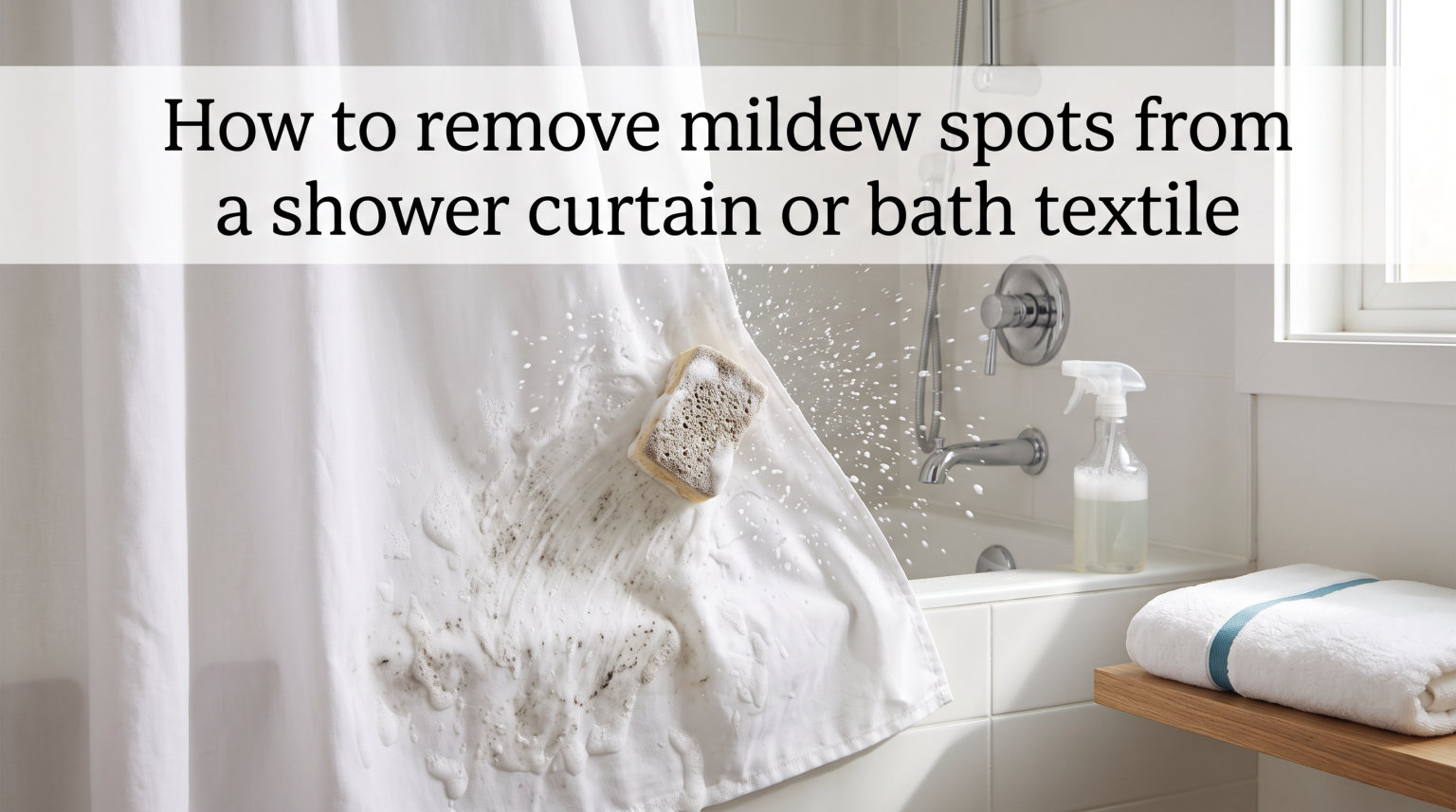
Those dark spots creeping across your shower curtain are more than just an eyesore. Mildew, a flat surface-level mold, thrives in warm, damp bathrooms and clings to shower curtains, liners, bath mats, and towels with surprising tenacity. If you want to remove mildew spots from a shower curtain or bath textile, you have several effective options ranging from a simple machine wash to targeted natural remedies.
I have dealt with this exact problem in my own bathroom. After testing multiple methods over several months, I can tell you that the right approach depends on your curtain material and how stubborn those stains have become. The good news is that most mildew-stained items can be saved using things you likely already have in your kitchen and laundry room.
This guide covers why mildew forms in the first place, three proven cleaning methods with exact measurements, prevention strategies that actually work, and clear signs for when it is time to toss a curtain for good.
Table of Contents
Why Shower Curtains and Bath Textiles Develop Mildew?
Mildew is a type of mold that grows flat on damp surfaces. It appears as black, pink, or gray spots and feeds on organic matter like soap residue, body oils, and dead skin cells that get trapped in fabric fibers or plastic coatings.
Your bathroom is basically a perfect incubator. Every hot shower fills the room with warm moisture, and poor ventilation traps that humidity inside. When the shower curtain bunches up or closes after use, water sits trapped in the folds with nowhere to evaporate.
Fabric shower curtains, cloth liners, bath mats, and towels are especially vulnerable. Their fibers hold moisture far longer than smooth plastic surfaces. Polyester and cotton blend curtains wick water deep into the weave, giving mold spores more surface area to colonize.
Soap scum makes the problem worse. It acts as a food source for mold and creates a sticky film that spores cling to. Hard water deposits compound the issue by leaving mineral buildup that traps even more moisture against the material.
How to Remove Mildew Spots From a Shower Curtain or Bath Textile
You have three main cleaning methods to choose from. The machine wash method works best for fabric curtains and many plastic liners. Hand cleaning gives you more control on delicate materials. Natural alternatives handle lighter stains without harsh chemicals. Here is exactly how to use each one.
Machine Wash Method
This is the easiest method and my go-to for fabric shower curtains and machine-safe plastic liners. Follow these steps for the best results.
Step 1: Remove the curtain and any rings or hooks. Shake it out over the tub to dislodge loose debris and standing water.
Step 2: Check the care label. Most polyester, nylon, and PEVA liners are machine washable. Vinyl or PVC curtains may require hand washing instead.
Step 3: Add the curtain to your washing machine along with two or three bath towels. The towels provide friction during the wash cycle, which helps scrub away embedded mildew stains.
Step 4: Add your cleaning agent. For white or colorfast curtains, pour in 1/2 cup of chlorine bleach. For colored curtains, use 1/2 cup of oxygen bleach (such as OxiClean) instead to prevent fading and discoloration.
Step 5: Run a warm water cycle on a gentle or normal setting. Avoid hot water on plastic liners, as high temperatures can cause warping or cracking along the fold lines.
Step 6: Skip the spin cycle for thin plastic liners to prevent tearing. For fabric curtains, a normal spin cycle is perfectly fine.
Step 7: Air dry the curtain by hanging it back on the rod while slightly damp. Let it drip dry naturally. Never machine dry plastic liners, as heat can melt or permanently damage them. Fabric curtains can go in the dryer on a low-heat setting if the care label allows.
Hand Cleaning Method
For delicate liners, vintage fabric curtains, or items explicitly labeled hand wash only, this method gives you precise control over the process.
Step 1: Fill your bathtub or a large basin with warm water. Add 1/4 cup of baking soda and a squirt of liquid laundry detergent, then mix until dissolved.
Step 2: Submerge the curtain completely and let it soak for 15 to 30 minutes. This soaking period loosens embedded mildew stains and breaks down soap scum.
Step 3: Use a soft-bristled brush or sponge to gently scrub the mildew spots. Work in circular motions, paying extra attention to the bottom edge and inner folds where mildew concentrates most heavily.
Step 4: For stubborn black mold stains that refuse to budge, make a thick paste of baking soda and water. Apply it directly to the stain, let it sit for 10 minutes, then scrub again with your brush.
Step 5: Rinse thoroughly with clean water until no soap residue remains. Leftover detergent will attract new mold growth.
Step 6: Hang the curtain to air dry. Do not wring or twist plastic liners, as this causes creasing and weakens the material.
Natural Cleaning Alternatives Without Bleach
Not everyone wants to use chlorine bleach, and you do not have to. Two common pantry staples handle mildew effectively without harsh fumes.
Vinegar method: Fill a spray bottle with undiluted white vinegar. Spray the mildew spots generously and let the solution sit for 30 minutes. Vinegar contains acetic acid, which kills roughly 82 percent of mold species. Scrub with a brush, then rinse clean. For machine washing, add 1 cup of white vinegar to the rinse cycle in place of fabric softener.
Baking soda method: Mix 1/2 cup of baking soda with just enough water to form a thick paste. Apply the paste directly to mildew stains, let it sit for 15 to 20 minutes, then scrub and rinse. You can also add 1/2 cup of baking soda directly to your washing machine load alongside your regular detergent for extra cleaning power.
Critical safety warning: Never mix bleach and vinegar together. This combination produces toxic chlorine gas that can cause serious respiratory harm and even be fatal in enclosed spaces. Choose one method per cleaning session and rinse the curtain thoroughly between different treatments.
How to Prevent Mildew From Coming Back?
Cleaning mildew once does not stop it from returning unless you change the conditions that caused it. Here is what actually works to keep your shower curtain and bath textiles clean.
Leave the curtain open after every shower. This is the single most effective prevention step you can take. Spread the curtain fully across the rod so air can circulate and water can evaporate freely. A closed curtain traps moisture in its folds and creates an ideal breeding ground for spores.
Run the bathroom fan for at least 20 minutes after you finish showering. If your bathroom does not have an exhaust fan, open a window or leave the bathroom door cracked to allow humid air to escape.
Squeegee or shake the curtain after each use. A quick shake dislodges water droplets before they settle into the fabric and begin feeding mildew growth.
Wash your shower curtain monthly. Set a recurring reminder on your phone so this becomes a habit rather than an afterthought. Regular washing removes soap residue and body oils before mildew has a chance to take hold.
Mist the curtain with vinegar spray once a week. A light vinegar mist changes the pH on the surface, making it less hospitable to mold spores between deep cleans.
Consider switching to a mildew-resistant material. PEVA, EVA, and hemp liners resist mold growth noticeably better than standard vinyl. A quick upgrade can save you months of scrubbing.
Cleaning Bath Mats, Towels, and Other Bath Textiles
Mildew does not stop at shower curtains. Bath mats, shower rugs, and towels face the same moisture problems and need their own care routine.
Bath towels should be washed after every three to four uses. If you notice a musty smell that lingers after washing, run them through a hot cycle with 1 cup of vinegar followed by a second cycle with 1/2 cup of baking soda to strip the buildup.
Fabric bath mats and shower rugs should be washed weekly at minimum. Shake them out daily to remove trapped moisture. For rubber-backed mats, avoid high heat in the dryer, as it cracks and degrades the backing over time.
Hang towels fully spread out between uses. Wadded or damp towels left on the floor will mildew within 24 hours, spreading spores to nearby textiles.
When to Replace a Mildewed Shower Curtain?
Some shower curtains are past saving. If you notice any of the following signs, it is time for a replacement rather than another round of cleaning.
The curtain has extensive black mold covering more than half its surface area. Deep-set stains that remain after two full cleaning cycles will likely never fully come out, no matter how aggressively you scrub.
The material is cracking, peeling, or shedding plastic flakes. This breakdown means the liner is degrading at a chemical level and can no longer be effectively cleaned or sanitized.
You or a family member experiences allergic reactions or respiratory issues that worsen after showering. Black mold can trigger asthma and allergy symptoms, especially in sensitive individuals and children.
A standard vinyl or PEVA liner is inexpensive to replace. When in doubt about health risks, toss it and start fresh.
FAQs
How do you get rid of black mold on shower curtains?
To get rid of black mold on a shower curtain, machine wash it with 1/2 cup of chlorine bleach for white curtains or 1/2 cup of oxygen bleach for colored ones. Add two bath towels for friction and run a warm water cycle. Air dry by hanging the curtain back on the rod. For hand washing, soak the curtain in warm water with baking soda and detergent for 30 minutes, then scrub with a soft brush.
How to get mildew stains out of shower curtain liner?
Remove mildew stains from a shower curtain liner by soaking it in a bathtub filled with warm water, 1/4 cup of baking soda, and liquid detergent for 15 to 30 minutes. Scrub the stained areas with a soft-bristled brush, focusing on the bottom edge and folds. Rinse thoroughly and hang to air dry. For stubborn stains, apply a baking soda paste directly and let it sit for 10 minutes before scrubbing.
Will OxiClean get mildew out of shower curtain?
Yes, OxiClean is effective at removing mildew from shower curtains, especially colored or patterned ones where chlorine bleach would cause fading. Add 1/2 cup of oxygen bleach to your washing machine along with the curtain and two bath towels. Run a warm cycle and air dry. OxiClean works by releasing oxygen bubbles that lift stains without the harsh effects of chlorine.
Does vinegar kill mold and mildew in the shower?
Yes, vinegar kills roughly 82 percent of mold species. Spray undiluted white vinegar directly on mildew spots, let it sit for 30 minutes, then scrub and rinse. You can also add 1 cup of vinegar to the rinse cycle when machine washing. Never mix vinegar with bleach, as this combination produces toxic chlorine gas.
Should I throw away a moldy shower curtain?
You should throw away a moldy shower curtain if black mold covers more than half the surface, if the material is cracking or peeling, or if family members experience respiratory symptoms after showering. Stains that survive two full cleaning cycles are unlikely to come out. Standard vinyl and PEVA liners are inexpensive to replace, and the health benefit of starting fresh outweighs continued scrubbing.
Does leaving the shower curtain open prevent mildew?
Yes, leaving the shower curtain fully spread open after showering is the single most effective way to prevent mildew. An open curtain allows air to circulate and water to evaporate from all surfaces. A closed curtain traps moisture in its folds, creating the warm damp environment that mildew spores need to grow. Pair this with running the bathroom fan for 20 minutes after showering for best results.
Conclusion
Removing mildew spots from a shower curtain or bath textile comes down to choosing the right method for your material and acting before stains set deep. Whether you reach for bleach, oxygen cleaner, vinegar, or baking soda, the key is consistent prevention once the curtain is clean. Leave that curtain open, run the fan, and wash monthly. A few small habits will keep your bathroom fresh and mildew-free all year long in 2026.