
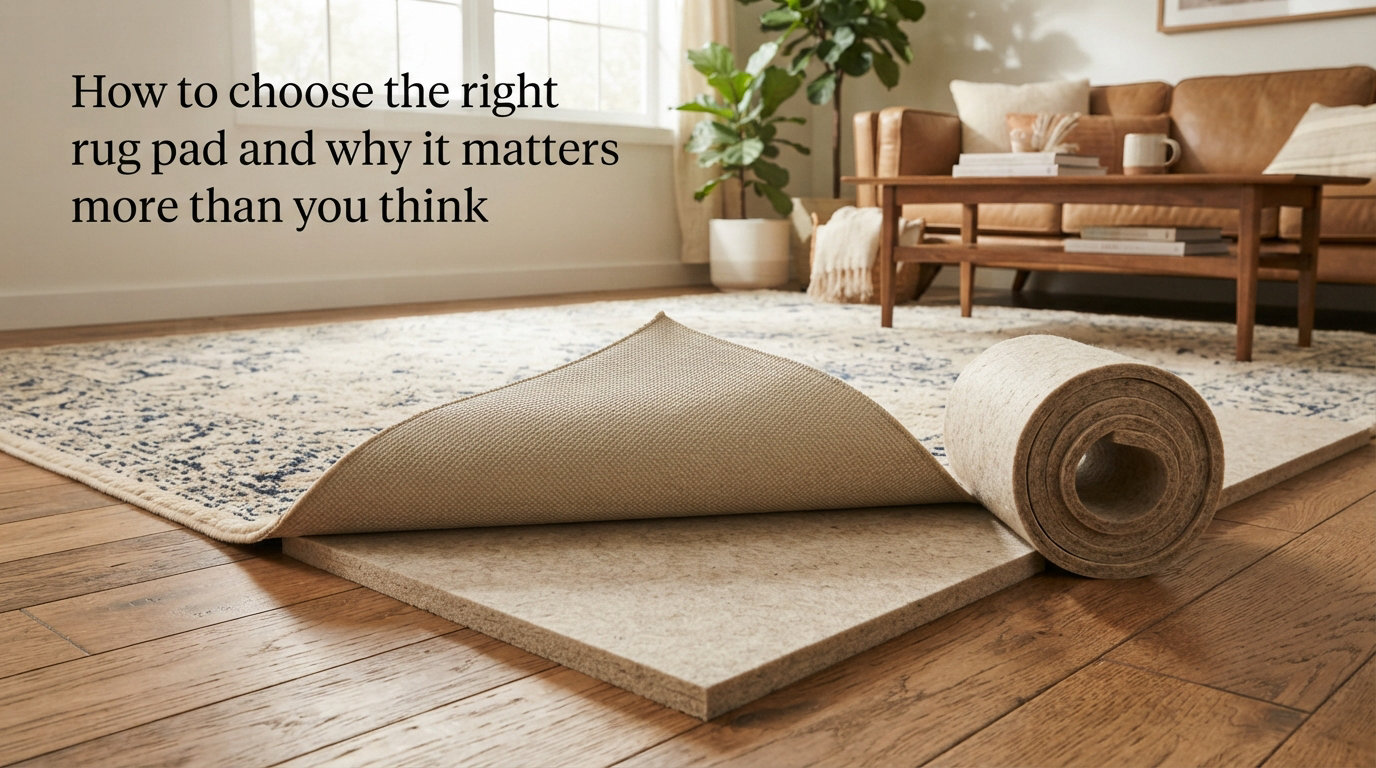
Most people treat a rug pad like an afterthought. Something to toss under the rug so it stops sliding. I used to think the same thing until I watched a three hundred dollar wool rug bleed dye onto a hardwood floor in less than a year. The culprit was not the rug. It was the missing rug pad.
How to choose the right rug pad is one of those questions that sounds simple but trips up almost everyone. The wrong pad can stain your floors, stop gripping within months, or feel like a thin sheet of cardboard under your feet. The right pad makes a rug feel like a cloud, stays put under your couch, and protects a floor that took you decades to refinish. In 2026, after helping hundreds of homeowners through this decision, I want to walk you through everything I have learned about how to choose the right rug pad, and why it matters far more than the price tag on the rug itself.
Table of Contents
What Is a Rug Pad and What Does It Actually Do?
A rug pad is a layer of material placed between your rug and the floor. Its three jobs are grip, cushion, and protection. A good rug pad keeps the rug from sliding, adds softness underfoot, and acts as a barrier between the rug backing and the floor surface.
Most rug pads are made from one of four materials: natural rubber, felt, a combination of felt and rubber, or memory foam. Each material does these three jobs differently, and that is exactly where most people get confused. A pad that grips brilliantly may feel flat. A pad that feels plush may slide around. The trick is matching the material to your floor, your rug, and the room.
Rug pads are not glamorous. Nobody posts a photo of theirs on Instagram. But the right one silently extends the life of your rug, keeps your kids from wiping out on a slick hallway runner, and saves your floors from scratches caused by furniture pressed against rug backing. That is why a rug pad is less of an accessory and more of insurance.
Why Rug Pads Matter More Than You Think
Here is the part I wish someone had explained to me before I ruined that wool rug. A rug pad is not optional. It is the foundation your rug sits on. Skip it, and you are asking a rug to do a job it was never designed to do, which is to grip a bare floor and survive years of foot traffic on its own.
The Safety Reason Most People Underestimate
Slip and fall accidents on unsecured rugs send thousands of people to the emergency room every year. I have seen it happen in my own family. A flat-woven rug on a smooth floor is essentially a trip hazard waiting for an unsuspecting sock. A non-slip rug pad with a rubber or textured backing creates friction that anchors the rug in place. For households with kids, elderly parents, or pets, this is the single biggest reason to never skip a pad.
What Cheap Pads Actually Do to Your Floors
This is the dirty secret of the rug pad world. Cheap PVC and synthetic rubber pads can stain your hardwood and tile floors. The sticker on the pad says “non-slip.” The reality is that those pads off-gas chemicals that react with floor finishes and leave a sticky, yellow residue that can be impossible to remove. I have heard from homeowners in online forums who noticed their floor finish wearing down under cheap pads within months.
Natural rubber and felt pads are different. They contain no plasticizers that can leach into polyurethane finishes. They breathe, which prevents moisture from getting trapped and turning into mold under your rug. This is why material matters more than thickness, and why the cheapest pad is almost always the most expensive choice in the long run.
Rug Longevity and Floor Protection
Every time you walk across a rug, the rug fibers grind against the floor underneath. Without a pad, that friction slowly wears the rug backing, creates bald spots, and scratches the floor. A pad acts as a shock absorber. It absorbs the impact of footsteps, distributes the weight of furniture, and keeps the rug fibers from being crushed.
A good rug pad can extend the life of a rug by years. I have seen rugs that have lasted a decade with a quality pad and rugs that looked tired after two without one. The math is simple. Pay for a pad once, or pay for a new rug and refinish later.
The Comfort and Sound Factor
Beyond safety and protection, a rug pad adds genuine comfort. Memory foam pads turn a hard floor into something soft underfoot. Felt pads add quiet. They absorb sound, which matters in apartments, upstairs bedrooms, and rooms with hard surfaces that echo. A rug without a pad looks fine. A rug with a pad feels like the room was designed around you.
The Four Main Types of Rug Pads (And When to Use Each)
Now we get to the part most guides confuse. There are four main types of rug pads, and they each do different things. Here is the comparison table I wish existed when I was learning this.
| Pad Type | Best For | Grip | Cushion | Floor Safety |
|---|---|---|---|---|
| Natural Rubber | Hardwood, tile, laminate | Excellent | Light | Very safe (no staining) |
| Felt | Larger rugs anchored by furniture | None alone | Plush | Very safe |
| Felt + Rubber | All-purpose, most situations | Excellent | Plush | Very safe |
| Memory Foam | Bedrooms, comfort-focused areas | Moderate | Very plush | Safe (good quality only) |
Natural Rubber Rug Pads
Natural rubber is the gold standard for non-slip grip. It feels like a waffle-textured mat and grips both the floor and the rug fibers with serious friction. I recommend natural rubber for any small rug on a hard floor. Throw rugs in bathrooms, kitchen mats, and entryway runners all benefit from a thin natural rubber pad. Avoid PVC pads that look similar. The real rubber does not stain. The fake stuff often does.
Felt Rug Pads
Felt pads are made from needle-punched or heat-pressed recycled fibers. They add cushion without grip. That sounds like a weakness, but for a large rug tucked under a couch and coffee table, you do not need grip. The furniture does the anchoring. Felt pads are quieter than rubber, give extra cushion, and are perfect for layering under thick rugs that need a soft foundation. Felt pads also work great on carpet, where rubber pads would actually create too much grip and cause the rug to buckle.
Felt and Rubber Combo Rug Pads
For most people, the felt and rubber combo is the answer. It combines a rubberized bottom for grip with a felt top layer for cushion. This hybrid handles most rooms and most rugs. It grips hard floors, cushions feet, and protects wood. If you only buy one style of rug pad, this is the one. Look for versions that use natural rubber, not synthetic, and dense felt, not shredded foam.
Memory Foam Rug Pads
Memory foam pads are the comfort choice. They feel amazing underfoot, almost like a foam mattress. They work best in bedrooms or anywhere you want that cloud-like cushion. They do not grip as well as rubber, so they are best for large rugs that are anchored by furniture. Viscoelastic memory foam that is at least a quarter inch thick gives the best feel without bottoming out.
How to Choose the Right Rug Pad by Rug Size?
Rug size changes the pad decision more than you would think. A small rug on a hard floor needs something different than a large rug under a dining table.
Small Rugs (Up to 4×6)
Small rugs have one job. Stay put. They are not heavy enough to anchor themselves, and they often sit in high-traffic areas like entryways. For these, you want a thin natural rubber pad. A quarter inch is plenty. Skip the thick cushion. You do not need it, and the additional height will cause the rug to buckle and slide.
Medium Rugs (5×7 to 8×10)
Medium rugs are where most living rooms and bedrooms live. They are heavy enough to stay put on their own but light enough that furniture placement matters. For these, a felt and rubber combo pad in the three-eighths to one-half inch range gives you the best of both worlds. Grip on the bottom, cushion on top, and a height that does not interfere with door clearance.
Large Rugs (9×12 and Up)
Large rugs are heavy and usually anchored by furniture. They rarely slide, so grip is less important. What matters is cushion and floor protection. A dense felt pad in the one-half inch range is the right choice here. It adds softness underfoot, protects the floor from the weight of furniture, and stays flat without any rubber grip needed.
Runners and Hallways
Runners are tricky because they need to lie flat under heavy foot traffic. A thin natural rubber pad is the answer. Anything thicker will cause the runner to ripple and become a trip hazard. Keep it under a quarter inch and prioritize grip over cushion.
Rug Pad Thickness: What Works Where
Thickness is the most over-thought and under-explained part of rug pads. Here is the rule I use. Match the thickness to the room and the amount of traffic.
For high-traffic areas like hallways, entryways, and kitchens, keep the pad thin. A quarter inch or less. Thick pads compress under heavy use and lose their cushion within months. Thin pads stay flat and grip better.
For medium-traffic living rooms and dining rooms, go medium. Three-eighths to one-half inch is the sweet spot. It adds noticeable comfort without making the rug feel unstable under furniture.
For low-traffic bedrooms and sitting areas, go thick. Half inch to three-quarter inch pads turn a hard floor into something plush. Memory foam shines here. Thicker pads do not wear out as quickly because the traffic is light.
Door Clearance Matters
One detail that gets overlooked. Measure the gap between your floor and the bottom of your doors before you choose a thick pad. I have seen people install a plush pad only to find their bedroom door no longer closes. If clearance is tight, stay under half inch or consider a low-profile pad specifically designed for door clearance.
Rug Pad Size Guide: How to Measure Correctly
The rug pad should be one to two inches smaller than your rug on all sides. This rule is not arbitrary. It prevents the pad from peeking out around the edges of the rug, which looks terrible and creates a tripping edge. A smaller pad also keeps the rug corners flat instead of curled.
For a 9×12 rug, the pad should be roughly 8 feet 10 inches by 11 feet 10 inches. For an 8×10 rug, the pad should be about 7 feet 8 inches by 9 feet 8 inches. Many rug pad companies sell pre-cut sizes that already account for this. If you are buying a custom pad, take the time to measure correctly.
Can you use a rug pad the same size as the rug? Technically yes for a rug that is anchored by furniture, but it will show at the edges if the rug shifts. The one to two inch rule exists for a reason. Stick to it.
Floor Type Considerations: Hardwood, Tile, Laminate, and Carpet
Your floor type decides which pad materials are safe. Get this wrong, and you can damage an expensive floor.
Hardwood Floors
Hardwood and natural rubber are best friends. Natural rubber grips without staining, breathes to prevent moisture buildup, and contains no plasticizers that can react with polyurethane finishes. Avoid PVC and cheap synthetic rubber pads. They are the ones that leave residue. Felt pads also work well on hardwood, especially for larger rugs anchored by furniture.
Tile and Stone
Tile and stone are forgiving. Both natural rubber and felt pads work, including memory foam. The main concern is moisture. Make sure the pad breathes so water does not get trapped underneath and cause mildew. Avoid solid foam pads that do not allow airflow.
Laminate and Vinyl
Laminate and vinyl are sensitive. Anything too sticky can bond with the floor surface and cause damage when moved. Choose a natural rubber pad with a low-tack grip. Avoid aggressive adhesive pads. Felt pads also work well here because they have no grip at all.
Wall-to-Wall Carpet
Yes, you can use a rug pad on carpet. But not a rubber one. Rubber on carpet creates too much grip, which causes the rug to buckle and wrinkle. Use a thin felt pad. The felt reduces friction between the rug and carpet backing, which is what causes wear. Avoid thick pads because they shift underfoot on a soft surface.
Radiant Heated Floors
Radiant heated floors need a low-profile pad that does not block heat transfer. A thin natural rubber pad or a low-profile felt pad works well. Avoid thick memory foam, which acts as insulation and reduces the efficiency of your heating system.
Common Mistakes to Avoid When Buying a Rug Pad
After years of helping people through this, I see the same five mistakes over and over.
The first mistake is buying the cheapest pad. Cheap pads use synthetic materials that can stain your floor, lose grip quickly, and fall apart. Spend a little more for natural rubber or felt. You will replace the cheap pad twice before you wear out the good one.
The second mistake is sizing the pad to match the rug exactly. The pad should be one to two inches smaller. Same-size pads show at the edges and create tripping hazards when the rug shifts.
The third mistake is choosing the wrong material for the floor. PVC pads on hardwood. Rubber pads on carpet. Thick pads on top of radiant heat. Each of these combinations causes problems.
The fourth mistake is ignoring door clearance. A thick pad may raise your rug above the bottom of a door, and you will not notice until the door refuses to close. Measure first.
The fifth mistake is skipping the pad entirely on a heavy rug. Even a heavy rug moves. Foot traffic, vacuuming, and kids playing all shift a rug over time. A pad keeps it where you put it.
Frequently Asked Questions
What size rug pad do I need for a 9×12 rug?
For a 9×12 rug, choose a pad that is about 8 feet 10 inches by 11 feet 10 inches. The pad should be one to two inches smaller than the rug on all sides so the edges do not show and the corners stay flat. Most rug pad brands sell pre-cut sizes in this range.
How thick should an area rug pad be?
Match thickness to traffic. Quarter inch or less for high-traffic areas like hallways and entryways. Three-eighths to one-half inch for living rooms and dining rooms. Half inch to three-quarter inch for low-traffic bedrooms where you want extra cushion. Always check door clearance before choosing a thick pad.
What is the best area rug pad for hardwood floors?
Natural rubber is the best rug pad for hardwood floors. It grips without staining, breathes to prevent moisture buildup, and contains no plasticizers that react with polyurethane finishes. Avoid PVC and cheap synthetic rubber pads, which can leave residue and damage floor finishes over time.
Do I really need a rug pad?
Yes. A rug pad prevents slipping, protects floors from scratches and staining, extends the life of your rug, and adds comfort and sound absorption. Skipping a rug pad risks floor damage, rug wear, and trip hazards, especially for small rugs on hard floors or households with kids and pets.
Should rug pad be the same size as the rug?
No. The rug pad should be one to two inches smaller than the rug on all sides. A same-size pad shows at the edges when the rug shifts and creates a tripping hazard. A slightly smaller pad keeps the rug corners flat and the edges hidden.
Can rug pads damage hardwood floors?
Yes, cheap PVC and synthetic rubber pads can damage hardwood floors. They can off-gas chemicals that react with polyurethane finishes, leave sticky residue, and even wear down the floor surface. Natural rubber and felt pads are safe for hardwood and will not cause damage when used correctly.
Conclusion
Learning how to choose the right rug pad takes ten minutes and saves you years of headaches. Pick the right material for your floor, size the pad one to two inches smaller than your rug, and match thickness to the room. That is the whole game. Treat the rug pad as the foundation it is, not the afterthought it has always been marketed as, and your rugs and floors will thank you for it in 2026 and well beyond.