
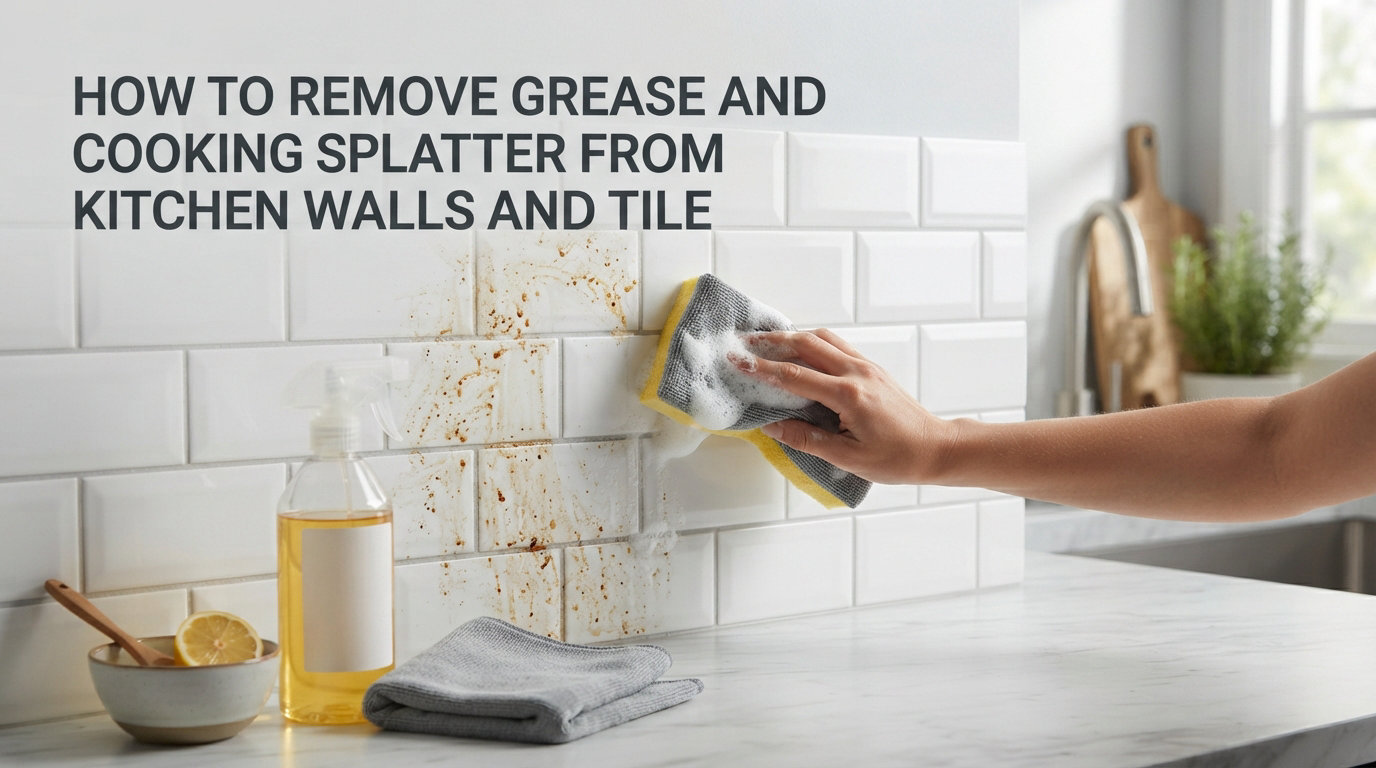
That sticky film on the wall behind your stove is more than just an eyesore. Every time you fry, saute, or even boil, tiny droplets of oil launch into the air and settle on every nearby surface. Over weeks and months, that cooking splatter builds into a stubborn layer that regular wiping will not touch.
The good news is you can remove grease from kitchen walls using supplies you probably already have at home. I have tested every method in this guide in my own kitchen, from gentle baking soda pastes to heavy-duty solutions for decades-old build-up. Whether you are dealing with painted drywall, ceramic tile, or a stainless steel backsplash, I will walk you through exactly what works.
Here is everything you need to know about removing grease and cooking splatter from kitchen walls and tile, including step-by-step instructions, surface-specific tips, and ways to stop the problem from coming back.
Table of Contents
Why Grease Sticks to Kitchen Walls?
Grease sticks because of a simple chemical fact: oil and water do not mix. When cooking oil heats up, it becomes thinner and atomizes into microscopic droplets. Those droplets float through the air, cool down as they travel, and land on your walls.
Once cooled, the grease hardens into a tacky film. It grabs onto dust, food particles, and even more oil. Each layer bakes on a little harder than the last, which is why old grease feels almost like glue.
This is why plain water and a sponge will not cut it. You need something that can break down the molecular bonds holding that grease together. That is where surfactants (like dish soap), mild acids (like vinegar), and gentle abrasives (like baking soda) come in.
Supplies You Will Need
Before you start, gather these supplies. Most are already in your pantry or under the sink.
Baking soda
White vinegar (distilled)
Liquid dish soap (Dawn works especially well)
Warm water
Two microfiber cloths or soft sponges
A spray bottle
A putty knife or plastic scraper (for thick build-up)
Rubber gloves
Clean paper towels
Optional: isopropyl alcohol (70% or higher) for stubborn spots
Optional: lemon juice for a natural citrus alternative
Having everything ready before you start saves you from stopping mid-clean with greasy hands.
How to Remove Grease from Kitchen Walls: Best Methods
I have ranked these five methods from most gentle to most powerful. Start with the gentlest option and work your way up if the grease does not budge.
Method 1: Baking Soda Paste
This is the most popular DIY method, and for good reason. Baking soda is a mild abrasive that scrubs away grease without scratching most surfaces. It also reacts with grease to help break it down.
What you need: 3 tablespoons baking soda, 1 cup warm water (or enough to make a thick paste).
Steps:
Mix the baking soda and warm water in a small bowl until you get a spreadable paste. It should be thick enough to cling to a vertical wall without dripping.
Apply the paste directly to the greasy area using a sponge or your gloved fingers. Cover every greasy spot with a layer about 1/8 inch thick.
Let it sit for 5 to 10 minutes. This gives the baking soda time to penetrate and soften the grease.
Scrub gently in small circular motions. You do not need to press hard. The baking soda particles do the work.
Wipe away the paste and lifted grease with a damp microfiber cloth.
Rinse the area with clean warm water and dry with a paper towel.
This method takes about 15 minutes per wall section. It works on tile, painted walls, and stainless steel, but always test a small hidden area first on painted surfaces.
Method 2: White Vinegar Solution
White vinegar is a natural degreaser thanks to its acetic acid content. The acid cuts through grease molecules and dissolves them. It also deodorizes, which helps with lingering cooking smells.
What you need: 1/2 cup white vinegar, 1/4 cup baking soda, 1 gallon warm water.
Steps:
Mix a solution of 1/2 cup white vinegar, 1/4 cup baking soda, and 1 gallon of warm water in a bucket or large bowl. It will fizz when the vinegar and baking soda combine, which is normal.
Dip a microfiber cloth into the solution and wring it out so it is damp, not dripping.
Wipe the greasy wall using broad, overlapping strokes. Work from the bottom up so the solution does not run down and leave streaks.
For stubborn spots, spray undiluted white vinegar directly on the grease and let it sit for 3 to 5 minutes before wiping.
Rinse with a clean, damp cloth and dry the surface completely.
This method takes about 10 minutes per section. Vinegar is safe for ceramic and porcelain tile, stainless steel, and most painted walls. Skip it on natural stone like marble, because the acid can etch the surface.
Method 3: Dish Soap Method
Liquid dish soap is designed specifically to break down cooking grease. It contains surfactants that surround oil molecules and lift them away from surfaces so water can rinse them off. This is the method I reach for first in my own kitchen.
What you need: 2 tablespoons liquid dish soap, 2 cups warm water.
Steps:
Mix 2 tablespoons of liquid dish soap into 2 cups of warm water. Dawn is a popular choice because it is formulated to cut through grease, but any quality dish soap will work.
Dip a soft sponge into the soapy water and squeeze out the excess.
Scrub the greasy area in circular motions, working the soap into the grease build-up.
Let the soapy solution sit on the wall for 2 to 3 minutes if the grease is thick.
Wipe away the loosened grease with a damp cloth, rinsing frequently.
Follow with a clean water rinse and dry with a paper towel or microfiber cloth.
This method takes 5 to 10 minutes per section. It works on virtually every kitchen surface and is the safest option for painted walls because dish soap is pH-balanced and gentle.
If regular dish soap is not strong enough, Reddit users in r/CleaningTips swear by dissolving a dishwasher pod in hot water. The concentrated enzymes in dishwasher detergent tackle grease that dish soap leaves behind. Use this as a heavy-duty option, but test it on a small area first since it can be harsh on delicate paint.
Method 4: Lemon Juice Natural Degreaser
Lemon juice contains citric acid, which works similarly to vinegar but leaves behind a fresh, clean scent. It is a great option if you want to avoid the vinegar smell.
What you need: Juice of 2 lemons (about 1/4 cup), 2 cups warm water.
Steps:
Mix the lemon juice with 2 cups of warm water in a spray bottle.
Spray the solution generously on greasy areas and let it sit for 5 minutes.
Wipe with a microfiber cloth in circular motions.
Rinse with clean water and dry.
This method takes about 10 minutes and works well on light to moderate grease. For heavier build-up, combine lemon juice with baking soda to create a citrus-scented scrubbing paste.
Method 5: Isopropyl Alcohol for Stubborn Grease
When nothing else works, isopropyl alcohol is your secret weapon. It dissolves grease on contact and evaporates quickly without leaving residue. Multiple Reddit users in cleaning forums report it works on years of caked-on build-up that standard cleaners could not touch.
What you need: 70% or higher isopropyl alcohol, a clean cloth.
Steps:
Apply isopropyl alcohol directly to a clean cloth. Do not spray it on the wall, because the fumes can be strong.
Rub the greasy area in small circles. You should see the grease start to dissolve almost immediately.
Wipe away the dissolved grease with a paper towel.
Rinse the area with warm soapy water and dry thoroughly.
Always work in a well-ventilated area and wear gloves. Test on an inconspicuous spot first, because isopropyl alcohol can dull certain paint finishes or damage wallpaper. This method takes 5 to 10 minutes per section.
Surface-Specific Cleaning Guide
Different surfaces need different approaches. Here is how to handle each type of kitchen wall and tile.
Painted Kitchen Walls
Painted walls are the trickiest surface because aggressive scrubbing or harsh chemicals can strip the paint. Start with the dish soap method, which is the gentlest and safest option.
Use a soft sponge rather than an abrasive pad. Work in light, circular motions and never press hard. If the grease is old and baked on, apply the soapy solution and let it sit for 5 to 10 minutes before wiping. This gives the surfactants time to penetrate without you needing to scrub aggressively.
If you need more power, try the baking soda paste. Avoid using isopropyl alcohol or undiluted vinegar on painted walls unless you have tested a small hidden area first. Flat and matte paints are the most delicate, while semi-gloss and satin finishes can handle slightly more scrubbing.
Ceramic and Porcelain Tile
Tile is the most forgiving surface in your kitchen. Glazed ceramic and porcelain tile can handle nearly every method in this guide, including vinegar, baking soda, dish soap, and isopropyl alcohol.
For routine grease on tile, the vinegar solution works fast and effectively. Spray it on, let it sit for a few minutes, and wipe clean. For baked-on grease behind the stove, use the baking soda paste and let it sit for 15 minutes before scrubbing with a grout brush or stiff sponge.
One thing to watch: avoid using abrasive scouring powders on polished tile. They can leave micro-scratches that make the surface look dull over time and give grease more texture to cling to in the future.
Stainless Steel Backsplash
Stainless steel backsplashes collect grease easily but are also easy to clean. The key is to always wipe in the direction of the grain. Look closely at the steel and you will see faint lines running in one direction. Follow those lines to avoid scratching.
Use the dish soap method or a 50/50 mix of vinegar and water. After cleaning, polish with a dry microfiber cloth to restore the shine and remove water spots. A few drops of olive oil on a cloth can bring back the luster and leave a thin protective layer.
Wooden Kitchen Walls
Wood absorbs grease, which makes cleaning harder. Do not soak wooden walls with liquid. Instead, use a barely damp cloth with dish soap and wipe quickly.
For stubborn grease on wood, try the baking soda paste but keep it thick so it does not drip. Let it sit for just 2 to 3 minutes, then wipe away. Dry the wood immediately with a clean towel.
Avoid vinegar on wood. The acid can damage the finish over time. After cleaning, consider applying a food-safe wood oil to re-seal the surface and protect against future grease penetration.
How to Clean Greasy Grout Lines
Grout is porous, which means grease sinks deep into it and turns brown or yellow over time. This is one of the most frustrating cleaning challenges in the kitchen, and most guides skip it entirely.
Here is the method I have found works best. Make a paste of baking soda and water, but make it thicker than what you would use on tile. Press the paste directly into the grout lines using an old toothbrush. Work it in with small back-and-forth motions.
Let the paste sit for 15 minutes. Then spray the grout with undiluted white vinegar. The vinegar and baking soda will fizz, which helps lift the grease out of the pores. Scrub again with the toothbrush and wipe away the residue with a damp cloth.
For deeply stained grout, you may need to repeat this process two or three times. If the grout is still dark after multiple treatments, the grease may have penetrated too deeply. In that case, regrouting the affected lines is your best option.
Steam Cleaning for Tiles
No competitor in the current search results covers steam cleaning, which is a missed opportunity. A handheld steam cleaner is one of the most effective tools for removing grease from tile and grout without any chemicals at all.
Steam melts grease instantly. The high temperature breaks down the oil bonds, and the moisture helps lift the grease so you can wipe it away. Simply aim the steam nozzle at the greasy tile, move slowly across the surface, and wipe with a microfiber cloth as the grease loosens.
Steam cleaning is safe for ceramic and porcelain tile and is especially effective on grout lines. Do not use steam on painted walls, wallpaper, or sealed wood, because the heat and moisture can cause damage.
Preventing Grease Buildup
Removing grease is only half the battle. Keeping it from coming back saves you hours of scrubbing down the road.
Use your range hood every time you cook. Turn it on before you start cooking, not after. The fan captures airborne grease before it reaches your walls. If your kitchen does not have a range hood, consider a wall-mounted splatter screen behind your stove.
Wipe spills immediately. Fresh grease wipes off in seconds. Once it sits for a week, it takes 15 minutes of scrubbing. Keep a microfiber cloth near the stove as a visual reminder.
Install a removable backsplash. A sheet of tempered glass or stainless steel behind your stove catches splatter and can be cleaned separately. Some people use peel-and-stick tile panels that you can replace when they get too greasy.
Cook with lids. Covering pans dramatically reduces the amount of grease that escapes into the air. This one habit alone cuts wall grease by more than half.
Do a weekly wipe-down. Every week, give the wall behind your stove a quick once-over with a dish soap and water solution. This prevents layers from building up in the first place.
Common Mistakes to Avoid
Over years of testing these methods, I have seen people make the same errors repeatedly. Here are the ones that cause the most damage.
Scrubbing too hard on painted walls. Aggressive scrubbing removes paint along with the grease. Let your cleaning solution do the work. Apply it, wait, and use gentle pressure.
Mixing bleach with vinegar. This combination creates toxic chlorine gas. Never combine these two cleaners on any surface, period.
Using abrasive pads on stainless steel. Steel wool and rough scouring pads scratch the surface and create grooves where grease gets trapped permanently. Always use microfiber or soft sponges on stainless steel.
Soaking wallpaper with liquid. Liquid cleaners will soak through wallpaper seams and damage the wall underneath. Use a barely damp cloth and work quickly on wallpapered surfaces.
Expecting one treatment to remove years of build-up. Old grease that has been baking on for months or years may need three or four treatments before it fully comes off. Be patient and repeat your chosen method.
FAQs
How to get old grease splatter off walls?
For old, baked-on grease, start with a thick baking soda paste applied directly to the wall. Let it sit for 15 minutes, then scrub gently in circular motions. If that does not work, dissolve a dishwasher pod in hot water and scrub with a sponge. For the most stubborn build-up, use 70% isopropyl alcohol on a cloth to dissolve the grease on contact. You may need to repeat any of these methods two or three times for decades-old grease.
How to get grease off kitchen wall tiles?
Spray a solution of 1/2 cup white vinegar, 1/4 cup baking soda, and 1 gallon warm water onto the greasy tiles. Let it sit for 3 to 5 minutes, then wipe with a microfiber cloth. For baked-on grease, use a baking soda paste and let it sit for 15 minutes before scrubbing with a stiff sponge or grout brush. Ceramic and porcelain tile can handle all five methods in this guide.
Why does grease stick to kitchen walls?
When oil heats up during cooking, it atomizes into microscopic droplets that float through the air. As these droplets cool, they land on walls and harden into a tacky film. This film grabs dust and food particles, creating layers that build up over time. Each layer bonds more tightly than the last, which is why old grease feels almost like glue.
Does Dawn dissolve grease?
Yes, Dawn dish soap dissolves grease effectively. Dawn contains surfactants that surround oil molecules and lift them away from surfaces so water can rinse them off. Mix 2 tablespoons of Dawn with 2 cups of warm water, scrub the greasy area with a sponge, let it sit for 2 to 3 minutes, then wipe clean and rinse.
Conclusion
You do not need expensive specialty products to remove grease from kitchen walls. A combination of baking soda, white vinegar, dish soap, and a little patience will handle almost any grease problem you encounter.
The key is matching the right method to your surface. Use gentle dish soap on painted walls, vinegar and baking soda on tile, and isopropyl alcohol only for the most stubborn build-up. Start gentle, work your way up, and let the cleaning solutions sit before you scrub.
Once your walls are clean, keep them that way with a weekly wipe-down, proper range hood use, and covered pans while cooking. A few minutes of prevention saves hours of scrubbing later. Follow these methods and your kitchen walls will stay grease-free well into 2026 and beyond.