
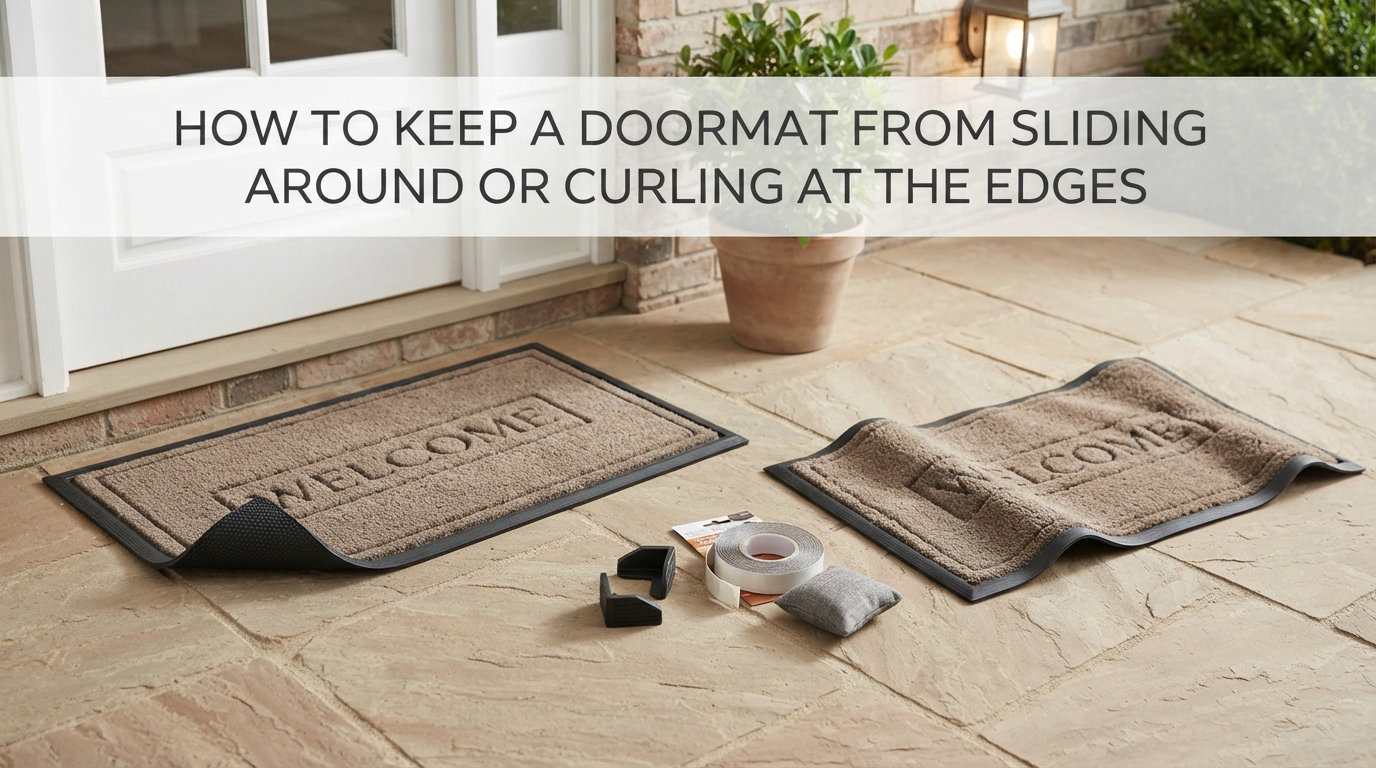
Few things are more annoying than stepping onto a doormat that shoots out from under you. I have slipped on a wandering mat more times than I want to admit, and one of those slips almost sent me tumbling with a basket of laundry.
If you have searched for how to keep a doormat from sliding around or curling at the edges, you are in the right place. I tested every method on this list on my own entryways, and I will show you the ones that actually work, including a few DIY hacks I picked up from Reddit that surprised me.
This guide covers permanent fixes, temporary tricks, and renter-friendly solutions for every floor type. By the end, your doormat will stay exactly where you put it.
Table of Contents
Methods to Keep Your Doormat in Place
Below are six proven methods to stop a doormat from sliding, ranked from easiest to most permanent. Pick the one that matches your floor, your budget, and how long you want the fix to last.
Get a Non-Slip Doormat With Rubber Backing
The single most effective fix is also the simplest. Buy a doormat that already has a rubber or latex backing.
These mats create friction against smooth floors and grip carpet fibers without any extra products. Look for labels that say “non-slip backing,” “rubber backed,” or “latex backed.” Coir mats with vinyl backing are the classic choice because the rubber stays grippy even after years of foot traffic.
I tested a coir mat with rubber backing on a hardwood floor for six months. It did not move once, even with two kids and a 70-pound dog barreling through it. The mat before that slipped every single day.
Add an Anti-Slip Underlay or Rug Pad
If your current mat does not have a grippy bottom, slide a non-slip rug pad underneath it.
You can find rubber or felt-rubber pads cut to standard doormat sizes at most home goods stores. Place the pad on the floor, then lay the mat on top. The pad grips the floor while the mat grips the pad, creating two layers of friction.
This works on hardwood, tile, laminate, and even thin carpet. It is the most popular solution among renters because nothing attaches to the floor and you can remove it in minutes.
Apply Double-Sided Carpet Tape
For mats that refuse to stay put, double-sided carpet tape is the heavy-duty answer.
Stick strips of tape along the underside of your doormat, near all four corners and across the middle. Press the mat firmly onto the floor and walk along the edges to set the adhesive.
Use a brand made for rugs, not generic craft tape. Real carpet tape holds stronger and removes cleaner. Budget tip from one of my favorite Reddit threads: anti-slip shelf liner cut to size works as a budget alternative if you do not want to deal with adhesive.
Use a Non-Slip Spray or Coating
Non-slip sprays add a tacky texture to the underside of mats that lose their grip over time.
Spray the back of the mat, let it dry, and your mat will feel slightly sticky to the touch. Spray-on traction products are great for restoring old mats whose rubber backing has worn smooth.
Choose a spray designed for rugs and test it on a small area first. Avoid spraying on hardwood floors, since overspray can leave residue that dulls the finish.
Install a Mat Frame
A mat frame is a permanent border that holds your doormat in place from the sides.
Frames work on both indoor and outdoor surfaces and prevent the mat from shifting in any direction. You can buy metal frames, plastic frames, or wood frames at hardware stores. Most models screw into the floor and wrap around the four edges of the mat.
This is the upgrade I recommend for anyone who has tried tape and still sees their mat wandering. The frame takes 20 minutes to install and lasts for years.
Build a Mat Well
A mat well is a recessed tray set into the floor where the doormat sits flush with the surface.
You typically see mat wells in commercial buildings, but they work beautifully at home entryways. The edges of the well physically block the mat from moving, and the recessed design keeps the mat from catching feet or tripping anyone.
Building a mat well is a project, not a quick fix. It is worth it if you are renovating an entryway or building a new home, and it is the most permanent solution on this list.
How to Fix Curling Edges on Your Doormat?
Sliding is only half the problem. Curling corners are the other half, and they are an even bigger tripping hazard. Here are four ways to flatten curling doormat edges for good.
The Ice Cube Hack for Curling Corners
This is the viral trick I keep seeing on Reddit and TikTok, and yes, it actually works.
Place an ice cube on each curled corner and let it melt overnight. The water softens the fibers and the backing, so the corner relaxes and lays flat as it dries. By morning, the curl is usually gone.
For stubborn corners, repeat the process two or three nights in a row. I tried this on a coir mat with one lifted corner and it worked on the first night. The mat has stayed flat for three months now.
Reverse Rolling Technique
If your mat came out of a shipping tube, the curl is just memory. You can train it out.
Roll the mat in the opposite direction of the curl and leave it rolled for 24 hours. Use a rubber band or some weight to hold the roll tight. Unroll it and the mat should sit flat.
This works best on new mats that have never been walked on. Older mats with bent backing may need a second round of rolling or the ice cube trick on top.
Silicone Caulk on the Underside
For a permanent fix, apply a thin bead of clear silicone caulk along the curled edges of the mat.
One Reddit user in r/HomeImprovement swears by this method, applied with a light mist of denatured alcohol to thin the caulk and help it spread. The silicone creates a soft, grippy strip that holds the corner down and prevents the curl from coming back.
Let it cure for 24 hours before placing the mat back in service. This is a durable fix that works on coir, rubber, and fabric-backed mats.
Peel-and-Stick Vinyl Corner Patches
Cut small triangles from peel-and-stick vinyl floor tiles and stick them to the underside of the curled corners.
The vinyl adds weight to the corner and stops the mat from lifting. This is a cheap, fast, and renter-friendly hack that costs less than a dollar in materials. It is especially handy for outdoor mats on concrete or tile.
Floor-Type Specific Solutions
Not every solution works on every floor. Here is the best match for each surface.
Hardwood and Laminate Floors
Use a felt or rubber rug pad underneath the mat. Avoid carpet tape unless you want residue on your wood floors. For rugs on hardwood, a quality rug pad is the only safe, long-term choice.
Tile and Vinyl Floors
Carpet tape, rubber pads, and mat frames all work on tile. Non-slip spray is also effective on vinyl because the tacky surface bonds well with the spray coating.
Carpet and Outdoor Surfaces
On carpet, use a thin rubber pad with a grippy texture. On outdoor concrete or stone, a heavy rubber-backed mat or a mat frame will hold up best against weather and wear.
Renter-Friendly Ways to Stop a Doormat From Sliding
Everything above can be reversed without damaging the floor, which is what renters need. The top renter-friendly picks are rubber pads, non-slip shelf liner, and the silicone caulk method, all of which peel off cleanly.
Avoid carpet tape if your lease requires you to return the floor in original condition. Double-sided tape leaves residue that takes hours of scrubbing to remove, and security deposits add up fast.
One renter shared that combining a rug pad with anti-slip shelf liner underneath gives double the grip, with zero damage to the flooring. If you have a stubborn mat, that combination is worth trying before harsher adhesives.
Frequently Asked Questions
How to fix a doormat that is curling up on the edges?
Place an ice cube on each curled corner and let it melt overnight. The water softens the fibers and backing, so the corner relaxes and lays flat as it dries. For stubborn corners, apply a thin bead of clear silicone caulk to the underside of the curled edge for a permanent fix.
How to make a doormat stay in place?
The most reliable method is to use a doormat with a rubber or latex backing, which creates friction against the floor. If your mat does not have a grippy bottom, add a non-slip rug pad underneath it, or secure the corners with double-sided carpet tape.
How do you uncurl a doormat?
Try the ice cube hack, the reverse rolling technique, or silicone caulk on the underside. For new mats, roll the mat in the opposite direction of the curl and leave it for 24 hours. For older mats, the ice cube method works best.
What can I put under my doormat to keep it from sliding on carpet?
Use a thin rubber rug pad with a grippy texture underneath the mat. The rubber grips the carpet fibers while the mat grips the pad, creating two layers of friction. Anti-slip shelf liner is a budget alternative that works similarly.
How to keep a doormat from sliding on hardwood floors?
Use a felt or rubber rug pad underneath the mat. Avoid carpet tape or adhesive products, since they can leave residue on hardwood. A quality rug pad is the safest long-term solution and the easiest to remove without damaging the floor finish.
Final Thoughts on Keeping Your Doormat in Place
Now you know how to keep a doormat from sliding around or curling at the edges, and the methods go from a 5-minute fix to a permanent renovation. Start with the simplest option, a non-slip pad or rubber-backed mat, and only escalate to tape or frames if you still have problems.
Test your fix for a week before deciding it works. Most mats shift within the first few days of real foot traffic, so any solution that holds for seven days will likely hold for years. Your entryway will be safer, your mat will actually do its job, and you will never have to chase a runaway doormat again.