
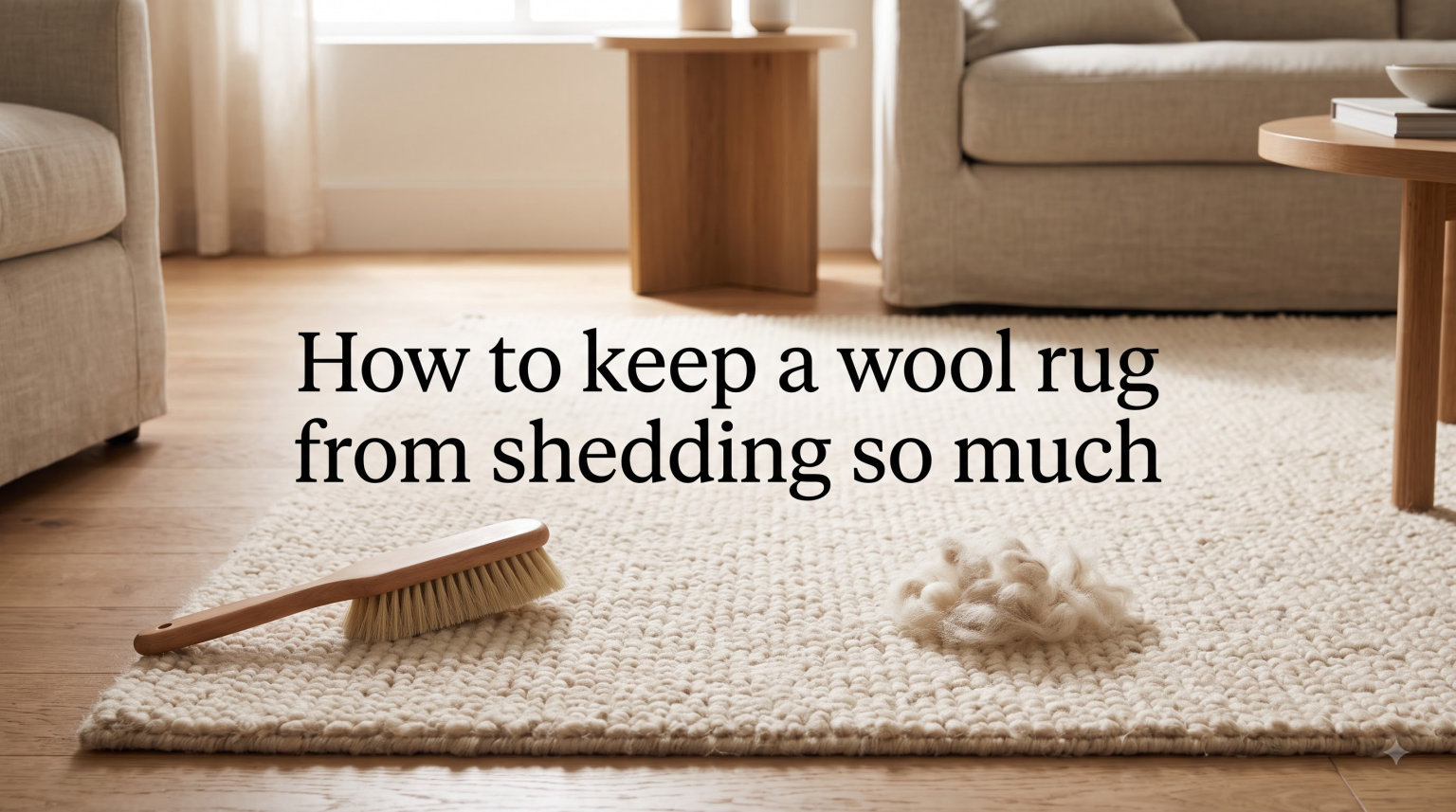
When I unrolled my first wool rug in the living room, I was thrilled with the texture and warmth. Within a week, I noticed a fine dust of fibers clogging my vacuum. If you are trying to keep a wool rug from shedding so much, I have been exactly where you are standing, and I have good news. There are practical techniques that genuinely reduce shedding, and most of the mess is solvable.
This guide walks you through what causes wool rug shedding, which rug types shed more, and the seven techniques I have tested over years of maintaining wool rugs in my own home. I will also cover when shedding is normal and when it points to a real defect.
Table of Contents
Why Wool Rugs Shed in the First Place?
Wool is a natural fiber shaved from sheep, and like any natural material, it has a structure of overlapping scales with short fibers mixed in. During the shearing, sorting, and spinning process, some short fibers stay trapped in the yarn. These short fibers loosen with foot traffic and vacuuming, which is what you see collecting in your dustbin.
The Nature of Wool Fibers
Wool fibers carry a natural oil called lanolin, which helps bind them together. Most wool rugs are washed during manufacturing to remove excess lanolin for dyeing. That washing strips some binding power from the yarn, and the loose fibers start shedding once the rug enters your home.
How Construction Affects Shedding
The way a wool rug is built has the biggest impact on how much it sheds. Hand-knotted rugs tie each individual fiber around the warp threads, locking them into place. Hand-tufted rugs push fibers through a canvas using a tufting gun, then glue a backing on. That adhesive backing does most of the holding, and as it cures over the first months, loose fibers release.
Rug Construction Types and How They Shed Differently
Before you try to keep a wool rug from shedding, it helps to know what kind you own. Different construction methods create different shedding patterns.
Hand-Knotted Wool Rugs
Hand-knotted rugs are the gold standard. Each knot is tied by hand around the warp and weft threads, so fibers have nowhere to go. Hand-knotted rugs still shed during the first few weeks as excess fibers from the spinning process release, but they calm down quickly. Quality hand-knotted wool rugs shed for 1 to 3 months and then settle into a low-shed state for decades.
Hand-Tufted Wool Rugs
Hand-tufted rugs look plush and feel soft, but they shed the most. The tufting gun pushes wool through a canvas, and adhesive backing holds it in place. During the curing period, hundreds of tiny fibers release. Expect a hand-tufted wool rug to shed noticeably for 3 to 6 months, sometimes longer in high-traffic areas.
Machine-Made Wool Rugs
Machine-made rugs vary widely. Industrial power looms can produce tight, low-shed wool rugs, but cheaper models use shorter fibers and lighter backing. These are the rugs I have seen shed the most unpredictably. Some machine-made wool rugs calm down within weeks, others keep going for months.
How to Keep a Wool Rug From Shedding: 7 Practical Techniques
Here are the seven techniques I rely on to keep a wool rug from shedding so much. I have ordered them by impact, starting with the most effective.
1. Vacuum Without the Beater Bar
A beater bar (the rotating brush inside most vacuums) tears loose fibers out of the pile. Set your vacuum to suction-only mode or use the highest pile setting. Always vacuum with the grain of the wool, not against it. Going against the grain pulls fibers in the wrong direction and accelerates shedding.
2. Use a Rug Rake Once a Week
A rug rake is the single most effective tool. One Reddit user told me: “The only thing that’s helped is this carpet rake thing, vigorously used once a week and a lot of cleaning out my vacuum.” I had the same experience. A good rug rake pulls loose fibers to the surface where your vacuum can grab them, instead of letting them work loose on their own.
3. Add a Quality Rug Pad
A rug pad does more than prevent slipping. It absorbs impact, reduces friction between the rug and the floor, and keeps the pile from getting crushed. Crushed fibers break and shed faster. A felt or rubber pad extends the life of your wool rug and slows shedding significantly.
4. Trim Stray Tufts With Sharp Scissors
From time to time you will see longer yarn ends or loose tufts sticking up. Do not pull them. Pulling unravels the surrounding weave. Cut them flush with the surface using sharp scissors. This is one of the simplest ways to keep a wool rug from shedding so much in the first six months.
5. Rotate the Rug Every 3 Months
Foot traffic concentrates on one side of a rug, which causes that section to wear and shed faster. Rotating the rug 180 degrees every 3 months distributes wear evenly. This single habit has extended the clean look of my living room rug by years.
6. Place the Rug in an Appropriate Traffic Area
Wool rugs perform better in medium to low traffic areas. Hallways, entryways, and main walkways create the most shedding. If your budget allows, save your wool rug for the bedroom, dining room, or a sitting area. Synthetic rugs handle entryway traffic better than wool.
7. Avoid Harsh Chemicals and Steam Cleaning
Steam cleaners and strong chemical detergents can strip the remaining lanolin and weaken wool fibers. If you must deep clean, use a wool-safe detergent and avoid soaking the backing. Adhesive-backed hand-tufted rugs are especially sensitive to moisture.
The Vacuuming Mistake Most Homeowners Make
I have watched three friends buy expensive wool rugs and then vacuum them with the beater bar on full power. Two of them returned the rugs thinking they were defective. They were not. The beater bar was the problem.
When you vacuum a wool rug with a beater bar, the rotating brush digs into the pile and pulls fibers that would otherwise stay locked for years. If your vacuum has a dedicated rug setting, use it. If your vacuum only has a beater bar, turn it off manually or use the bare-floor tool. Vacuum with the grain, going in the direction the wool lays, never against it.
Frequency matters too. Vacuuming once a week is enough for most wool rugs. Daily vacuuming does not reduce shedding and may make it worse because you are constantly agitating the pile.
How Long Does Wool Rug Shedding Actually Last?
This is the question I see most often on Reddit and home decor forums. The honest answer depends on the rug construction.
Realistic Timeline by Rug Type
Hand-knotted wool rugs typically shed for 1 to 3 months. Hand-tufted rugs shed for 3 to 6 months, sometimes up to a year. Machine-made wool rugs vary, but most calm down within 6 months. Quality wool from mountain sheep like New Zealand wool tends to shed less than wool from lowland breeds because the fibers are longer.
Why the Long Timeline
Wool fibers are twisted tightly during yarn production. Short fibers near the surface release slowly as the rug flexes underfoot. Vacuuming and rug raking speed up this natural process. The shedding is not a defect. It is the rug settling into its final state.
One homeowner shared this experience on a home decor forum: “I had a 13 x 9 wool rug and it never stopped shedding and I vacuumed almost every day. I returned it after 8 months.” That rug was likely hand-tufted, and the owner was vacuuming daily with a beater bar. Both factors extend shedding.
Normal Shedding vs Excessive Shedding
Knowing the difference between normal break-in shedding and a defective rug saves you money and stress.
Signs of Normal Shedding
Normal shedding looks like fine wool dust in your vacuum after each session. The volume decreases over time. Your rug looks the same from week to week. The pile stays uniform and soft underfoot.
Signs of Excessive Shedding
Excessive shedding looks like handfuls of yarn coming loose. You may notice visible thin patches or bald spots that grow over time. Tufts may unravel rather than just release dust. If your rug shows these signs, photograph them and contact the manufacturer. Many quality brands have a shedding tolerance window of 5 to 10 percent fiber loss in the first year.
Another red flag is constant yarn breakage. A small amount of fiber break is normal, but if you see actual yarn strands coming off in pieces, the rug construction may be poor.
Pet and Baby Safety Around Shedding Wool Rugs
One concern I hear often from new parents and pet owners is whether loose wool fibers pose a danger. The honest answer is that low shedding is safe, but you should still take a few precautions during the first months.
Risks for Cats and Dogs
Cats are curious about new textures and may try to lick or chew on loose yarn ends. Small amounts of wool fiber pass through a cat’s digestive system without issue, but longer strands can cause vomiting or intestinal blockage. Trim any visible tufts promptly and vacuum more frequently in homes with cats. Dogs are less likely to chew on rugs, but puppies sometimes do. Supervise them during the heavy-shedding phase.
Babies and Wool Fibers
Babies explore by putting things in their mouths. Loose wool fibers on a rug are usually too short to cause harm, but if your baby is in the crawling stage, vacuum the rug every 2 to 3 days instead of weekly. Washable cotton play rugs layered over the wool rug give babies a clean surface while letting the wool settle underneath.
One parent in a home forum wrote: “I wasn’t warned about wool rugs! They definitely shed a lot at first!” Their solution was to keep the wool rug in the living room and use a washable cotton rug in the nursery. That same approach works for most households.
When to Call a Professional Cleaner?
Most wool rugs respond well to at-home care, but some situations call for a professional. If your rug has been shedding for more than a year with no improvement, a professional cleaning may help reset the pile. Specialists use wool-safe solvents and controlled agitation that pull loose fibers without damaging the weave.
Professional cleaning is also worth considering once a year for any wool rug in a high-traffic area. The cost is typically modest compared to replacing the rug, and proper cleaning extends the lifespan of the fibers. Look for cleaners certified by the Institute of Inspection, Cleaning and Restoration Certification.
Quick Reference: Best Practices to Reduce Wool Rug Shedding
Here is a summary of the techniques covered above, ranked by impact for quick scanning.
Top 3 Highest Impact
First, vacuum without the beater bar every week. Second, use a rug rake weekly to pull loose fibers to the surface. Third, add a quality rug pad to absorb impact and reduce friction.
Maintenance Habits That Help
Rotate the rug every 3 months for even wear. Trim stray tufts with scissors instead of pulling them. Place the rug in a medium to low traffic area to slow fiber release.
What to Avoid
Avoid daily vacuuming, since it agitates the pile. Avoid steam cleaning and harsh chemicals, which strip lanolin. Avoid pulling loose yarns, which unravels the weave.
Frequently Asked Questions
How long does it take for a wool rug to stop shedding?
Most wool rugs shed for 1 to 6 months. Hand-knotted rugs typically calm down within 1 to 3 months. Hand-tufted rugs shed for 3 to 6 months, sometimes longer. Quality and construction matter most.
Is it normal for a wool rug to shed a lot?
Yes, especially in the first few months. Wool is a natural fiber with short fibers trapped in the yarn. These short fibers release as the rug settles in. The shedding slows over time with proper care.
Will a wool rug eventually stop shedding?
Most wool rugs shed significantly less after 6 months. Hand-knotted rugs shed the least long-term. Hand-tufted rugs may release small amounts of fiber for a year, but the volume drops sharply after the first 3 months.
Is there a wool rug that does not shed at all?
No wool rug is completely shed-free. Wool is a natural fiber and will always release some loose fibers. Hand-knotted rugs made from long-fiber wool like New Zealand wool shed the least. Felted wool rugs shed less than pile rugs.
How do I fix a shedding wool rug?
Vacuum without the beater bar, use a rug rake weekly, place a quality rug pad underneath, trim loose tufts with scissors, and rotate the rug every 3 months. Avoid harsh chemicals and steam cleaning. These steps reduce shedding in 4 to 8 weeks.
Final Thoughts on Keeping Your Wool Rug From Shedding
Shedding is the most common complaint about wool rugs, but it is also one of the most manageable. The techniques above turn a frustrating problem into a routine maintenance habit. Vacuum without the beater bar, rake weekly, pad underneath, and rotate. Use the technique that fits your routine and stick with it for at least 8 weeks.
With the right care, your wool rug will settle into a low-shed state for years. If you are trying to keep a wool rug from shedding so much, give these methods a try. They work, and they are backed by homeowners who have walked the same shop-the-rug, vacuum-the-fibers, return-the-rug path before reaching a solution.