
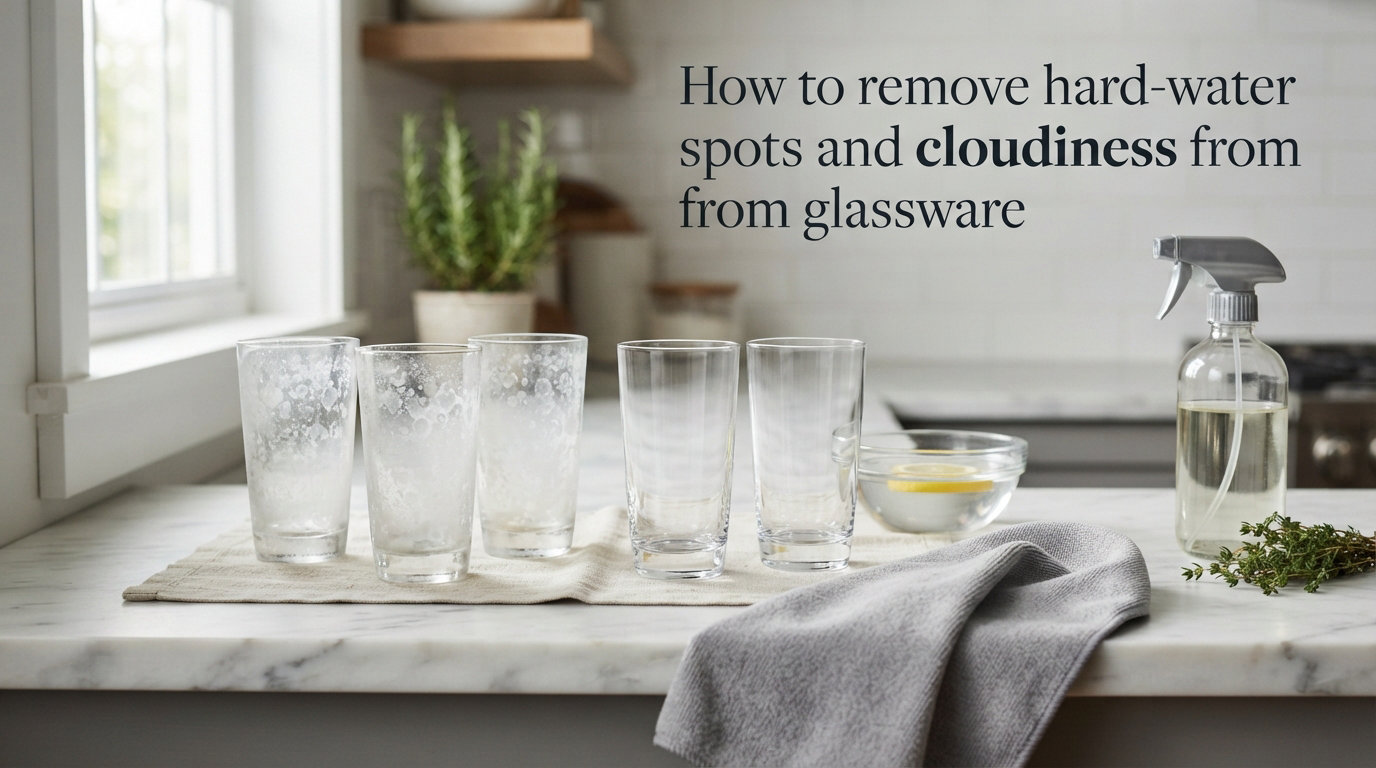
Soak your cloudy glasses in equal parts white vinegar and warm water for 15 to 30 minutes, then scrub gently with a soft sponge and rinse. That single step dissolves the calcium and magnesium mineral deposits that cause most hard-water spots, and it works on drinking glasses, wine glasses, vases, and mugs alike.
But here is the catch: not every cloudy glass can be saved. Some cloudiness is caused by etching, which is permanent physical damage to the glass surface, while other cloudiness is a removable mineral film. Knowing the difference before you start scrubbing saves you time and frustration.
In this guide, I will walk you through exactly how to remove hard-water spots and cloudiness from glassware using six proven methods, how to tell whether your glasses are fixable, and how to prevent the haze from coming back. Whether you are dealing with a favorite set of wine glasses or a whole cabinet of cloudy drinking glasses, these techniques will help.
Table of Contents
What Causes Cloudy Glassware?
Cloudy glassware has three main causes: hard-water mineral deposits, permanent etching, and soap or detergent residue. Identifying which one you are dealing with determines whether the problem is fixable and which method will work best.
Hard Water Mineral Deposits
Hard water contains high levels of dissolved calcium and magnesium. When water droplets evaporate from your glassware, those minerals stay behind and form a chalky white film that clings to the surface.
This is the most common cause of cloudy glasses, and fortunately it is completely reversible. The mineral layer builds up gradually, so glasses that started clear slowly develop a milky haze over weeks or months of washing.
If you live in an area with hard water, you are almost guaranteed to see these spots eventually. The deposits are especially visible on dark-colored glasses and on the bottoms of cups where water pools during the drying cycle.
Etching (Permanent Damage)
Etching happens when the glass surface itself gets eaten away by a combination of soft water, harsh detergents, and high heat in the dishwasher. Unlike mineral deposits, etching cannot be removed because the glass has been physically worn down.
You can identify etching by its iridescent rainbow tint when held under bright light. It often appears as tiny pits or a frosted area that looks different depending on the angle.
Many people do not realize etching is permanent and spend hours trying to scrub it away with vinegar or baking soda. That effort will not help, and aggressive scrubbing can actually make the damage more visible.
Soap Residue and Detergent Film
Using too much dish soap or dishwasher detergent leaves a filmy residue that mimics hard-water cloudiness. This is especially common when people switch to eco-friendly detergents that lack rinse aids or enzymes.
The residue clings to glass surfaces and dries into a cloudy layer that feels slightly slippery to the touch. You can usually tell it apart from mineral deposits because soap film washes off easily with hot water alone.
If your glasses are cloudy right after a single wash, soap residue is the more likely culprit than mineral buildup, which takes time to accumulate.
How to Tell the Difference: Etching vs. Mineral Deposits
The quickest way to test is the vinegar soak: submerge a cloudy glass in white vinegar for 15 minutes, then rinse. If the cloudiness disappears, it was mineral deposits. If it remains, you are likely dealing with etching, which is permanent.
Another test is the scratch test. Run your fingernail lightly across the cloudy area. Mineral deposits feel slightly rough and powdery, while etched glass feels smooth because the damage is beneath the surface layer.
Finally, hold the glass under direct sunlight or a bright LED light. Etching often shows a faint rainbow or blue-purple iridescence, while mineral deposits look flat white or chalky with no color shift.
How to Remove Hard-Water Spots and Cloudiness from Glassware: Best Methods
Here are six effective methods to remove hard-water spots and cloudiness from glassware, ranked from most to least commonly used. Start with the vinegar soak, as it handles 90 percent of mineral deposit cases.
Method 1: White Vinegar Soak (Most Effective)
White vinegar is the single best solution for removing hard-water spots because its acidity dissolves calcium and magnesium deposits on contact. This method works on drinking glasses, wine glasses, vases, and even glass tabletops.
Follow these steps for sparkling results:
Step 1: Fill a bowl, sink, or plastic tub with equal parts warm water and plain white vinegar. Use enough liquid to fully submerge the cloudy glasses.
Step 2: Place the glasses in the solution and let them soak for 15 to 30 minutes. For heavier buildup, extend the soak to an hour.
Step 3: Remove one glass and scrub gently with a soft sponge or microfiber cloth while it is still wet. Focus on areas with visible white spots.
Step 4: Rinse each glass thoroughly with warm water to wash away the loosened minerals and any vinegar smell.
Step 5: Dry immediately with a lint-free microfiber cloth to prevent new water spots from forming. Air-drying invites the same minerals right back onto the surface.
One tip from forum users who tackle this regularly: for stubborn stains, use a ratio of three parts vinegar to one part hot water and add a few drops of Dawn dish soap. The soap helps break down any greasy film layered on top of the minerals.
Method 2: Baking Soda Paste
Baking soda is a gentle abrasive that scrubs away mineral deposits without scratching glass. Make a paste by mixing two tablespoons of baking soda with a small amount of warm water until it forms a thick spread.
Apply the paste directly to the cloudy areas using a soft cloth or sponge. Rub in small circular motions for two to three minutes, focusing on the cloudiest spots. Rinse with warm water and dry with a microfiber cloth.
This method pairs well with the vinegar soak. Use vinegar first to dissolve the bulk of the buildup, then follow with baking soda paste for any stubborn spots that remain.
Be careful not to press too hard. Baking soda is mild, but aggressive scrubbing on thin or delicate glass can cause micro-scratches over time.
Method 3: Lemon Juice or Citric Acid
Lemon juice works on the same principle as vinegar because both contain acid that breaks down mineral deposits. The advantage of lemon juice is a fresher scent and a slightly higher citric acid concentration.
Squeeze the juice of one lemon into a bowl of warm water and soak glasses for 20 minutes. For a stronger treatment, rub half a lemon directly onto the cloudy spots and let the juice sit for 10 minutes before rinsing.
Citric acid powder, available in the canning section of most grocery stores, works even better. Dissolve two tablespoons in a quart of warm water and soak for 30 minutes for tough deposits.
Method 4: Hydrogen Peroxide and Ammonia
Hydrogen peroxide lifts organic film and stains, while ammonia cuts through grease and soap scum that can trap mineral deposits against the glass surface. This method is best for glasses that still look cloudy after a vinegar soak.
Mix equal parts 3-percent hydrogen peroxide and household ammonia in a bowl. Soak the glasses for 15 minutes, then scrub gently with a soft cloth and rinse thoroughly.
Work in a well-ventilated area when using ammonia, and never mix ammonia with bleach, as the combination produces dangerous fumes. Wear rubber gloves to protect your skin.
Method 5: Commercial Cleaners (CLR, Bar Keepers Friend, Lemi Shine)
When home remedies are not enough, commercial hard-water removers offer stronger formulations designed specifically for mineral deposits. These products fill a gap that most cleaning guides skip entirely.
CLR (Calcium, Lime, and Rust Remover) is effective on severe buildup. Dilute it according to the label instructions, soak glasses for two to five minutes, and rinse thoroughly with cold water. Always test on one glass first to check for any adverse reaction.
Bar Keepers Friend works as a gentle powder cleanser. Make a paste with water, apply to cloudy areas, and rub lightly with a soft cloth. Lemi Shine is a citric-acid-based cleaner popular in forum communities for dishwasher use and for soaking heavily clouded glasses.
Check that any commercial cleaner is labeled safe for glassware and food-contact surfaces before using it on drinking glasses.
Method 6: Steam Wand Technique for Light Cloudiness
If you own an espresso machine with a steam wand, it can remove light cloudiness fast. The concentrated steam loosens mineral deposits, and you wipe them away immediately with a microfiber cloth.
Steam the cloudy area for five to ten seconds, then buff with the cloth while the glass is still warm. This method is quick and avoids soaking, making it ideal for delicate wine glasses that should not be fully submerged.
How to Prevent Cloudy Glassware from Coming Back?
Removing hard-water spots is only half the battle. Without prevention, the cloudiness returns within a few wash cycles. These adjustments keep your glasses crystal clear for the long run.
Dishwasher Adjustments That Actually Help
Switch to a detergent that contains enzymes and a built-in rinse aid, or add a separate rinse aid to every load. Rinse aid reduces water droplet size so fewer minerals stick to the glass during drying.
Use less detergent than the package recommends, especially if you have soft water. Excess detergent causes etching over time, which is permanent.
Select the air-dry or no-heat dry setting instead of heated dry. High heat bakes minerals onto the glass surface and accelerates etching damage.
Finally, run your dishwasher on its hottest cycle empty once a month with a cup of white vinegar placed on the top rack. This descales the interior and prevents mineral transfer to your glassware.
Hand-Washing Best Practices
Wash glasses in warm, not hot, water using a small amount of mild dish soap. Hot water evaporates faster and leaves more mineral deposits behind on the glass.
Rinse each glass in a stream of warm water immediately after washing. Do not let soapy water sit on the surface, as it dries into a film.
Dry each glass right away with a clean microfiber cloth or a lint-free cotton towel. Skipping the drying step is the number one reason spots return the same day.
Water Softener Systems
If hard water is the root cause, a whole-house water softener eliminates the problem at the source. Softeners remove calcium and magnesium ions before the water reaches your taps and dishwasher.
A full system costs between $500 and $2,500 installed, but it protects not just your glassware. It also extends the life of your dishwasher, coffee maker, showerheads, and plumbing fixtures.
For renters or those not ready for a full system, an under-sink water filter with a softening stage works for drinking glasses washed by hand in the kitchen.
When to Replace Cloudy Glassware
If you have tried the vinegar soak, baking soda paste, and commercial cleaners and the cloudiness remains, you are likely dealing with etching. Etched glass cannot be restored because the damage is structural, not just a surface film.
At that point, the best option is to replace the affected glasses and focus on prevention for the new set. Use less detergent, switch to air-dry, and consider a water softener to keep your next batch crystal clear.
You can keep etched glasses for everyday casual use where appearance matters less, but retire them from dinner parties, holidays, and entertaining where you want them to sparkle.
FAQs
How do you remove hard water haze from glass?
Soak the glass in equal parts white vinegar and warm water for 15 to 30 minutes, then scrub gently with a soft sponge and rinse. The acid in vinegar dissolves calcium and magnesium deposits, which are the main cause of hard-water haze on glassware.
How to remove years of hard water stains from glass?
For years of buildup, soak glasses in full-strength white vinegar for one to two hours, then scrub with a baking soda paste for stubborn areas. If home remedies fail, use a commercial cleaner like CLR for two to five minutes followed by a thorough rinse. Very old, thick deposits may require multiple treatments.
Can cloudy glassware be restored?
Yes, if the cloudiness is caused by hard-water mineral deposits or soap residue. Soak in white vinegar and the cloudiness should disappear. However, if the cloudiness is caused by etching (permanent glass damage), it cannot be restored and the glassware will need to be replaced.
How to remove cloudy film from old glassware?
Start with a 30-minute white vinegar soak, then scrub with a baking soda paste and rinse. For antique or delicate glass, use lemon juice instead of vinegar for a gentler acid, and always hand-dry with a microfiber cloth. Test a small area first to confirm the cloudiness is mineral buildup and not permanent etching.
Conclusion
Learning how to remove hard-water spots and cloudiness from glassware comes down to one key step: soaking in white vinegar to dissolve mineral deposits. The methods in this guide, from baking soda paste to commercial cleaners like CLR, handle everything from light haze to years of stubborn buildup.
Remember to test whether your cloudiness is removable mineral deposits or permanent etching before you invest time scrubbing. A 15-minute vinegar soak tells you everything you need to know.
Then focus on prevention: use rinse aid, cut back on detergent, switch to air-dry, and consider a water softener if hard water is an ongoing problem in your home. With the right approach, your glasses will stay crystal clear for years to come.