
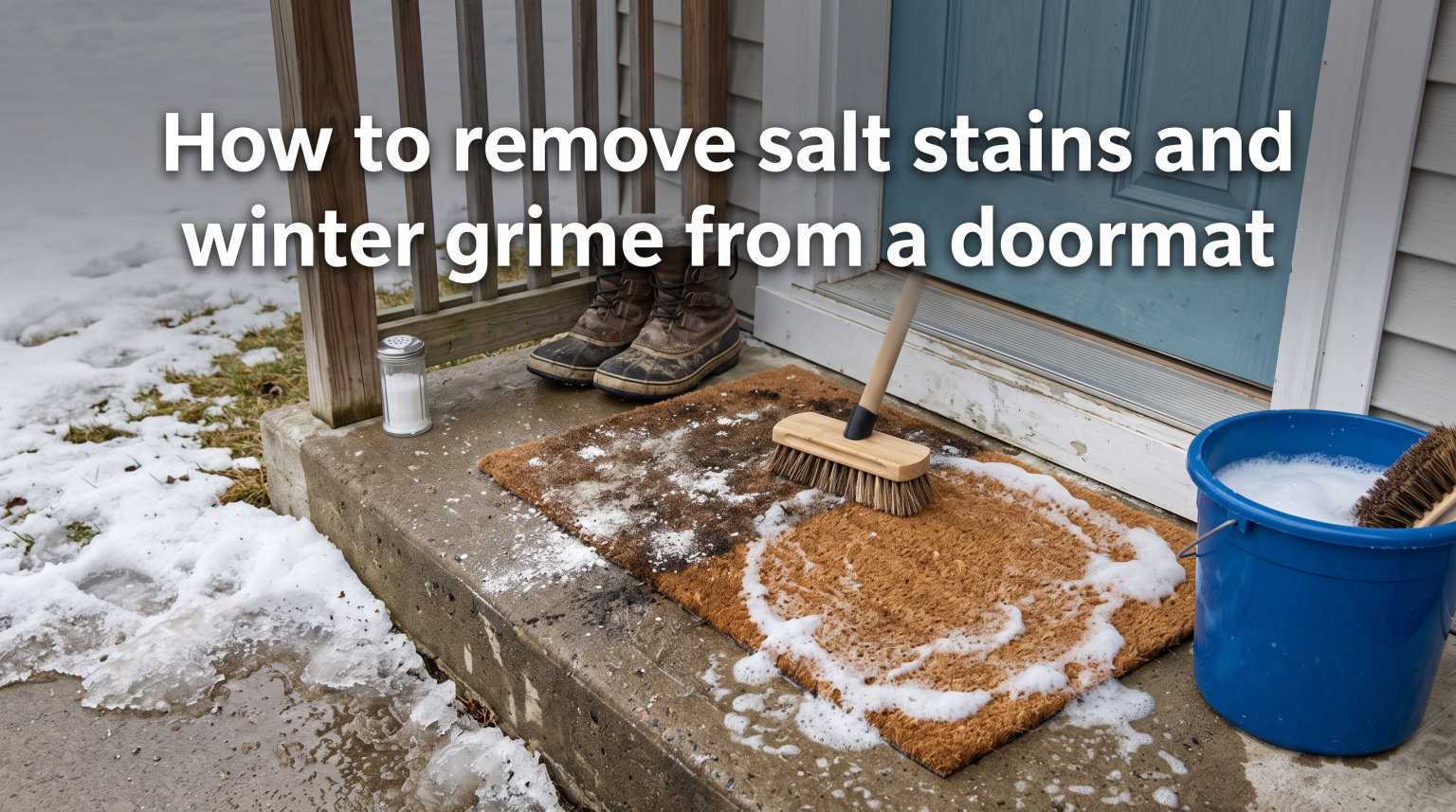
Winter leaves its mark on everything, and your doormat takes the brunt of it. Road salt, deicing chemicals, slush, and frozen mud collect on your entry mat day after day, leaving behind stubborn white crusts and dingy buildup that refuse to budge with a simple shake.
If you are staring at a doormat covered in chalky residue and wondering whether it is salvageable, the short answer is yes. Learning how to remove salt stains from doormat surfaces takes about 15 minutes of active effort, and the solution lives in your kitchen cabinet right now.
In this guide, I will walk you through a proven step-by-step process using a simple vinegar and warm water mixture. You will also learn why salt stains form, how to clean different doormat materials, and how to prevent the white crust from coming back next winter.
Table of Contents
Why Doormats Get Salt Stains in Winter?
Salt stains happen because deicing salt and road salt cling to your shoes, melt into slush, and get tracked onto your doormat. As the moisture evaporates, the salt crystallizes and bonds to the fibers or surface, leaving behind that familiar white, chalky residue.
The problem compounds over weeks. Each new layer of wet salt adds to the crust underneath, and soon your doormat looks like it has been dusted with powder. The alkaline nature of deicing salts means they do not rinse away with plain water alone.
This buildup does more than look ugly. Over time, salt crystals act like tiny abrasives that wear down carpet fibers and rubber backing. Salt also tracks into your home, dulling hardwood floors and damaging carpeting if left unchecked.
The good news is that salt is water-soluble, and the right cleaning agent breaks it down fast. You just need to understand which solution does the job and how to apply it correctly for your specific mat type.
What You Need to Clean Salt Stains?
You do not need expensive specialty products to get your doormat looking fresh again. Here is everything required to remove salt stains using items you likely already have at home.
White vinegar (the cleaning powerhouse)
Warm water
A clean spray bottle
A stiff-bristled scrub brush or old toothbrush
Clean microfiber cloths or dry rags
A vacuum or broom for loose salt removal
Oxygen bleach (optional, for stubborn stains)
Gather these supplies before you start so you can move through each step without stopping. The total cost of this cleaning kit is under five dollars if you already own a spray bottle.
Why Vinegar Dissolves Salt: The Science
Vinegar works because its active ingredient, acetic acid, neutralizes the alkaline residue left behind by deicing salts. When salt dries on a surface, it forms an alkaline crust that plain water struggles to penetrate fully.
The acetic acid in white vinegar (typically 5% concentration) reacts with the salt crystals, breaking the bonds that hold them to the fibers. This chemical reaction turns the hardened crust back into a soluble form that wipes away easily with a cloth.
Warm water speeds up the process by increasing molecular activity, helping the vinegar penetrate deeper into the material. That is why a warm vinegar solution outperforms cold water every single time.
Vinegar also deodorizes. If your doormat has picked up a damp, musty smell from salt and moisture sitting together, the vinegar neutralizes those odors as it cleans. The vinegar scent itself dissipates completely once the mat dries.
How to Remove Salt Stains and Winter Grime from a Doormat
This step-by-step method works for most standard doormats and takes about 15 minutes of hands-on time. Follow each step in order for the best results.
Step 1: Remove Loose Salt First
Take the doormat outside and shake it vigorously to dislodge loose salt crystals and dried dirt. Follow up by vacuuming both sides of the mat, or use a stiff broom to sweep away remaining debris.
Skip this step and you risk grinding loose salt deeper into the fibers during cleaning. Removing dry salt first makes every subsequent step more effective.
Step 2: Mix Your Vinegar Cleaning Solution
Combine equal parts white vinegar and warm water in your spray bottle. The ideal ratio is 1:1, so for a standard spray bottle use one cup of vinegar and one cup of warm water.
Shake the bottle gently to mix. The water should be warm to the touch but not scalding, as extreme heat can damage certain mat materials.
Step 3: Spray the Stained Areas
Lay the doormat flat on a protected surface and spray the vinegar solution generously over all visible salt stains and winter grime. Let it sit for 30 to 60 seconds so the acetic acid can begin breaking down the salt crystals.
For large mats, work in sections so the solution does not dry before you get to scrubbing. The mat should be damp but not soaking wet.
Step 4: Scrub Gently with a Brush
Use your stiff-bristled brush or an old toothbrush to scrub the stained areas in small circular motions. Apply moderate pressure, working the vinegar solution into the fibers to lift the salt residue.
For coir or bristle doormats, scrub in the direction of the fibers to avoid damaging them. For rubber or flat mats, circular scrubbing works best.
Step 5: Blot with a Clean Cloth
Press a clean, dry microfiber cloth against the scrubbed areas to absorb the dissolved salt and excess moisture. Use a blotting or pressing motion rather than wiping, which can spread the salt around.
Switch to a fresh section of cloth as each area becomes saturated. You will see the white residue transferring onto the cloth, which tells you the method is working.
Step 6: Air Dry Completely
Prop the doormat upright or hang it over a railing in a well-ventilated area to air dry. Avoid direct high heat, which can warp rubber backing or shrink natural fibers.
Most mats dry fully within 2 to 4 hours. If any white residue remains after drying, repeat Steps 3 through 6 for a second round.
Cleaning Different Doormat Materials
Not all doormats respond to cleaning the same way. The material determines how much moisture it can handle and which techniques work best.
Coconut Coir Doormats
Coir mats are the most common front door mats, and they handle the vinegar method beautifully. Avoid soaking them, since excessive moisture can cause the natural fibers to rot over time. Spray lightly, scrub gently, and let them dry completely in an upright position.
Rubber-Backed Doormats
Rubber-backed mats cannot be fully submerged because water can seep between the backing and the surface layer, causing separation. Use the spray-and-blot method exclusively. For heavy buildup, take the mat to a coin-operated car wash and use the pressure washer on a low setting from at least 12 inches away.
Textile and Fabric Doormats
Fabric mats absorb liquid quickly, so use a lighter hand with the vinegar solution. Blot frequently to prevent over-saturation, and always test the solution on a small hidden area first to check for colorfastness.
Rubber and Plastic Mats
All-rubber or plastic mats are the easiest to clean. You can spray generously, scrub hard, and even rinse with a hose. These mats tolerate pressure washing and dry within minutes.
How to Tackle Stubborn, Baked-In Salt Stains?
Old, hardened salt stains that have been sitting for months sometimes survive the first vinegar treatment. For these stubborn cases, make a paste using oxygen bleach and warm water, apply it to the stain, and let it sit for 10 minutes before scrubbing.
Avoid chlorine bleach, which can discolor doormat fibers and degrade rubber backing. Oxygen bleach is gentler and safe for most colored materials. If the stain persists after two rounds, pressure washing at a car wash or with a home unit on low pressure will blast away the remaining residue.
How to Prevent Salt Stains on Your Doormat
Prevention saves you from repeated deep cleaning and extends the life of your doormat significantly. A few simple habits make a big difference over the winter season.
Use a two-mat system at your entrance. Place a rough outdoor scraper mat outside the door to catch the heaviest salt and debris, and a softer absorbent mat inside to capture remaining moisture. This combination traps most salt before it enters your home.
Shake out or vacuum your doormat once a week during winter to remove loose salt before it builds up. A quick 30-second shake prevents weeks of accumulated crust.
Keep a boot tray inside the door for wet, salty footwear. Removing shoes before stepping past the entry area dramatically reduces how much salt reaches your interior floors and carpets.
Apply a fabric protector spray to textile doormats at the start of winter. This creates a barrier that makes it harder for salt to bond with the fibers, so weekly cleaning becomes faster and easier.
For rubber and plastic mats, a light spray of silicone-based protectant after cleaning helps repel future salt buildup. Reapply every few weeks during heavy winter use.
FAQs
How to get salt stains out of front door mat?
Mix equal parts white vinegar and warm water in a spray bottle. Spray the solution on the salt stains, let it sit for 30 to 60 seconds, scrub with a stiff brush, then blot with a clean dry cloth. Repeat if needed and let the mat air dry completely.
How to remove winter salt stains?
First remove loose salt by shaking or vacuuming the mat. Then apply a 1:1 white vinegar and warm water solution to the stained areas, scrub gently, blot with a microfiber cloth, and air dry. For stubborn stains, use oxygen bleach paste or a pressure washer on rubber mats.
How do you get salt stains out of mats?
Vacuum or shake off loose salt first. Spray a mixture of equal parts white vinegar and warm water onto the stains, scrub with a brush in circular motions, and blot the dissolved salt away with a clean cloth. Allow the mat to dry fully before putting it back in place.
What dissolves salt buildup?
White vinegar dissolves salt buildup because its acetic acid neutralizes the alkaline residue left by deicing salts. Warm water accelerates the process. Oxygen bleach is an effective alternative for stubborn, baked-in salt crusts that vinegar alone cannot remove.
Conclusion
Knowing how to remove salt stains from doormat surfaces keeps your entryway looking clean all winter long. A simple mixture of equal parts white vinegar and warm water, applied with a scrub brush and blotted dry, handles the vast majority of salt crusts in a single session.
For stubborn buildup, oxygen bleach or pressure washing takes care of the rest. Pair your cleaning routine with weekly shaking, a two-mat system, and a boot tray to prevent stains from returning.
Your doormat works hard all season. Give it 15 minutes of care, and it will keep protecting your floors through every freeze, thaw, and snowstorm winter throws your way.