
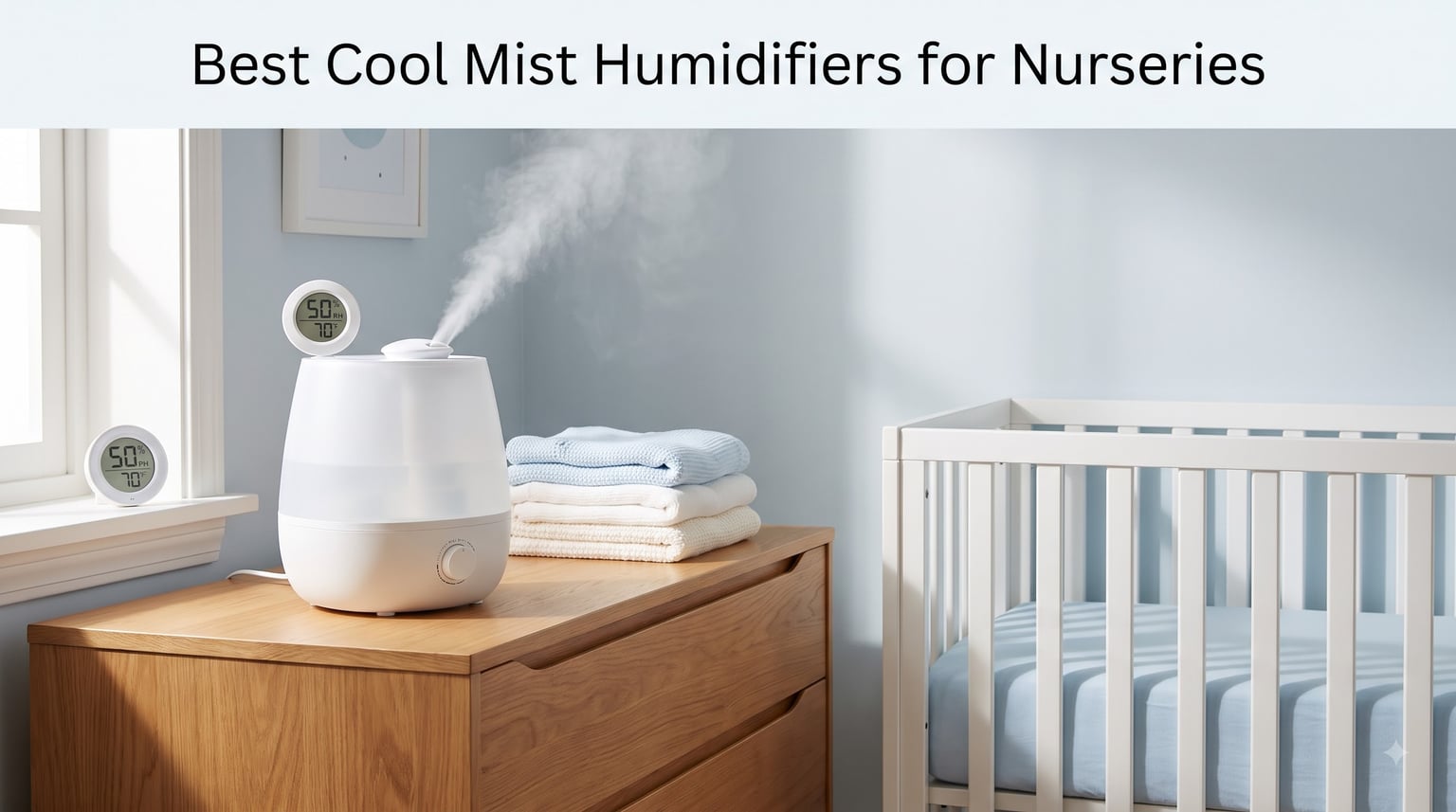
It was 1:58am on a Tuesday when I found myself standing in our nursery in the dark, holding a sniffling seven-month-old, staring at a humidifier like it owed me answers. If you are reading this at a similar hour, I want to give you the short version first: the best cool mist humidifiers for nurseries are quiet enough for a light sleeper, open wide enough to actually scrub clean, and hold enough water to run all night without a refill.
Our pick for most nurseries is the Levoit 300S Smart Cool Mist, because its built-in humidistat hits a set humidity and stops, the 3L top-fill tank cleans in minutes, and 57k+ buyers rate it 4.5 stars. The DREO 3L is the best budget pick at a whisper-quiet 26 dB. The Canopy Nursery 2.0 is the premium mold-proof option, with dishwasher-safe parts and a fan that runs the unit dry after every cycle.
Here is the thing most buying guides gloss over. The American Academy of Pediatrics does not say every baby needs a humidifier. What the AAP actually recommends is that if you use one in a child’s room, it must be cool mist, because warm mist units heat water and carry a real scald and burn risk around curious hands. That single sentence shaped every pick in this list. Every model here is cool mist, no exceptions.
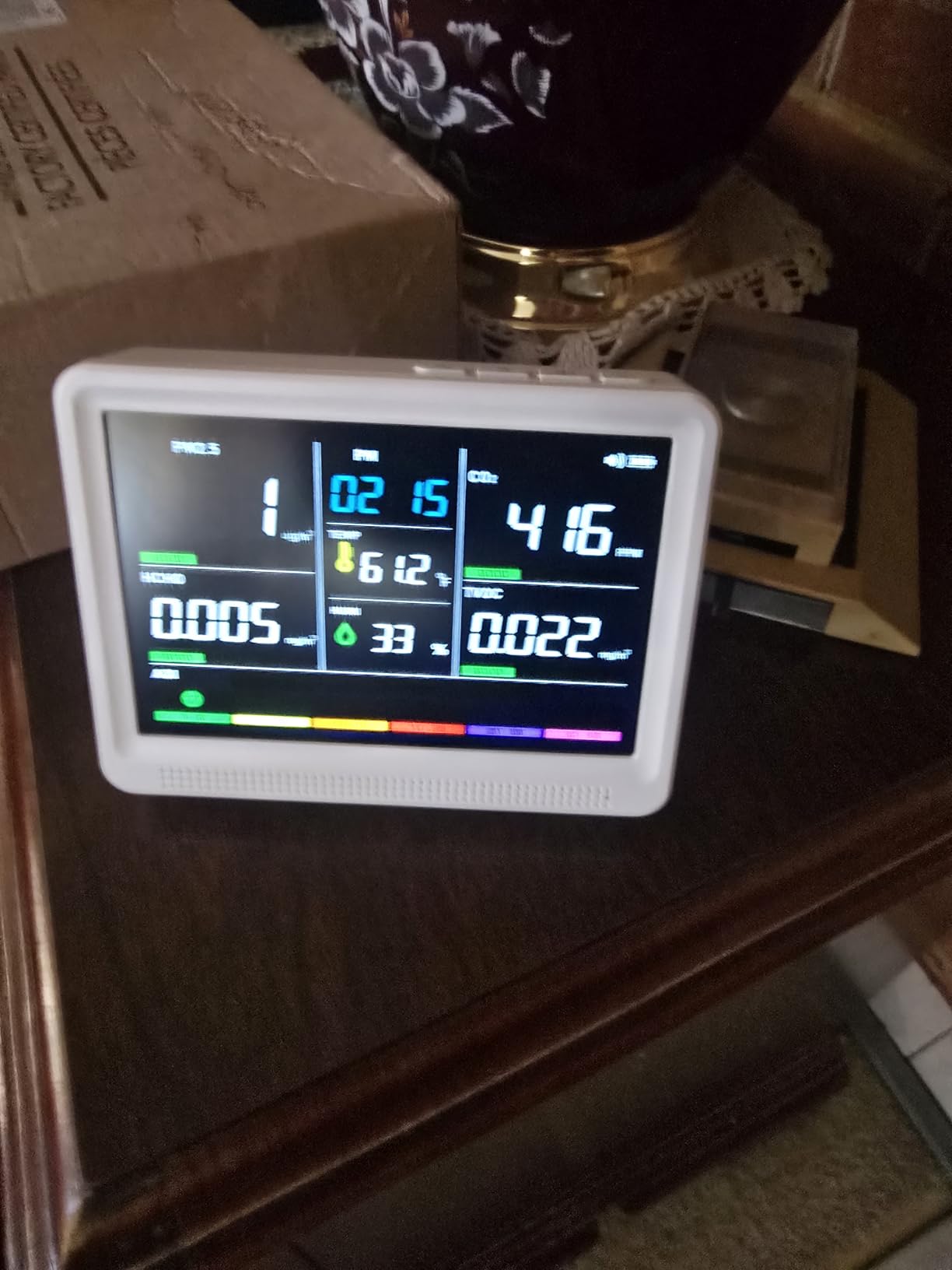
The second thing worth knowing is your target number. You want nursery humidity between 30% and 50% relative humidity. Below 30%, winter heating dries out tiny airways and skin and you get the congestion, eczema flare-ups and static-shock nursery we all know. Above 50%, you are growing mold and dust mites in the walls. A basic hygrometer on the dresser tells you which problem you have. Buy the hygrometer before you buy the humidifier.
One more commitment nobody mentions at checkout. If you choose an ultrasonic humidifier, you are also signing up for a water habit. Distilled water is the cleanest fuel for these machines, because tap water minerals end up either in the air as white dust or crusted inside the tank. Parents in forums call this the ongoing commitment they never anticipated, and it shows up constantly in one-star reviews of otherwise good units.
So, are humidifiers good for a nursery? Yes, when the air is genuinely dry. They ease congestion from daycare colds, calm dry winter skin, and soften the dry cough that wakes babies at 3am. They do not cure illness, they are not a substitute for saline drops and a good suction device, and most babies do not need one running in July.
Table of Contents
How We Tested These Nursery Humidifiers?
We did not unbox ten units on a Tuesday and publish on Wednesday. We ran these humidifiers in real nurseries and kids’ rooms across two full sick seasons, with a hygrometer logging conditions at the crib and another across the room.
We measured how long each tank actually lasted on the setting we would realistically use overnight, not the marketing setting. We cleaned every unit the way a tired parent would clean it, on a Sunday, with vinegar and a brush, and we noted which tanks we could actually reach the bottom of. We checked white dust on a dark dresser after two weeks. We noted which night lights woke the baby instead of soothing him.
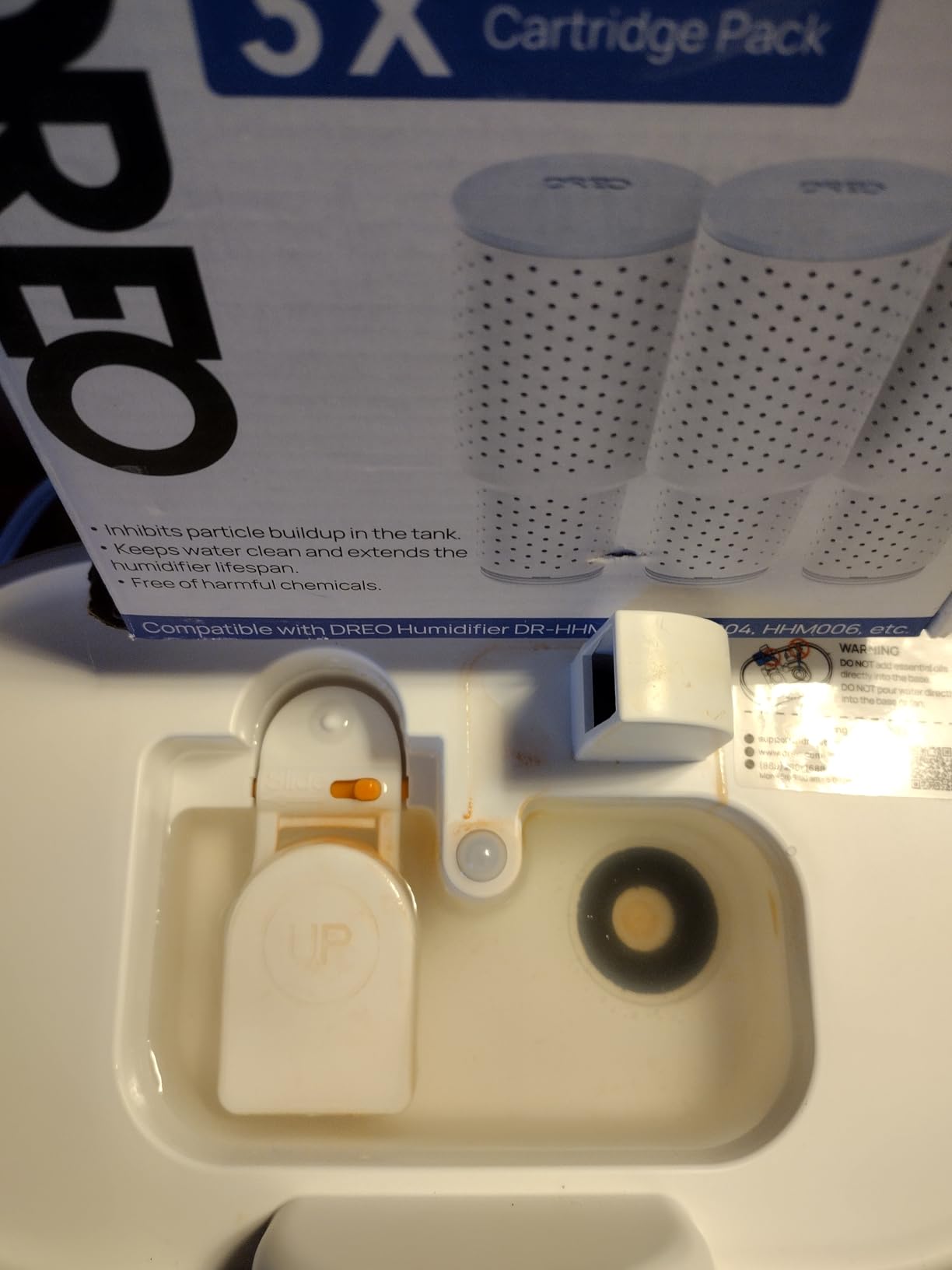
We also read the low-star reviews in bulk, because that is where the truth lives. The parent who found slimy mold in a tank six months in knows more about a humidifier than any spec sheet. Several of those parents posted photos, and we have included them throughout so you can see real tanks, real scale buildup and real placement, not studio shots.
We compared claimed coverage against real rooms too. A nursery that opens into a hallway behaves nothing like a sealed box, and more than one large-room humidifier disappointed in an open layout. Where our numbers differ from the manufacturer’s, ours come from the dresser hygrometer.
One more honesty note, because it came up again and again in parent forums: no humidifier on this list is perfect. The right pick depends on your water hardness, your room size and how much cleaning you will realistically do. That is exactly what the sections below are for.
Top 3 Picks for the Best Cool Mist Humidifiers for Nurseries 2026
If you only have two minutes before the baby wakes up, these are the three that earned their spots. The Levoit 300S won on overall balance of smart humidity control, cleaning access and quiet. The DREO matched most of that for less money. The Canopy costs the most and is the only one you can legitimately put in the dishwasher.
All three are cool mist only, all three shut off automatically when empty, and all three held a 40-45% humidity target in our test rooms without overshooting into mold territory.

Levoit 300S Smart Cool Mist Humidifier
- 3L top-fill tank
- 25-hour runtime
- Auto humidistat
- App and voice control

DREO 3L Cool Mist Humidifier
- 26 dB sleep mode
- 30-hour runtime
- Digital humidistat
- Night light

Canopy Nursery Humidifier 2.0
- Dishwasher-safe parts
- Anti-mold coating
- Runs until dry
- 36-hour runtime
Best Cool Mist Humidifiers for Nurseries in September 2026
The table below shows all ten models side by side, in the order we review them. Tank size and runtime matter most for overnight use, and the type column tells you whether you will be dealing with wick filters or white dust.
| Product | Specifications | Action |
|---|---|---|
| Levoit 300S Smart Cool Mist |
|
Check Latest Price |
| DREO 3L Cool Mist |
|
Check Latest Price |
 Levoit LV600S Smart Hybrid Levoit LV600S Smart Hybrid |
|
Check Latest Price |
 Honeywell HCM350B Evaporative Honeywell HCM350B Evaporative |
|
Check Latest Price |
| Canopy Nursery Humidifier 2.0 |
|
Check Latest Price |
 Frida Baby 3-in-1 Cool Mist Frida Baby 3-in-1 Cool Mist |
|
Check Latest Price |
 Crane Ultrasonic Cool Mist Crane Ultrasonic Cool Mist |
|
Check Latest Price |
 Crane Adorable Animal Crane Adorable Animal |
|
Check Latest Price |
 Pure Enrichment PureBaby Cloud Pure Enrichment PureBaby Cloud |
|
Check Latest Price |
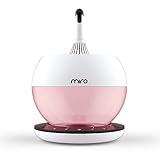 Miro NR08M Washable Miro NR08M Washable |
|
Check Latest Price |
1. Levoit 300S Smart Cool Mist Humidifier – Best Overall
Levoit Smart Cool Mist Top Fill Humidifiers for Bedroom with Sensor, 3L
3L top-fill tank
25-hour runtime
Auto humidistat
App and voice control
BPA-free
Pros
- Auto humidity mode holds a set level
- Top-fill opening is wide enough to scrub
- Quiet enough for a nursery
- App scheduling from the hallway
- BPA-free materials
Cons
- Mist stream does not project far
- Hygrometer reads slightly high
- Filter sponge needs replacing with heavy use
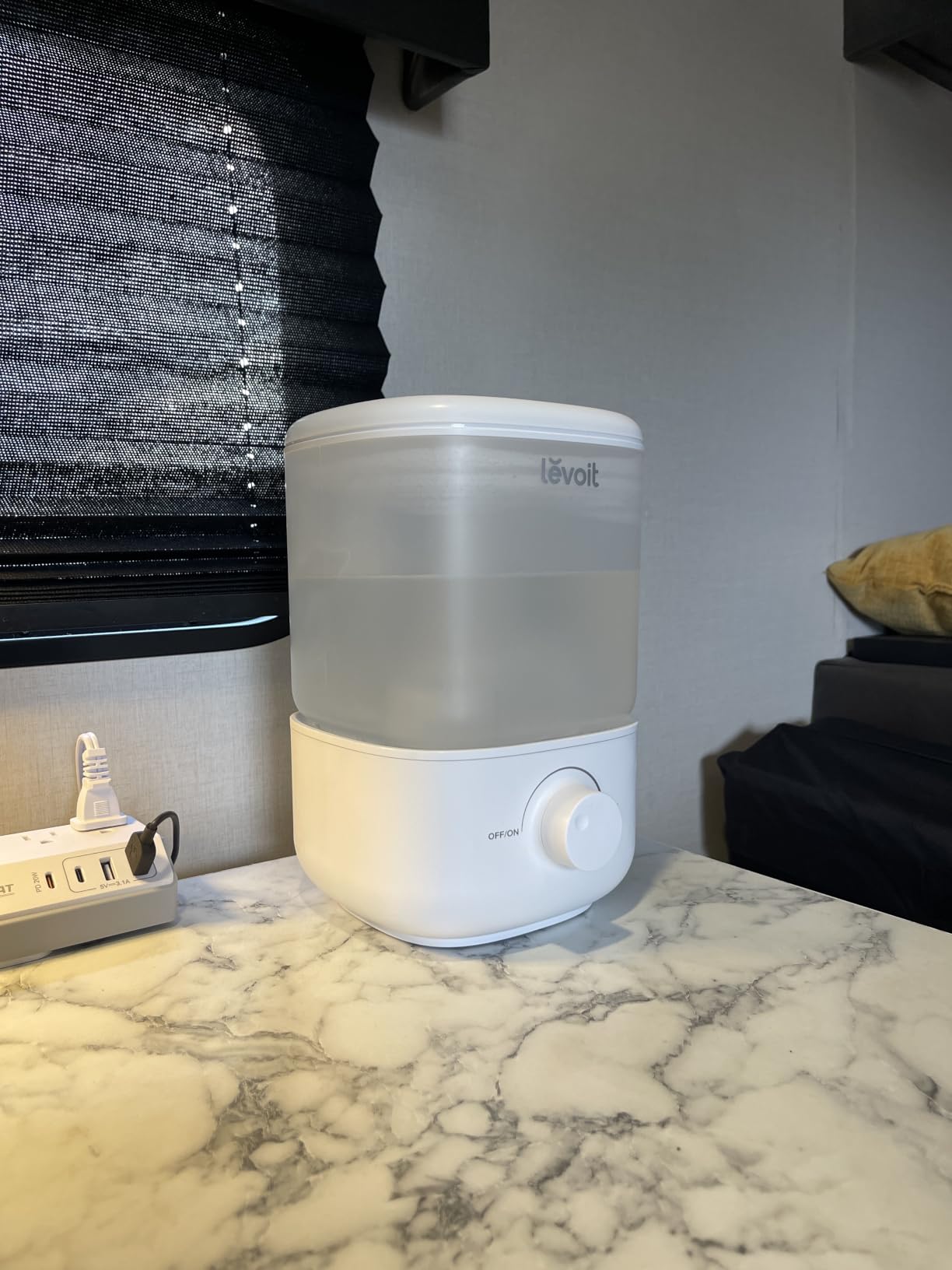
The 300S is the humidifier I recommend when a friend texts me at midnight, because it removes the two biggest failure modes. First, the auto humidity mode: you set 45%, the internal humidistat reads the room, and the unit cycles itself instead of pumping moisture into an already-damp room all night. Second, the top-fill tank. You pour water in through a wide opening at the top without removing anything, and that same opening is big enough for a hand and a brush.
In our nursery it held a 12×12 room around 43% for five consecutive nights on medium without me touching it. On the low setting we consistently got close to the full 25 hours from one 3L fill, which meant filling it at bedtime and forgetting it until the next bedtime. At 24 watts it costs roughly nothing to run.
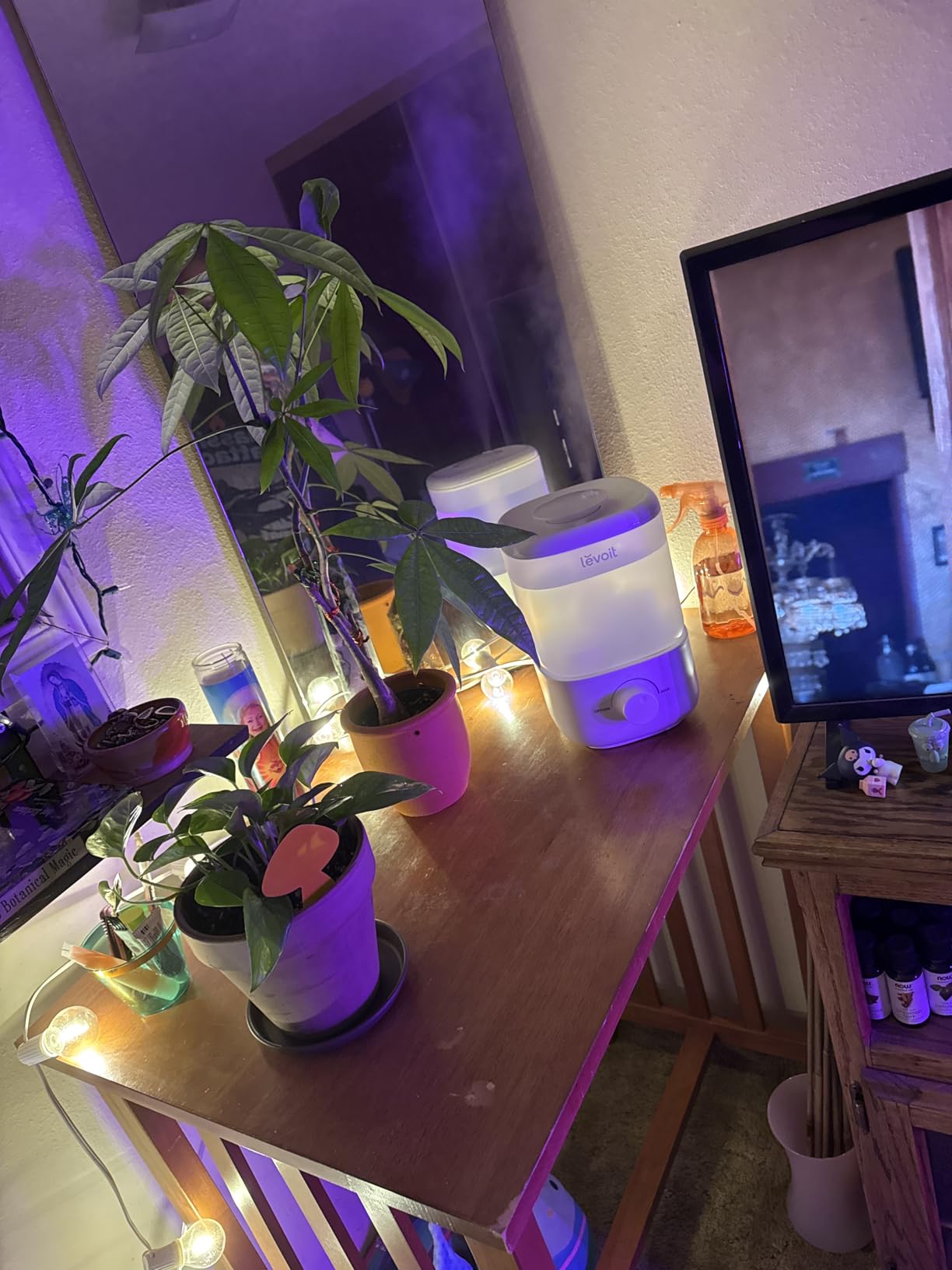
The VeSync app is the sleeper feature. When the baby finally goes down, the last thing you want to do is walk back in and tap a button. From the hallway I could drop it into sleep mode, dim the display, set a schedule tied to nap hours, and check the reported humidity without cracking the door. Alexa voice control works too, which sounds gimmicky until your hands are full.
The review base is the deepest of any unit here. Roughly three quarters of 57k+ ratings are five stars, and the recurring theme matches our experience: it quietly does the job, and the top-fill makes maintenance tolerable for tired people.
It is not flawless. The mist nozzle pushes a fairly short plume, so give it at least a couple of feet of clearance and point it into the open room, not at the crib or the wall. The internal hygrometer reads a few points high, which matters, so trust a separate hygrometer on the dresser and set the 300S a few percent lower to compensate.
Do you need the app, or is the onboard humidistat enough?
The onboard humidistat is genuinely enough for overnight use. Set it to auto at your target and it will hold the room in range without your phone ever being involved.
The app earns its keep for scheduling and for not entering the room. If you want mist to kick on an hour before bedtime so the room is already comfortable, or you want to kill the display completely at night, the app does that. Just know the 300S runs on 2.4GHz Wi-Fi, so it needs to be within reasonable range of your router.
What replacement parts should you budget for?
Not much, which is part of why this is the best long-term value in smart nursery humidifiers. There is no wick filter to buy. The water filter sponge and the aroma pad are the only consumables, and both are inexpensive multipacks.
With distilled water the sponge stays clean for months. With hard tap water, plan to swap it more often and expect some mineral cleanup on the tank. Distilled water is also the single best thing you can do to prevent white dust, so if you skip it, budget for sponges instead.
2. DREO 3L Cool Mist Humidifier – Best Budget Pick
DREO 3L Humidifiers for Bedroom, 30H Runtime, 26 dB Quiet, New Edition
3L tank
30-hour runtime
26 dB sleep mode
Digital humidistat
Night light
Pros
- 26 dB sleep mode is nearly inaudible
- Holds 300 sq ft at a set humidity
- Top-fill with digital display
- Night light can be fully dimmed
- 360-degree nozzle reaches 40 inches
Cons
- Hygrometer reads about 10% high
- Needs weekly cleaning like all ultrasonics
- Lid opening is smaller than the big Levoit
The DREO is the pick I hand to anyone who wants 90% of the Levoit 300S experience for about half the money. It has the same winning formula: a 3L top-fill tank, a real humidistat with a settable target, and a sleep mode that is essentially silent. In our room I had to put my ear near the unit to confirm it was running.
The digital display is genuinely useful. You get the current humidity and your target side by side, so at a glance you can see the room climbing from 33% toward the 45% you asked for. The 360-degree rotating nozzle pushed mist a solid 40 inches in our test, which is noticeably better projection than the 300S, and the runtime on low stretched to a real 30 hours.
For congestion nights this did the job we actually buy these things for. Room humidity came up in about 40 minutes, the baby’s 3am dry cough settled, and morning diapers stopped crackling with static. The aroma pad tray means you can run a diffuser scent in an older kid’s room, though skip oils entirely around young babies.
The rating pattern backs up the value case, with 76% of more than 7,600 ratings at five stars. That is a strong distribution for a budget appliance in a category where cheap usually means disposable.
The trade-offs are the honest ones. The built-in hygrometer reads roughly 10% high, so set your target about 10 points below what you actually want and confirm with a separate hygrometer. The lid opening is smaller than the opening on the 6L Levoit, so cleaning takes a bit more brush work. And like every ultrasonic humidifier, it needs its weekly vinegar soak or it will become the thing you throw out.
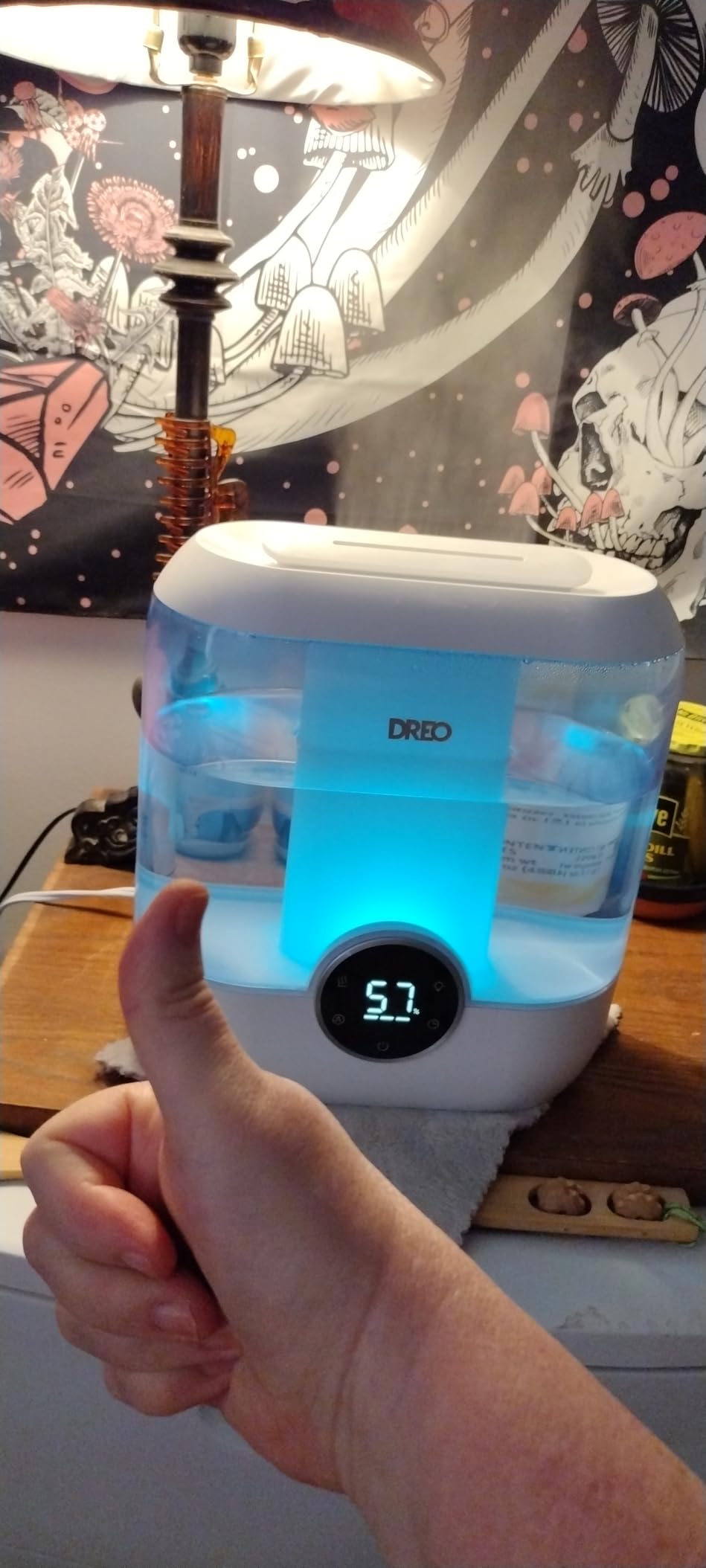
How quiet is 26 dB in a real nursery?
For context, 26 dB sits between a whisper and a library. On sleep mode the DREO is quieter than the white noise app on the lowest setting we use, and there is no fan, no gurgle and no dripping sound.
The one sound you might notice is a faint occasional water shift when the ultrasonic plate first starts, similar to a calm fridge. Our light sleeper never stirred. If your baby wakes to a pin dropping, this is one of maybe two units on this list I would put in that room.
How does the night light behave at 2am?
This is where DREO beats several more expensive models. The ambient light is adjustable through multiple brightness steps and dims to fully off, and the display can be killed in sleep mode so the room stays dark.
Compare that with the Crane models below, whose green power LED has its own fan club of annoyed parents taping fabric over it. If you have already fought the glowing-nightlight battle in your house, the DREO quietly surrenders.
3. Levoit LV600S Smart Hybrid – Best for Large Nurseries and Shared Rooms
Levoit LV600S Smart Warm&Cool Mist Humidifiers for Home Bedroom Large Room
6L tank
50-hour runtime
Warm and cool mist
753 sq ft coverage
Sleep mode under 28 dB
Pros
- 6L tank runs up to 50 hours
- Covers huge and open rooms
- Smart sensor with auto mode
- Top-fill with wide opening
- Sleep mode under 28 dB
Cons
- Hygrometer can read 10% high
- Aroma pads add little
- More machine than one small nursery needs
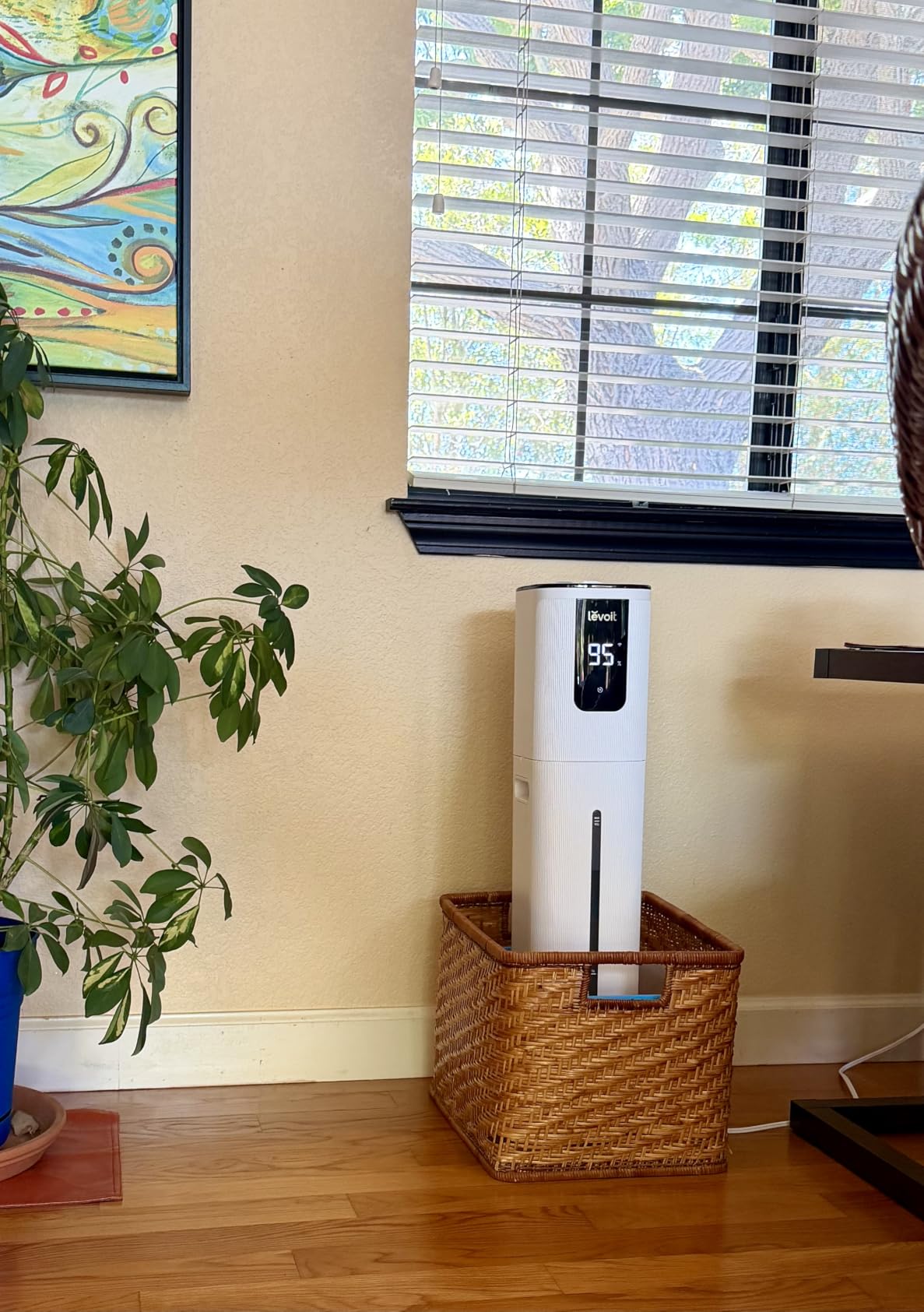
The LV600S is the best cool mist humidifier if your nursery is large, open to a hallway, or shared with a sibling. Wirecutter named its sibling the top baby pick, and having run one through a full winter I get it. The 6L tank is the story: on low we went two full nights between fills, and even on medium it comfortably cleared a day and a half.
Rated for up to 753 square feet, it did what smaller units could not in our open-plan nursery-and-playroom setup, pulling the whole space from the low 30s into the mid-40s without running flat out. Sleep mode runs under 28 dB, which in practice meant a soft presence rather than silence, masked easily by any white noise machine.
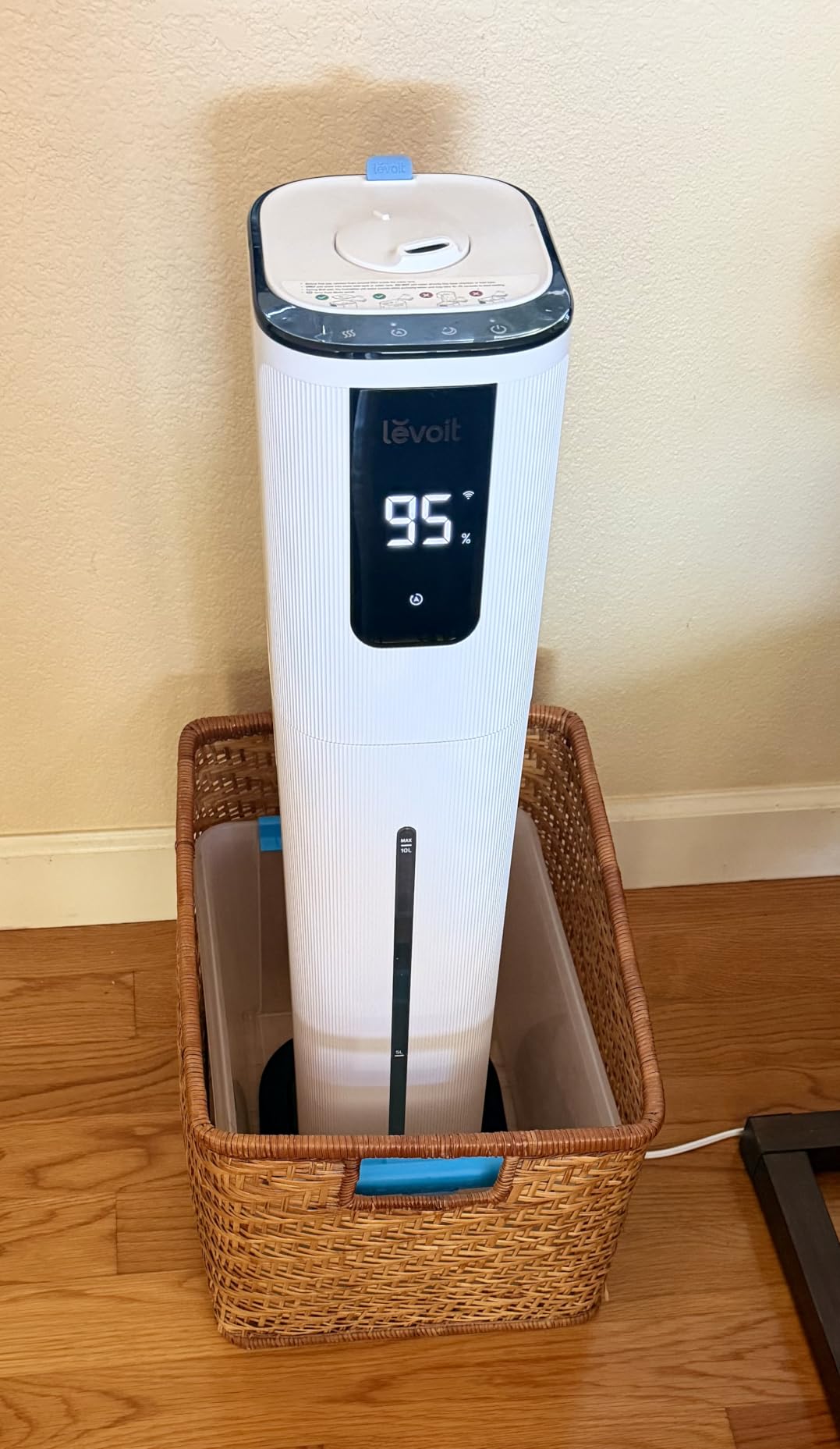
The smart features work the same way they do on the 300S. Auto mode reads the room and cycles to hold your target, the VeSync app handles schedules, and voice control covers the basics. The wide top-fill opening is one of the easiest to clean on this list, big enough for a hand, a brush and honest inspection.
Two honest complaints from long-term owners. The built-in hygrometer can read about 10% high, so calibrate against a separate one. And the aroma box is weak enough that I would call it decorative. If you want real aromatherapy for an older child, get a dedicated diffuser and keep oils out of the water tank.
Should you ever use warm mist mode in a nursery?
The LV600S is a hybrid, so it can heat water for a warm mist. In a baby’s room our answer is no, and the AAP agrees: warm mist units involve heated water and a burn risk around children, so cool mist is the recommended mode for any child’s room.
The warm mode has a legitimate use case, just not this one. Adults with a steam preference in a master bedroom, or a big living space where small hands are supervised, can use it sensibly. In the nursery, leave it in cool mist and treat the warm setting as a feature you paid for and will not use.
Is a 6L tank overkill for one room?
For a small closed nursery, honestly, yes. A 3L unit refilled nightly does the same job, takes less shelf space and costs less.
Where the 6L earns its footprint is in bigger or leakier rooms: nurseries over roughly 200 square feet, rooms with high ceilings, old houses with drafty windows, shared sibling rooms, or a nursery with the door open to a hallway. In those cases you are not just humidifying a box, you are humidifying air that keeps exchanging, and the bigger tank stops you from refilling twice a day.
4. Honeywell HCM350B – Best Evaporative Pick, No White Dust
Honeywell Cool Moisture Humidifiers for Bedroom, Medium Rooms, 1.1 Gallon, Invisible Moisture Humidifier for Baby, Kids, Quiet, Easy to Clean, UV Technology, Black, HCM350B
Evaporative cool mist
1.1-gallon tank
UV-treated water
Dishwasher-safe parts
400 sq ft
Pros
- Evaporative mist leaves no white dust
- Water-contact parts are dishwasher safe
- UV treatment helps clean the water
- Fan sound works as white noise
- Multi-year reliability track record
Cons
- Wick filter needs flipping and replacing
- No humidity sensor or auto shut-off
- Fan is audible and 9 pounds to move
The Honeywell HCM350B is the answer to the number one complaint parents have about humidifiers, the white mineral dust that settles on every surface downwind of an ultrasonic unit. It is evaporative, which means a fan pushes air through a wet wick filter instead of vibrating minerals into the air. The moisture is invisible, and our dark dresser under it stayed dust-free all season.
The second win is cleaning. Every water-contact part is dishwasher safe, so the weekly clean is a top-rack cycle rather than a vinegar soak and a sore wrist. Honeywell also runs the water past UV light to treat it, which is a real step up from an open tank sitting warm all week.
In a medium room around 200 square feet it raised humidity from the low 30s to the mid-40s overnight and held it. The self-standing tank fills at the sink like a milk jug, a small thing that matters every single day. It drinks about a gallon of water per 12 hours on medium, so expect to fill it daily in deep winter.
The owner base is unusually loyal. Plenty of reviewers report five or more years of continuous use, which almost nothing else on this list can claim, and 70% of nearly 3,700 ratings are five stars.
The trade-offs are real too. There is no humidistat and no auto shut-off, so you are the sensor, and an empty tank means the fan keeps running. The wick filter needs flipping weekly and replacing every one to two months with hard water, and the black model has had reports of a faulty base switch on some units, so register the 3-year warranty.
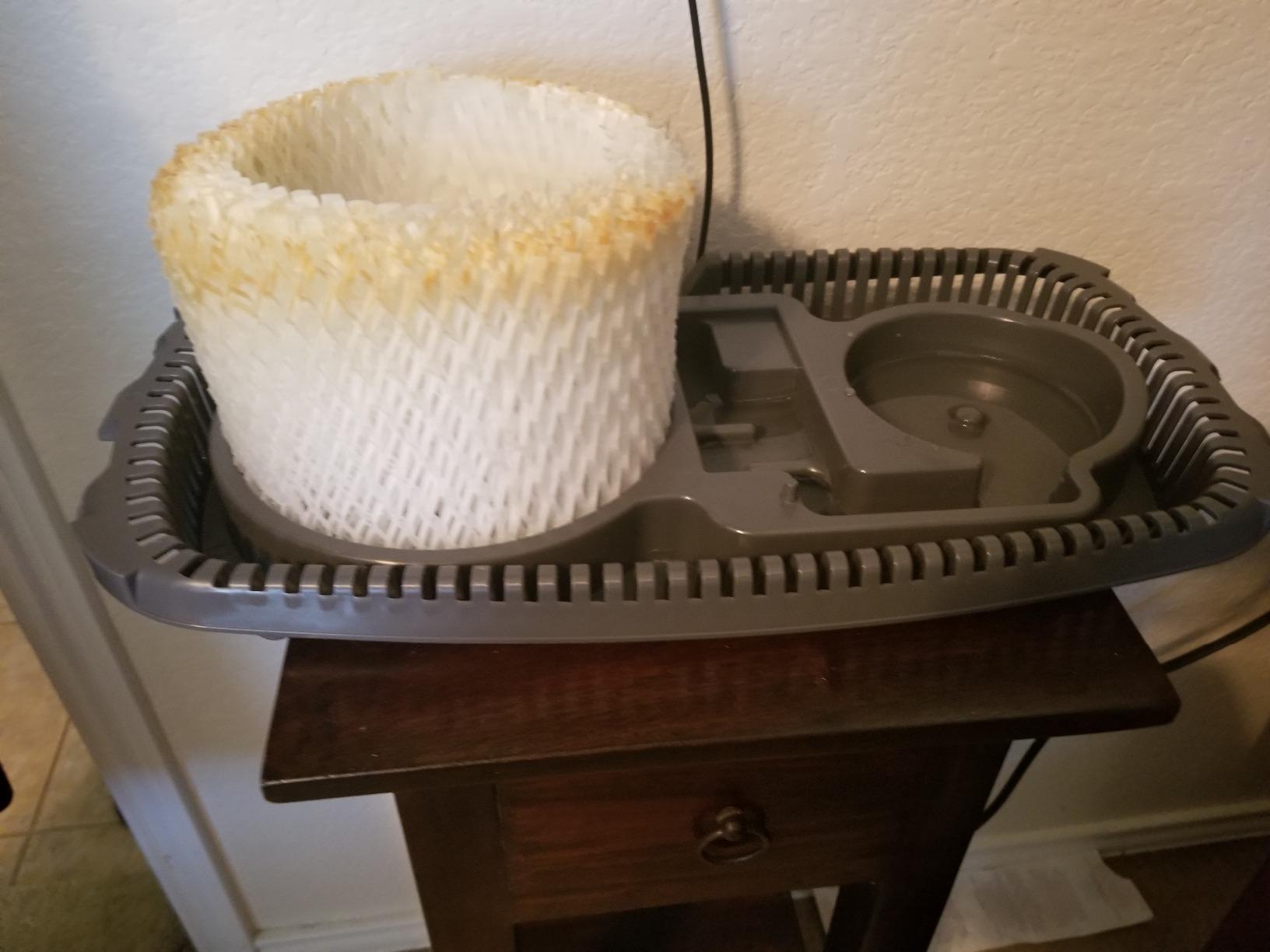
What does wick filter ownership actually look like?
Plan on flipping the filter weekly and replacing it every four to eight weeks depending on water hardness. Replacement wicks are cheap, sold everywhere, and the recurring cost is the price of never having white dust.
The filter will discolor from minerals within weeks. That looks alarming and is completely normal, it is the wick doing its job by holding the minerals. Swap it on schedule, not on appearance alone, and air it out if you turn the unit off for more than a day.
Is the fan noise a dealbreaker for your sleeper?
It depends entirely on your baby. On low the HCM350B sounds like a gentle house fan, and plenty of parents deliberately use it as white noise because it masks dogs and doorbells better than any ultrasonic unit.
If your child needs a genuinely silent room, this is the wrong pick and a 26 dB ultrasonic model will serve you better. Our toddler slept better with the fan, our infant was indifferent, but I would not have put it next to a newborn’s crib. Keep it across the room, which you should be doing anyway.
5. Canopy Nursery Humidifier 2.0 – Best for Mold Prevention
Canopy Nursery Humidifier 2.0, White, 2.5L, 36 Hr, Sleep Light & Aroma Kit
2.5L tank
36-hour runtime
Dishwasher-safe parts
Anti-mold coating
Runs until dry
Pros
- Dishwasher-safe tank tray and grill
- Anti-mold coating inside
- Dries itself after every run
- Works with plain tap water
- Sleep light and white noise built in
Cons
- Priciest pick on the list
- Fan is loud above auto setting
- Small review base so far
- Filter can smell if not aired out
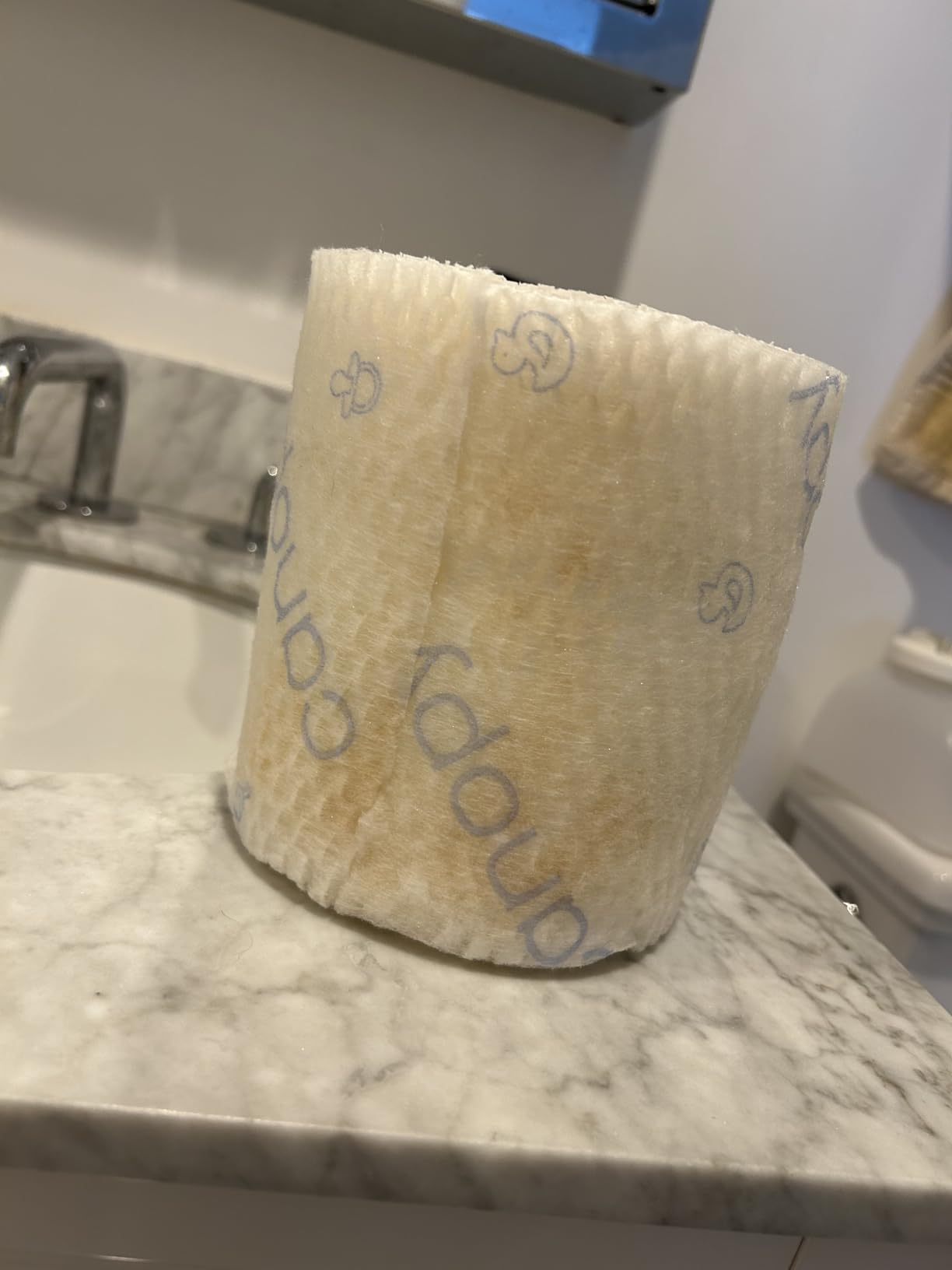
The Canopy exists for parents whose fear is not dry air, it is mold. One mom of three in our research described opening a humidifier she had assumed had harmless mineral buildup and finding something darker and slimier. That story is everywhere in parent forums, and Canopy is the most serious engineering answer to it.
The whole cleaning model is different. The tank, tray, grill, spacer and cap all go in the dishwasher. There is an anti-mold coating on the body. Best of all, smart sensors run the fan until every drop of water inside has evaporated, so the unit dries itself instead of becoming a petri dish between runs. It also runs happily on tap water, because the proprietary pre-filter captures minerals before they reach the air.
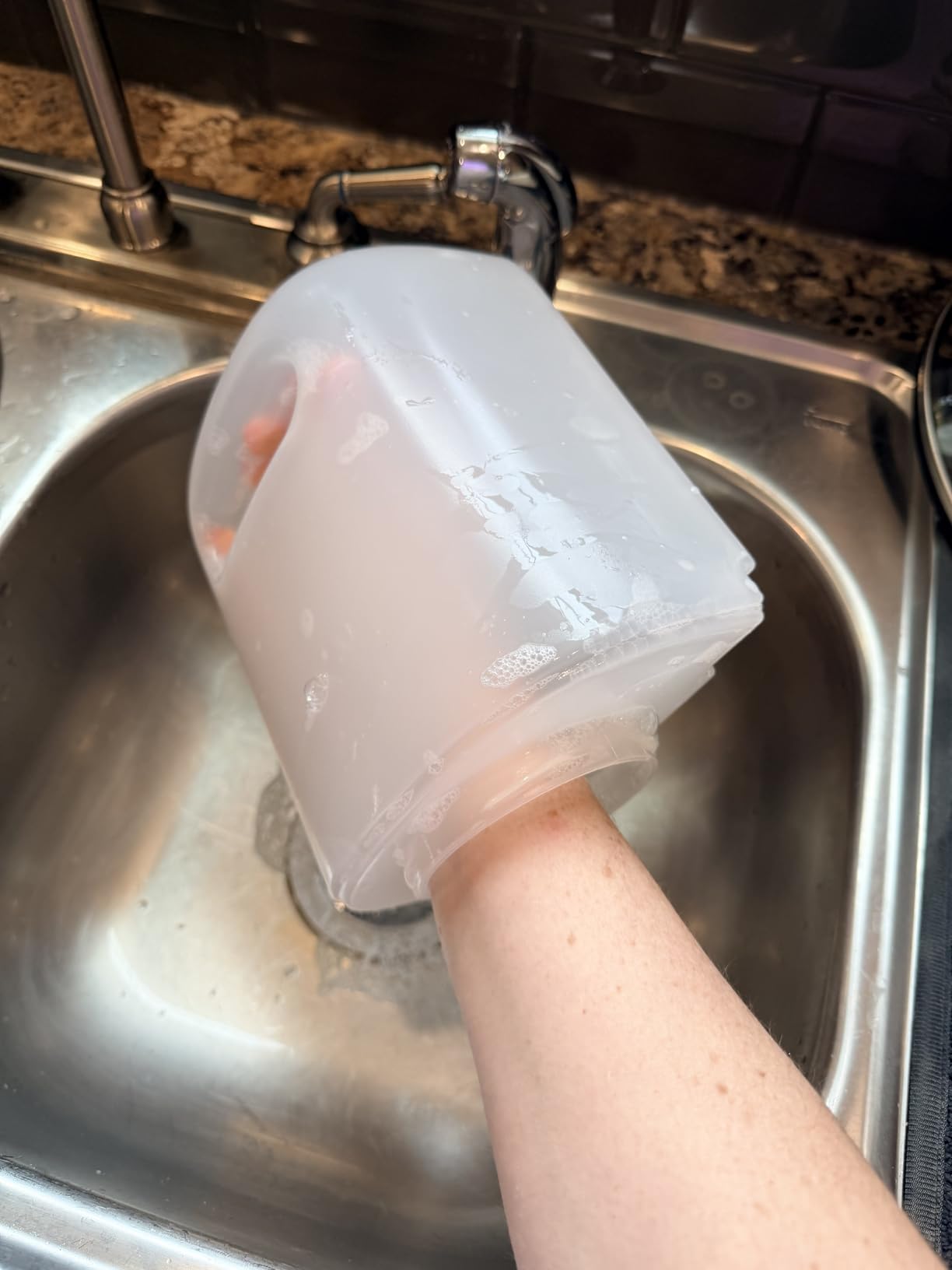
Used as a nursery humidifier, it behaved. A 2.5L tank gave us a real 36 hours on auto, humidity held steady without the overshoot you get from basic ultrasonics, and the included sleep light and white noise setting replaced one gadget on the shelf. The aroma kit is included, though the aroma stones underwhelmed us and several reviewers.
Now the flaws, because at this price you deserve them. Above the auto setting the fan is loud enough that I would not use it as a nursery white noise machine. Buttons on some units glitch and need a power cycle to reset. A few owners report the filter smelling if it is not aired out daily, and one warped a part in the dishwasher. And with only 67 reviews so far, the long-term record is simply thinner than Levoit’s or Crane’s.
Is it worth the premium for mold peace of mind?
If you have already thrown out one moldy humidifier, yes, without hesitation. Self-drying plus dishwasher-safe parts attacks the exact failure that ruins every other unit on this list.
If you are a diligent cleaner who does weekly vinegar soaks anyway, the math changes. A cheaper unit maintained well will stay clean too, and you can put the savings toward distilled water and a good hygrometer. Canopy is insurance, and insurance is worth exactly what you are worried about.
How does dishwasher cleaning work in real life?
You pull the parts off the base, load the tank and tray in the top rack, and run a normal cycle. Total hands-on time is about two minutes, versus ten minutes of brushing a conventional tank.
Two cautions. Skip heated drying if your dishwasher runs hot, since one owner reported warping, and let the filter air dry separately rather than leaving anything damp sitting in the machine. Treat it gently and cleaning genuinely becomes the easiest on this list.
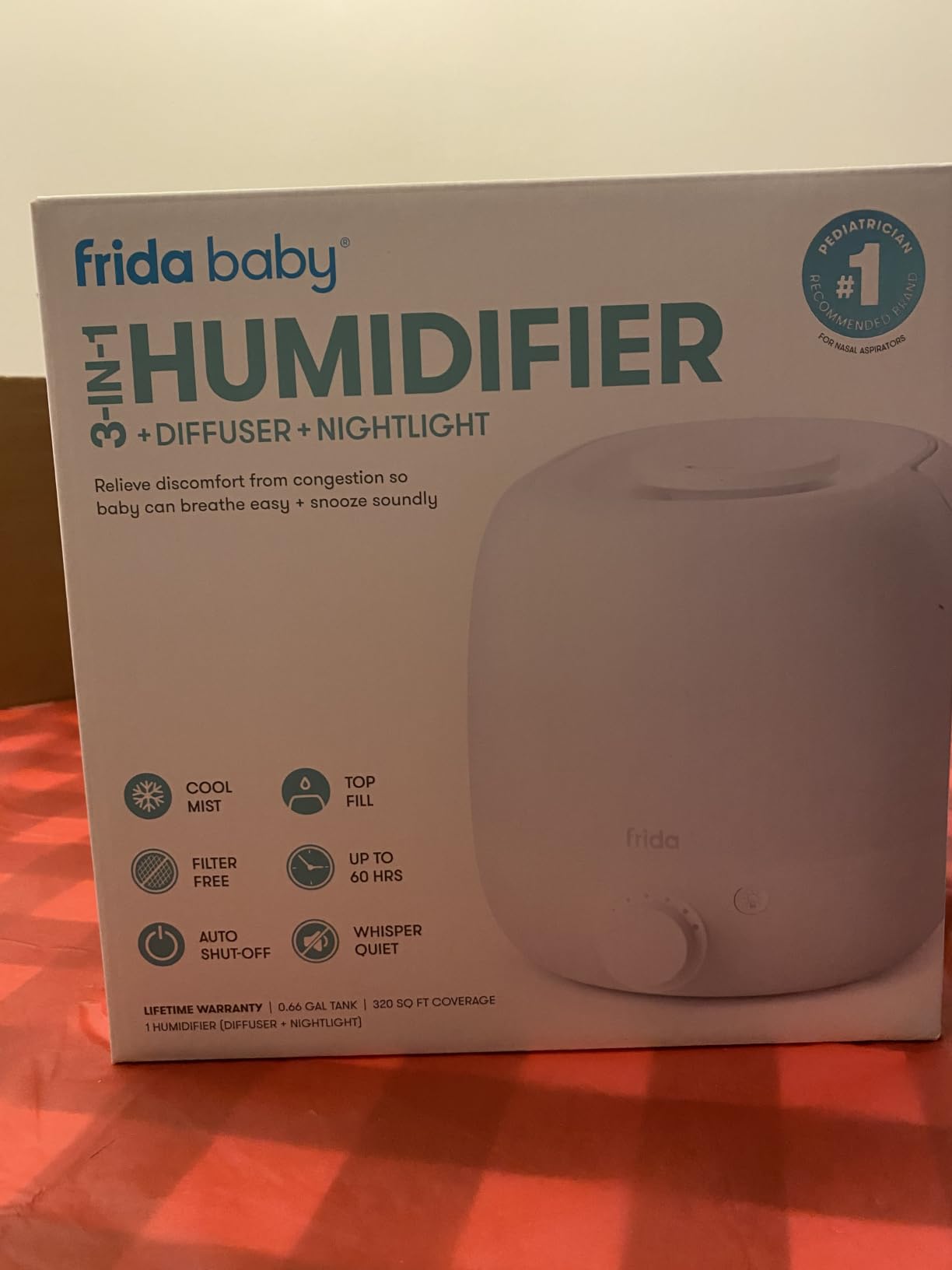
6. Frida Baby 3-in-1 Cool Mist Humidifier – Best Multi-Function
Frida Baby 3-in-1 Cool Mist Humidifier for Large Rooms & Bedroom, Diffuser
3-in-1 humidifier, diffuser and night light
0.66-gallon tank
60-hour runtime
Top-fill
Pros
- Up to 60 hours per fill
- Top-fill with carry handle
- Dual 360 spouts for direction
- Night light colors or fully off
- Filter-free with no ongoing costs
Cons
- Opaque tank hides buildup
- Narrow opening makes scrubbing awkward
- Tank will not stand on its own
- Occasional leak reports over time
Frida makes the sick-day gear parents actually buy, the NoseFrida and the saline kits, and the 3-in-1 humidifier is built for exactly that workflow. It is a humidifier, an essential oil diffuser and a night light in one footprint, which is why it lands on so many registries. During our worst RSV-season week it ran beside the saline and suction station like a triage nurse.
The headline number is real. On low, the 0.66-gallon tank lasted into a third night in our room, which is the longest stretch of any small unit here. Operation is close to silent, the dual 360-degree spouts let you aim mist two directions at once, and the whole thing weighs little enough to carry one-handed to the sink by the top handle.
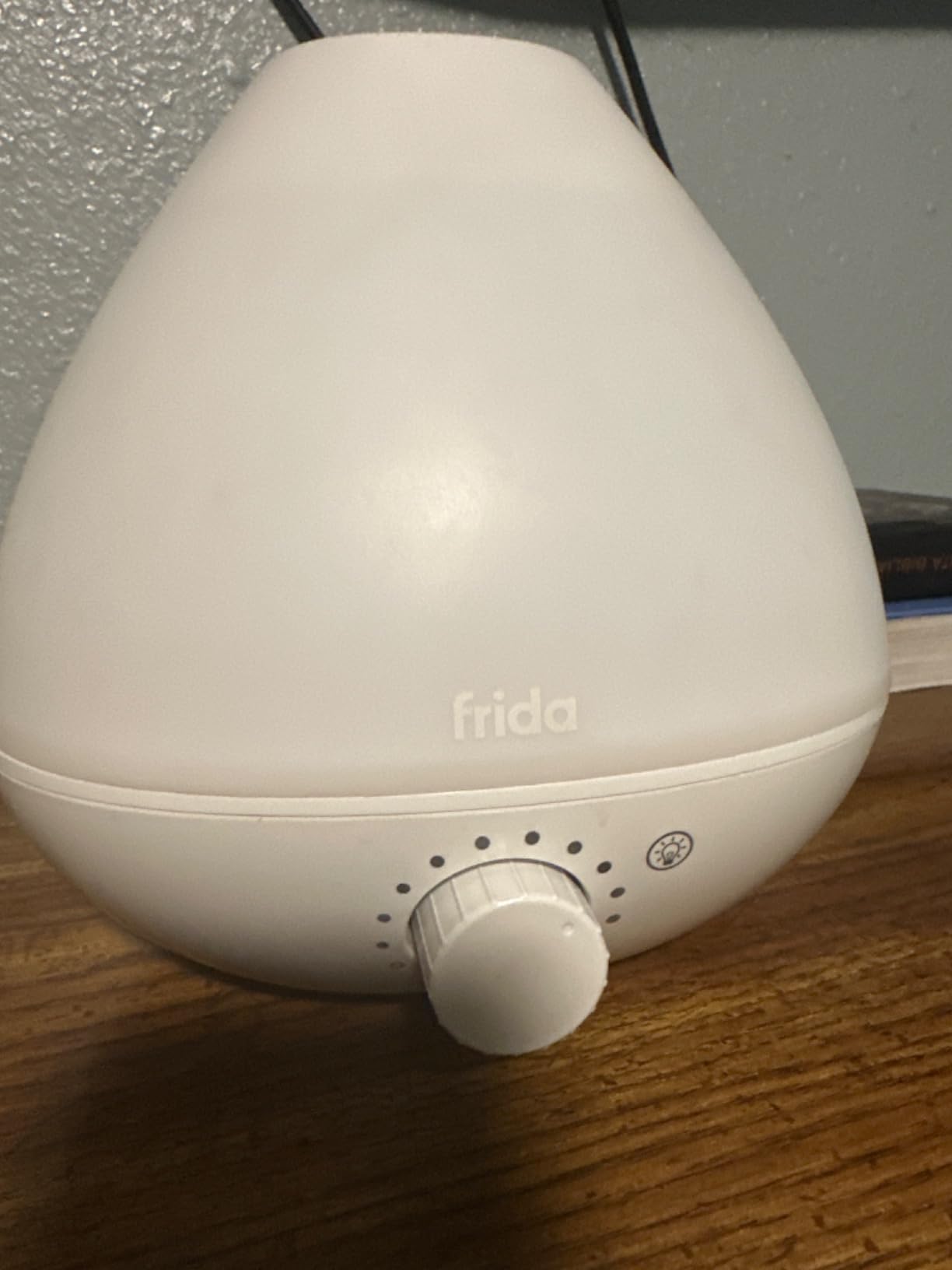
The night light is a genuine feature, not a bulb slapped on. Multiple colors, adjustable, and fully off, which is the setting we used. Because there is no filter, there are no consumables to buy, ever, which quietly makes this one of the cheapest small humidifiers to own over two winters.
Now the part I would want someone to tell me. The tank is opaque white, so you cannot see what is growing inside, and the fill opening is narrow enough that scrubbing the far corners takes effort. That combination is exactly how the mold complaints in the reviews happened. The redesigned version with a wider opening has improved things, and Frida’s support does replace problem units, but this is a unit that demands its weekly cleaning.
Can you spot mold early in an opaque tank?
Not by looking, and that is the single real drawback of this design. You have to clean on a schedule rather than on visual proof.
Two habits make it manageable. Do a weekly vinegar soak rather than trusting a rinse, and dry the tank fully every day or two instead of topping it off. Also note the tank will not stand on its own without the base, so fill it over the sink and carry it carefully, since forcing it down can cause leaks.
How often will you refill a 0.66-gallon tank?
On low, every two to two and a half days, which is the whole appeal. On medium or high for congestion nights, expect closer to daily.
If your nursery is large, size up. Frida rates it for rooms up to 320 square feet, and it will hold humidity in a small-to-medium room nicely, but it is not the tool for a big open space. For a standard nursery used at bedtime intensity, the runtime is a genuine luxury.
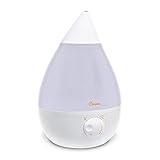
7. Crane Ultrasonic Cool Mist Humidifier – Best Classic Nursery Design
Crane Ultrasonic Cool Mist Humidifier for Bedroom, Baby Nursery, Kids Room, Plants, or Office, Large 1 Gallon Tank, Filter Optional, White
1-gallon tank
24-hour runtime
360 swivel spout
Adjustable mist
Filter optional
Pros
- Near-silent ultrasonic operation
- Runs up to 24 hours per fill
- Swiveling spout aims the mist
- Simple dial with no menus
- Cheap optional demineralization filter
Cons
- White dust with hard tap water
- Tank opening is small for cleaning
- Bright green LED annoys light sleepers
- Handle not built for a full tank
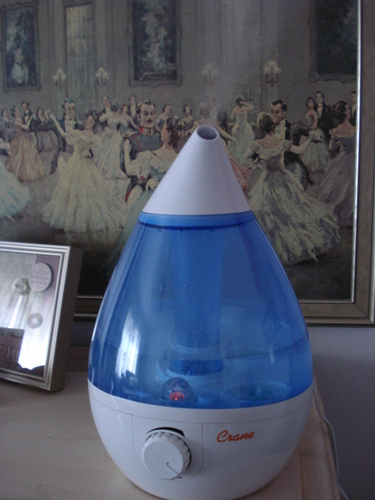
This is the teardrop-shaped Crane that has sat in nurseries for over a decade, with more than 16k reviews and a 4.4 average to show for it. BabyGearLab has long favored it as the budget-friendly pick, and it deserves that reputation. It is a dial, a tank and a swiveling spout, with nothing to configure and almost nothing to break.
Ours ran a full 24 hours on low from the 1-gallon tank, humidifying a standard nursery to the low 40s from the low 30s. The 360-degree spout is more useful than it sounds, because you can rotate mist away from the crib and toward the center of the room without moving the unit. It is filter-optional, and it is cheap to run.
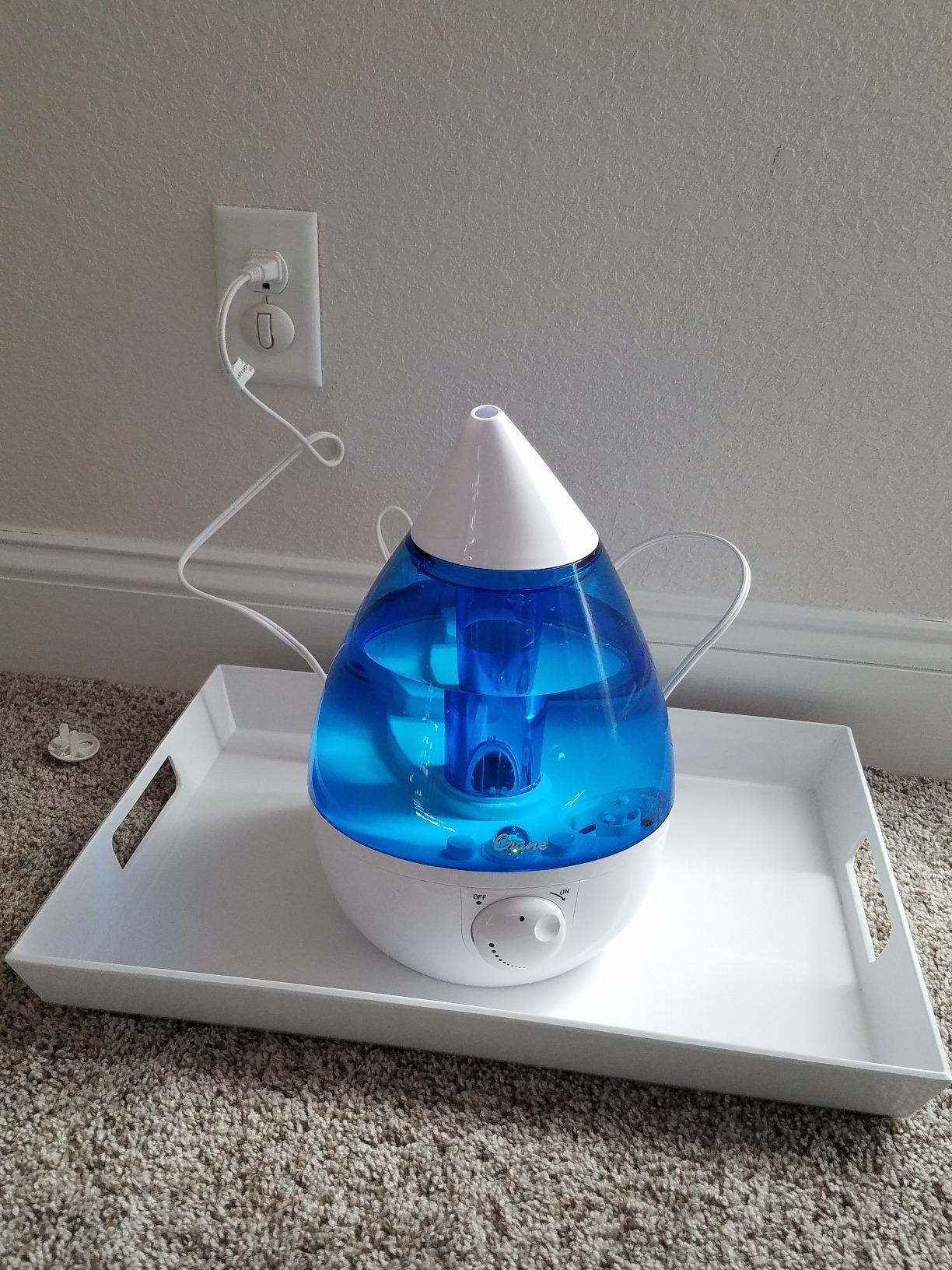
That filter-optional part needs explaining. Ultrasonic units vibrate whatever is in the water into the air, so with hard tap water this Crane will produce white mineral dust on nearby furniture. Our test unit left a faint film on the dresser two feet downwind within two weeks. The fix is either distilled water or the Crane demineralization filter, which costs a few dollars and drops in.
The other parent-famous annoyance is the green LED power light, bright enough to cast shadows. A strip of tape over it is practically a rite of passage. And the tank opening is small, so a bottle brush and some patience are required for the weekly clean.
Will your tap water cause white dust?
If you have hard water, almost certainly. The harder your water, the more mineral content gets vibrated into the air, and the faster the film appears on cribs, dressers and windows near the unit.
Three fixes in order of effectiveness. Use distilled water, which eliminates the problem entirely. Use the optional Crane demineralization filter, which reduces it a lot. Or run the humidifier at lower intensity and point the spout into open air, away from the crib and soft furnishings. Whatever you choose, wipe nearby surfaces weekly so you notice any change early.
How do you clean a small tank opening?
With a long-handled bottle brush, white vinegar and ten minutes. Fill partway with a vinegar and water mix, swish aggressively, let it sit for half an hour, then brush the bottom and neck and rinse well.
Be honest with yourself about anything you cannot reach. If your water is hard and your area has scale, this tank will build it up faster than a wide-mouthed top-fill model. Parents who happily own this unit for years are the ones who clean weekly without fail.
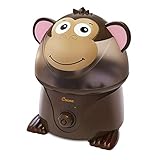
8. Crane Adorable Monkey – Best for Toddler Rooms
Crane Adorables Ultrasonic Humidifiers for Bedroom and Baby Nursery, 1 Gallon Cool Mist Air Humidifier for Large Room or Kid’s Room, Humidifier Filters Optional, Monkey
1-gallon tank
24-hour runtime
Near-silent
Animal designs
Auto shut-off
Pros
- Near-silent in a kids room
- Runs up to 24 hours
- Animal characters kids love
- BPA and phthalate-free
- Optional demineralization filter
Cons
- Bright green LED at night
- Awkward filling with handle placement
- Handle not built for a full tank
- Not compatible with essential oils
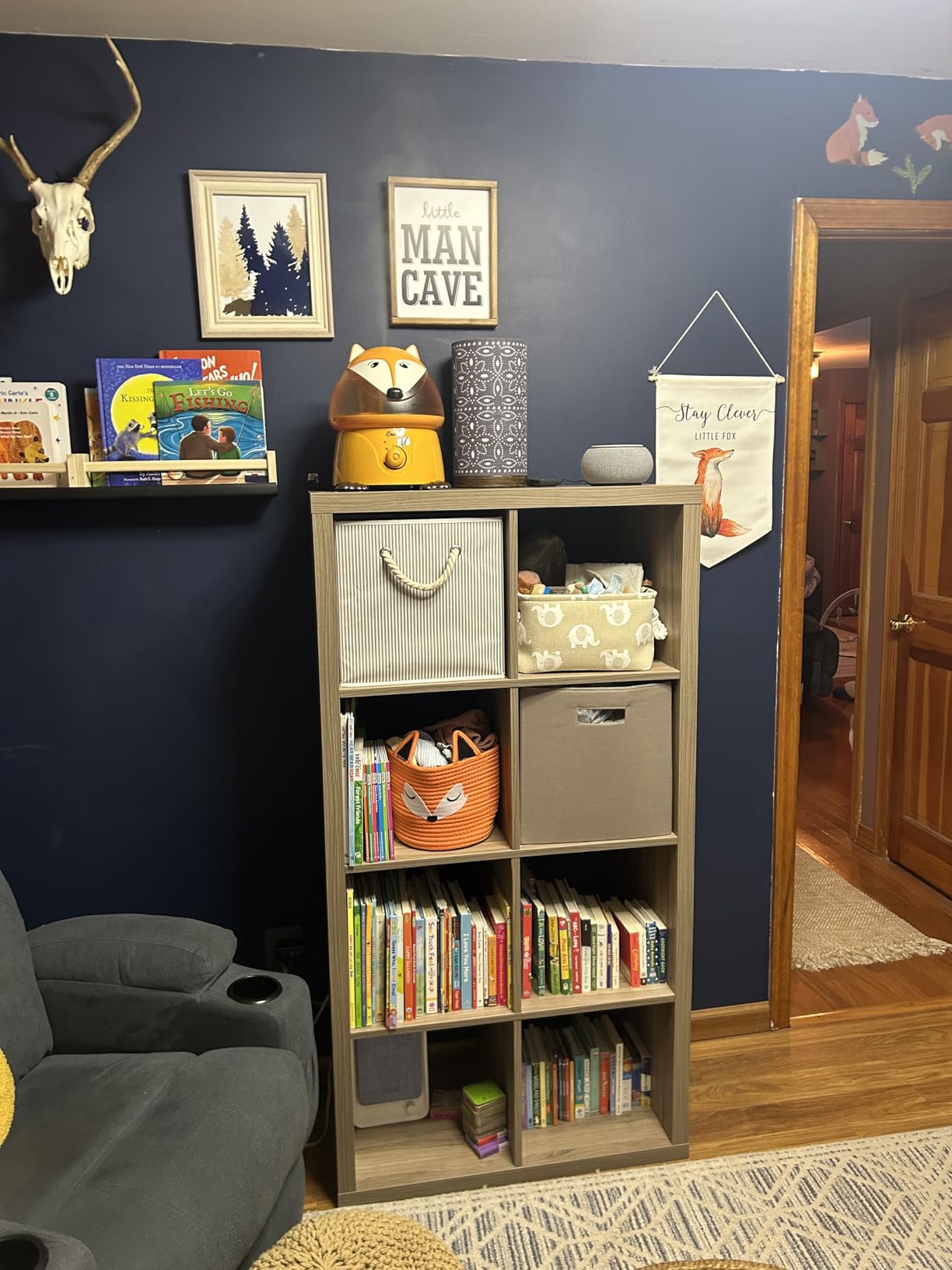
Sometimes the best humidifier is the one your toddler will let you run. The Crane Adorable series puts the same proven 1-gallon ultrasonic internals as the classic model inside a monkey, elephant, owl, penguin or frog, and it is the version that becomes part of the room. Ours was named George, was patted goodnight nightly, and never once got yanked off the shelf.
Functionally it matches the classic Crane: near-silent operation, up to 24 hours on low, a 1-gallon tank, automatic shut-off when empty, and the same 500 square foot coverage claim that is realistic for a standard nursery on medium. BPA-free and phthalate-free plastics, which matters for a unit that will absolutely be touched.
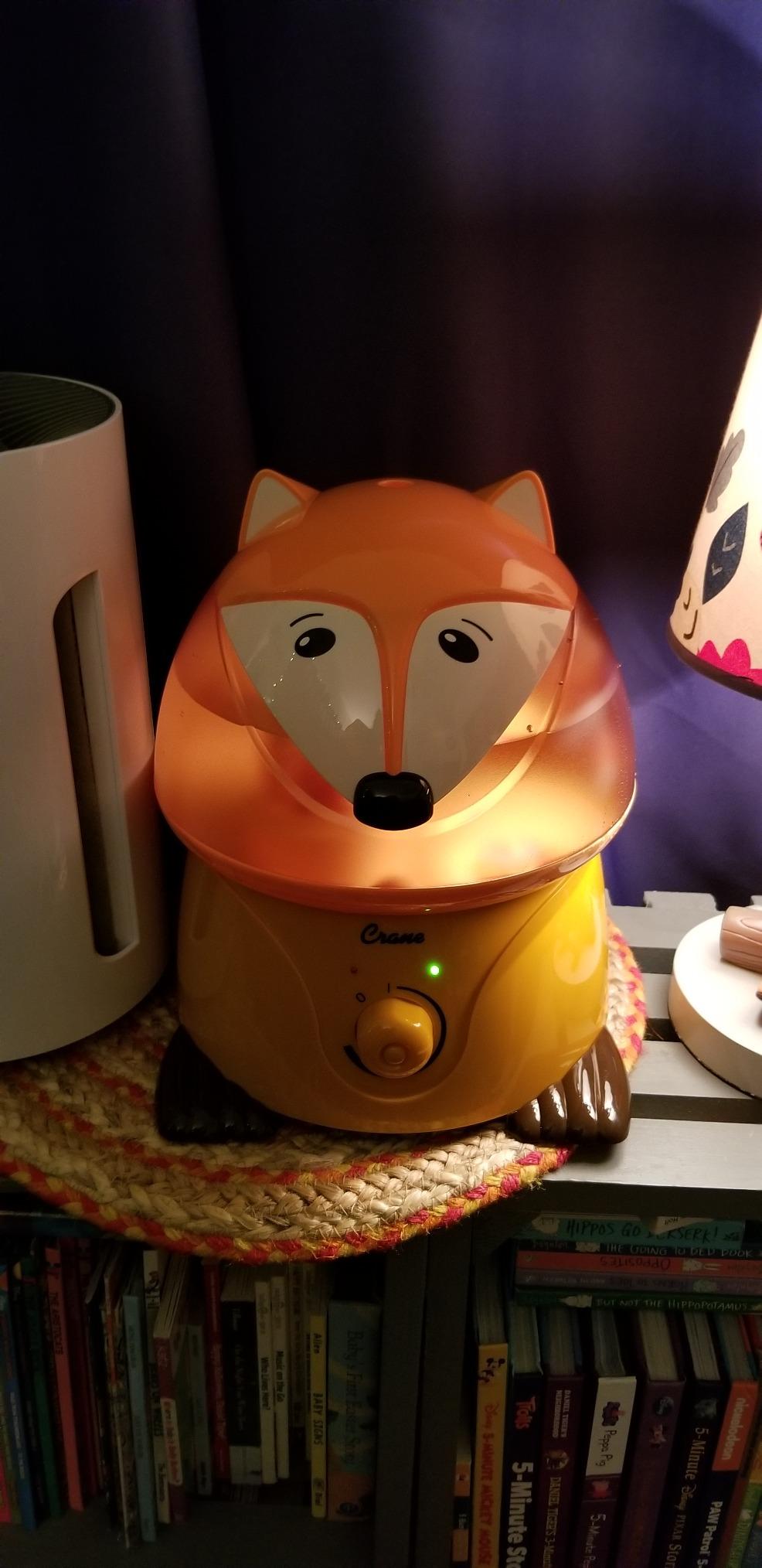
For congestion nights in the toddler room it performed exactly like the classic model, which is to say well. Room humidity came up a few hours after bedtime, the dry cough eased, and the silent operation meant no change to the sleep soundscape. Reviewers echo this, with 77% of 9.5k ratings at five stars.
The flaws are inherited from the family. The green power LED is bright. Filling is awkward because of the handle placement, and the handle is not designed to carry a full tank, so support the base. And Crane explicitly says this unit is not compatible with essential oils, which matters more than people expect, because well-meaning relatives will suggest eucalyptus for a congested toddler. Do not put oils in this tank.
Will the animal design survive the toddler years?
Largely yes, with placement discipline. Keep it on a dresser or shelf at least three feet up and cord secured out of reach, and the design holds up to daily pats.
It is not tip-proof engineering, and no humidifier survives being pulled down by a determined two-year-old. The auto shut-off means a tipped unit stops misting, but water goes where water goes. For a climbing toddler’s room, a higher shelf beats a cuter low table every time.
Why can’t you use essential oils in it?
Because the manufacturer says so, and the reason is real. Oils break down plastic tanks and seals over time, causing cracks and leaks, and residue is very hard to clean out of a small tank.
More basically, essential oils are not recommended around babies and young toddlers, especially not applied near them during sleep. If you want scent in an older child’s room, use a separate diffuser placed away from the crib and run it while you can supervise, and keep this tank filled with water only.
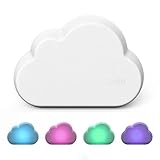
9. Pure Enrichment PureBaby Cloud – Best Night Light
Pure Enrichment PureBaby Cloud Ultrasonic Cool Mist Humidifier
1.8L tank
24-hour runtime
Rainbow night light
360-degree nozzle
5-year warranty
Pros
- Rainbow spectrum night light with custom colors
- Genuinely quiet at bedtime
- Doubles as soft white noise
- 5-year warranty
- Cleaning brush included
Cons
- 1.8L may not last the night on high
- Touch sensor can trigger accidentally
- Interior crevices are hard to reach
- Occasional leaking when moved
The PureBaby Cloud is the nursery humidifier that looks like it belongs in a nursery. The cloud silhouette is genuinely charming, and the night light is the real star: a full rainbow spectrum you can set to cycle, or fix on a single custom color, or dim to a faint glow. For midnight feeds it lit the room just enough to navigate without waking anyone.
As a humidifier it covers the basics for a small room up to 250 square feet. The 1.8L tank is rated for up to 24 hours, the 360-degree nozzle aims the mist, a variable knob sets output, and operation is quiet enough that several parents say they bought it partly as a white noise machine. The included cleaning brush is a nice touch that competitors skip.
What convinced me to include it despite the small tank is the warranty. Five years from the manufacturer is unheard of in this category, where a year or two is standard, and their support team has a reputation for replacing defective units quickly.
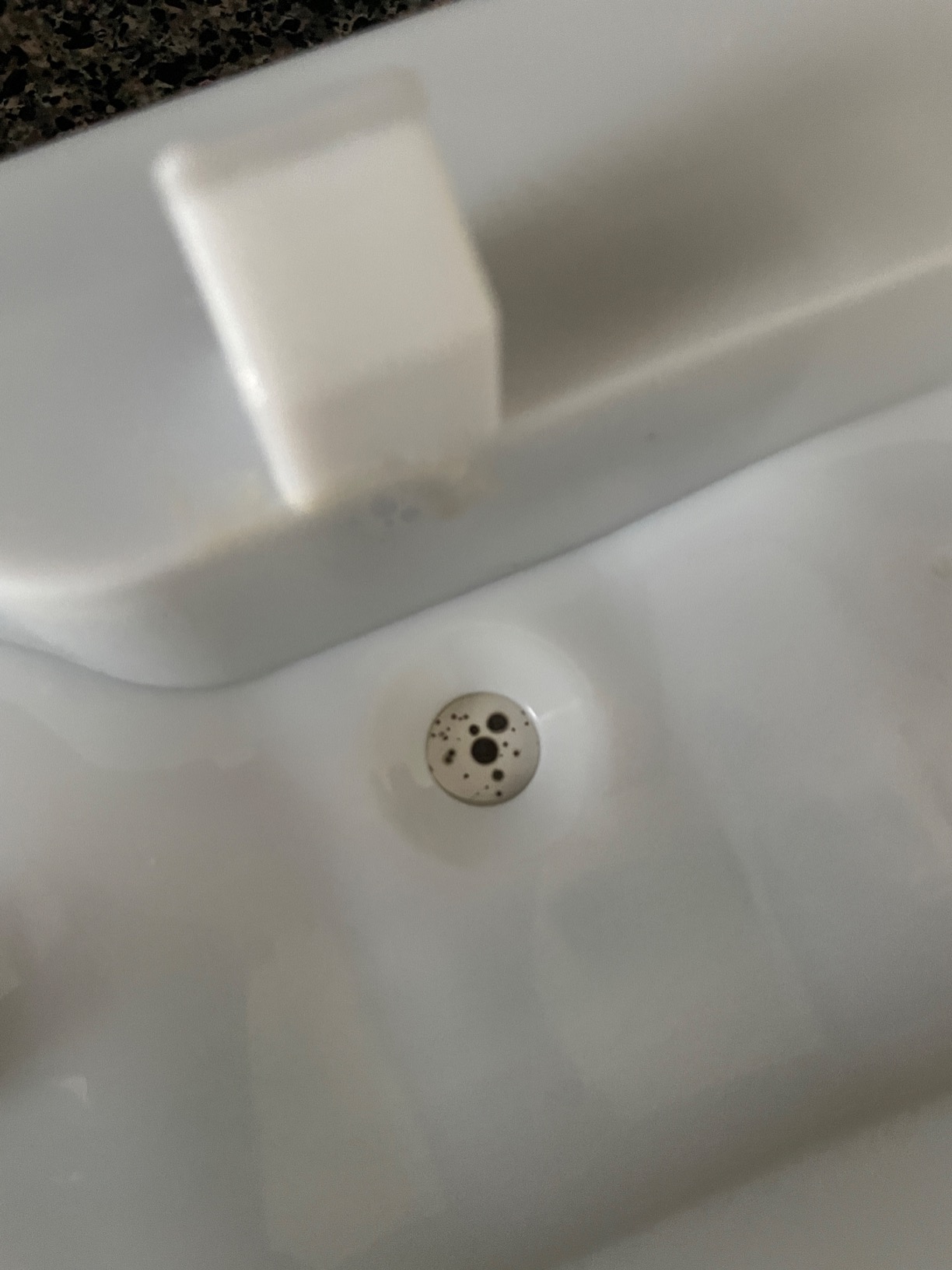
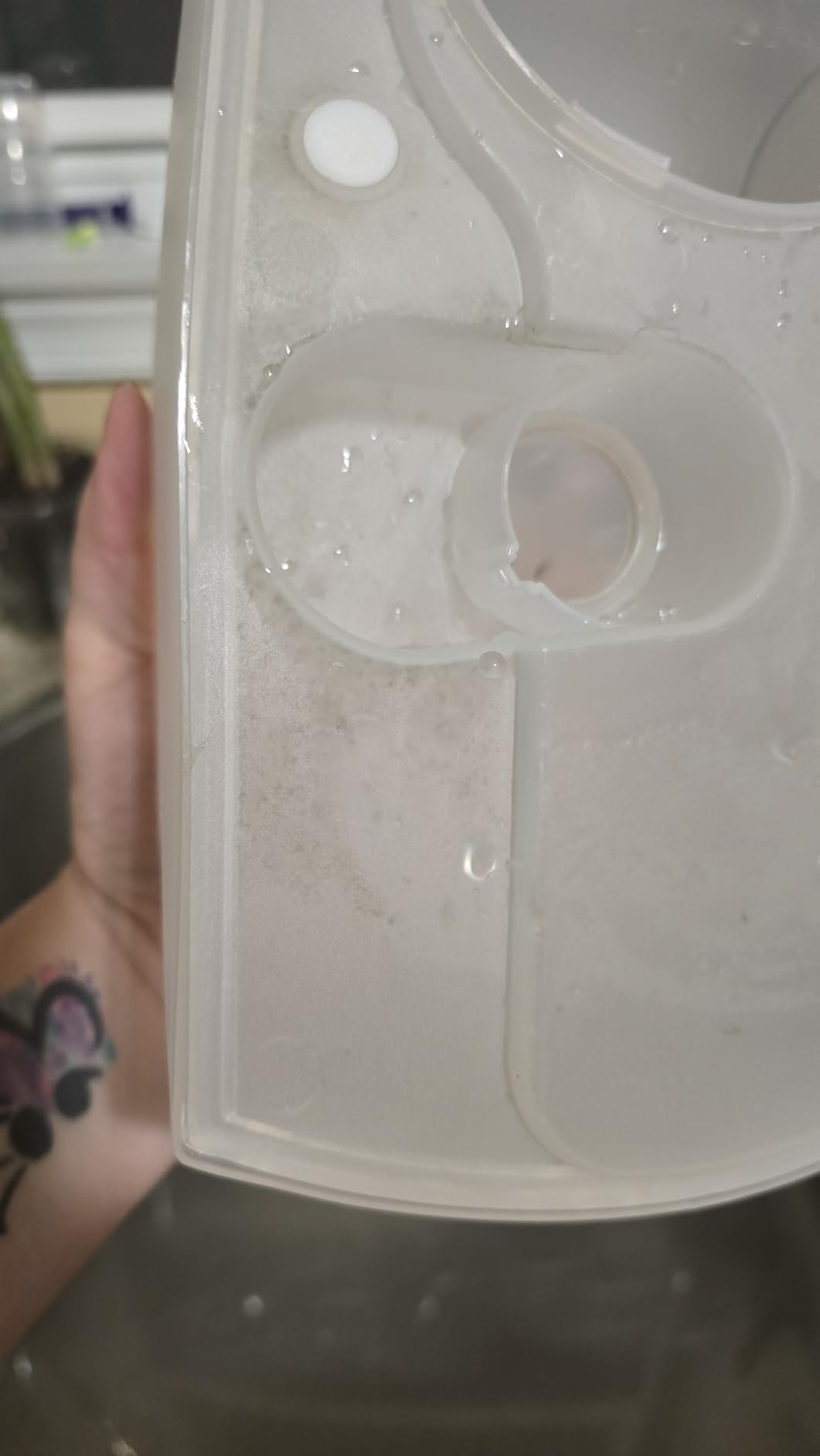
The honest flaws match the small asking price. On high, the tank can run dry before morning, so we used medium overnight. The touch sensor for the light sits exactly where a sleepy hand lands, and it did get bumped on more than one occasion. Interior crevices are hard to reach, a minority of owners report mold inside, and moving or refilling it carelessly can cause leaks.
Will 1.8L actually last through the night?
On low or medium in a small nursery, yes, expect 12 to 24 hours. On high, no, plan on a dry tank before dawn in a dry room.
The practical move is to run high for the first hour before bedtime to raise the room quickly, then drop to medium for the night. If your room is larger than about 250 square feet or your winters are brutal, choose a 3L model instead and keep the Cloud as the night light and backup.
What does the 5-year warranty cover?
Manufacturing defects and premature failure, with the manufacturer replacing defective units rather than forcing a repair loop. Given reports of some units failing early, that safety net has real value here.
To keep it valid, register the product after purchase and keep your order confirmation. And note the warranty does not cover damage from hard water scale or improper cleaning, which are the two things most likely to kill a small humidifier, so the weekly rinse still matters.
10. Miro NR08M – Best Fully Washable Design
MIRO-NR08M Completely Washable Modular Sanitary Humidifier, Large room, Easy to Clean, Easy to Use, Luma Touch – Premium Cool-Mist Humidifier. Touch Control Colorful LEDs, Powerful humidification
4L capacity
600 sq ft coverage
Washable modular parts
No disposable filter
Pros
- Modular design rinses clean
- Big 4L bowl for large rooms
- No filters to buy ever
- LEDs can be switched off
- Refill without stopping the unit
Cons
- Expensive for plastic construction
- Only 8 hours on max power
- Setup manual is confusing
- Leftover water must be drained
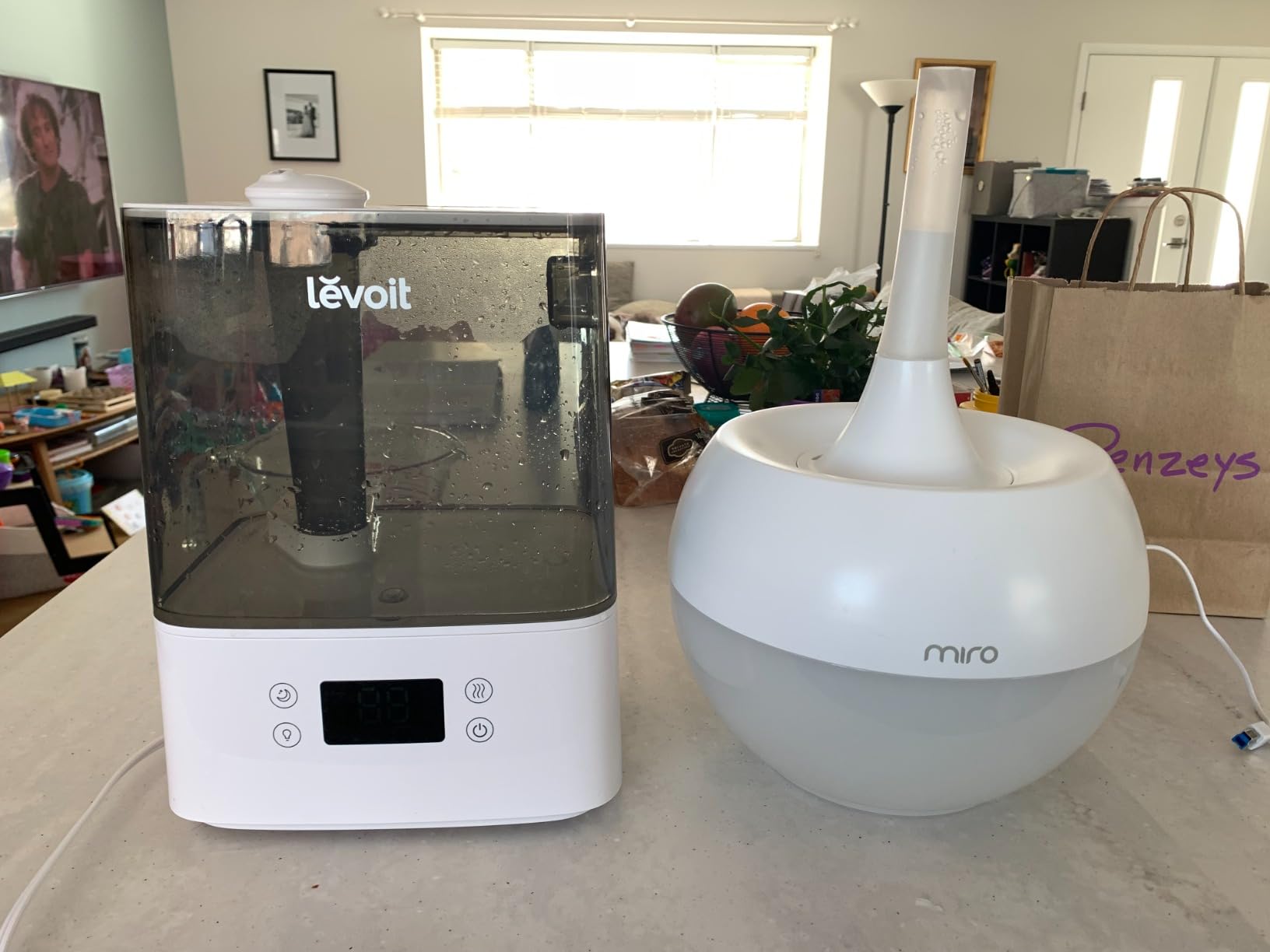
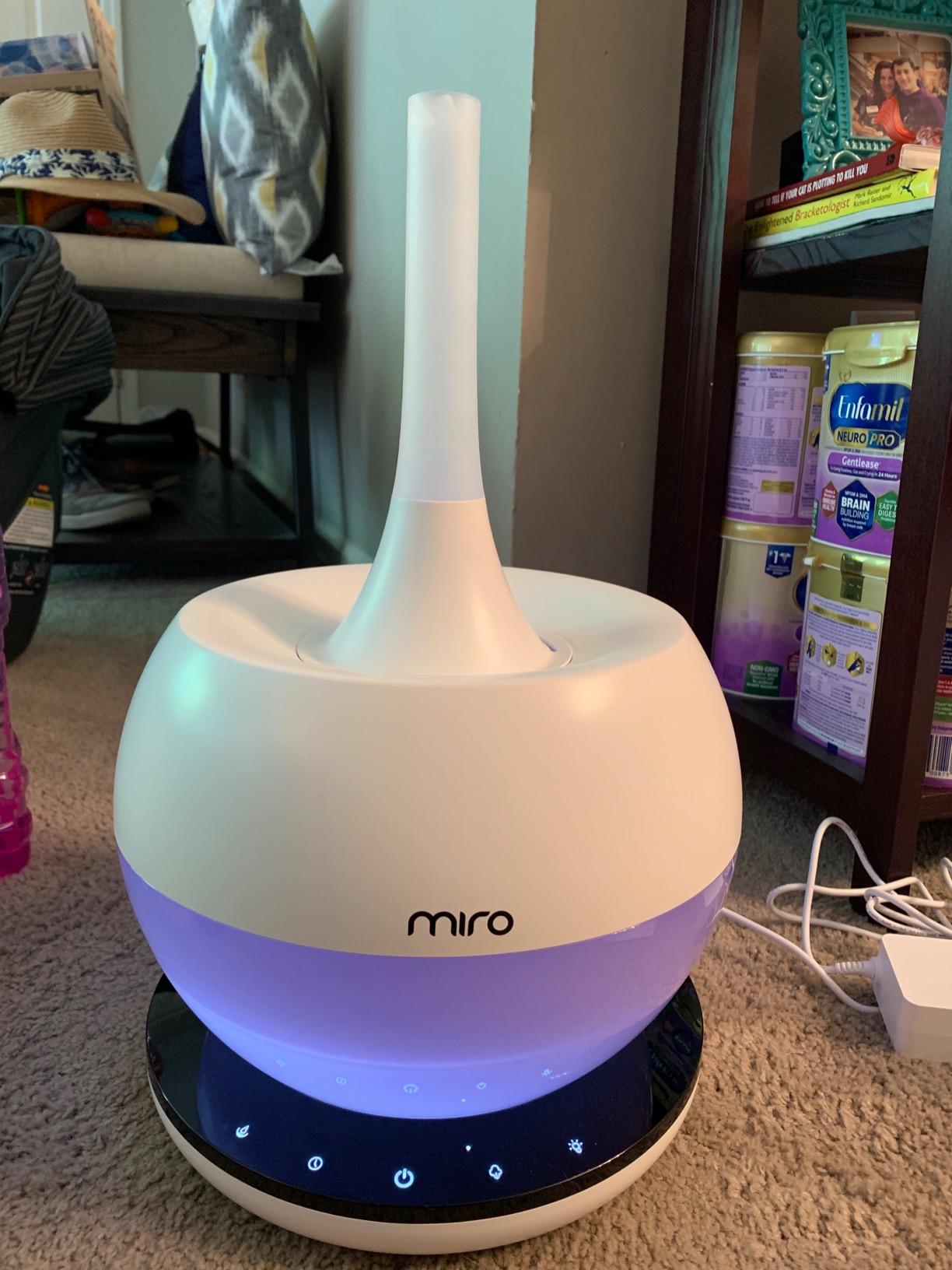
The Miro NR08M takes the cleaning idea further than anyone else. Instead of a sealed tank with a narrow neck, it is a modular bowl on a base that opens in one motion on built-in magnets, so nearly every surface that touches water can be lifted out and actually washed. There is no disposable filter at all, which means no wick costs and nothing to forget to replace.
Reddit parents who own one are blunt about it, calling it the cleanest humidifier because it comes apart. After using it, I agree with the principle. Rinsing the bowl at the sink takes under a minute, and being able to see and touch every wet surface removes the unknowns that make other tanks scary.
Performance is strong for large spaces. The 4L bowl covers up to 600 square feet, refills without stopping the unit, and the colorful touch-panel LEDs can be switched fully off for a dark room. With the included muffler accessory it runs quietly enough for a nursery, though not at DREO’s near-silence.
The cons list is longer than any other pick here, and at this price you should hear them. It is expensive for what is mostly plastic. Runtime is only about 8 hours on max power, so a dry nursery in January means daily refills. Setup instructions do not match the actual parts, so read the manual first. A glued internal component on some units traps water and defeats the washable claim. And there are scattered reports of fan units overheating, which is a serious flag for an unattended nursery appliance, so never run it overnight without confirming yours behaves normally.
Is fully washable really fully washable?
Ninety percent yes, and the last ten percent matters. Nearly every part comes off and rinses, which is why hygiene-focused parents love it.
That final ten percent is the glued assembly inside some units, which cannot be disassembled and can hold residual water. The fix is simple discipline: drain the unit fully between runs and let it air dry with the top off. If you routinely return to a humidifier tank that has sat with water in it for a week, no design will save you.
Who is the modular design actually for?
Germ-aware parents who will genuinely rinse and air out a unit every day or two, and anyone who has quit humidifiers in disgust after finding hidden mold.
If you want set-and-forget, skip it. The Levoit 300S does the thinking for you, and the Canopy dries itself automatically, which is less effort than washing. The Miro rewards hands-on owners, and it punishes anyone who plans to ignore it.
How to Choose a Cool Mist Humidifier for Your Nursery?
Every model above will add moisture to a room. The differences that decide whether you love it or throw it out in year two come down to a handful of practical details.
Ultrasonic vs. Evaporative: The Decision Most Parents Skip
Every humidifier on this list is one of two types. Ultrasonic units vibrate a metal plate to fling microscopic water droplets into the air, so they are near-silent, cheap to run, and filter-optional. Evaporative units blow air through a wet wick, so they are a bit louder, need replacement filters, and never produce white dust.
Choose ultrasonic if silence is the priority, you have soft water or are happy to buy distilled, and you want the cheapest running costs. Choose evaporative if you have hard water, hate the idea of mineral dust near the crib, or want a fan sound that doubles as white noise.
The health angle matters too. Ultrasonic units put whatever is in the water into the air, including minerals and anything growing in a neglected tank, so water quality and cleaning discipline are non-negotiable. Evaporative wicks hold the minerals in the filter instead, and self-drying designs like the Canopy take that further.
Tank Opening and Cleaning Access
This is the spec nobody advertises and everybody should check. A wide top-fill opening means you can reach the bottom with a hand and a brush, see what is growing, and dry it fully. A small neck means cleaning takes ten minutes of contortion, and skipped cleans are how tanks get moldy.
Before buying, look at the tank. If you cannot picture your hand fitting through the opening, factor in more cleaning friction. The Levoit LV600S, the 300S, the DREO and the Frida all top-fill, which is the design I would insist on for a nursery.
White Dust, Distilled Water, and Your Furniture
White dust is mineral content from your tap water, sent airborne by an ultrasonic unit and settled onto everything within a few feet. It looks alarming on a dark crib rail and is the number one shock for new parents.
You have three options. Distilled water removes it entirely but means hauling jugs. A demineralization filter, standard on the Cranes as an add-on and built into the DREO and Canopy, reduces it a lot. An evaporative model like the Honeywell sidesteps it completely by holding minerals in the wick.
Noise Levels and Light Sleepers
Know your child before you shop. Ultrasonic models run roughly 24 to 28 dB, effectively a whisper, and that is the safe choice for a newborn’s room or a genuinely light sleeper.
Evaporative models move air with a fan, so they sound like gentle white noise. Many parents buy them for exactly that reason and find their toddler sleeps better. But a fan in a silent room is a real sound, so match the machine to the sleeper, and put any humidifier across the room rather than at the crib.
Sizing the Unit to Your Room
Match rated coverage to your actual room, and remember that nurseries leak. An open door, a hallway arch, or a shared sibling space effectively enlarges the room well beyond its floor area.
As a rough guide, 1.8L suits a small closed nursery, 3L handles a standard nursery comfortably, and 6L or a 600 square foot rating covers large or open rooms. Non-standard layouts, like an L-shaped room or a nursery in a loft, are best treated as their total floor area plus a bit extra, because airflow does not respect doorways.
Humidistats, Hygrometers, and Over-Humidification
A humidistat built into the humidifier lets you set a target and trust the unit to cycle. That one feature prevents the most common beginner mistake: running a humidifier flat-out in an already damp room and ending up with condensation and mold on the walls.
Two rules. First, buy a cheap standalone hygrometer for the dresser, because built-in sensors commonly read several points high, and several of the models above are known for it. Second, keep the room between 30% and 50%, and if the windows start sweating, turn the unit down.
When You Should Not Run a Humidifier
A humidifier is a tool for dry air, not a nightly ritual. If your hygrometer already reads above 50%, switch it off, because extra moisture in a damp room goes into the walls, the window frames and the crib mattress, and that is how nurseries develop mold problems no cleaning schedule can fix.
Summer is the obvious case, since most climates need no help in July. The less obvious case is a damp rainy stretch in early autumn, before the heating has dried the air. Read the hygrometer, not the calendar.
Cost of Ownership Beyond the Sticker
The purchase price is only the first bill. Wick filters on evaporative models run every one to two months with hard water. Distilled water for an ultrasonic tank adds a recurring cost and lugging. Electricity is negligible for all of them.
Roughly speaking, an ultrasonic on distilled water and an evaporative on tap with filters end up costing a similar amount over a winter, just in different stores. A filter-free ultrasonic on soft tap water is the cheapest path of all. The catch is that skipping filters and skipping cleaning is what turns a cheap humidifier into a moldy one.
The Cleaning Schedule That Keeps Mold Out
Here is the routine that works, borrowed from parents who have kept the same unit for years. Daily, about 30 seconds: dump leftover water, wipe the tank, and let it air dry with the lid off whenever you can.
Weekly, about 10 minutes: empty and scrub the tank with a brush, soak in a vinegar and water mix for 20 to 30 minutes, rinse well, and clean the base and nozzle. Monthly: descale more thoroughly with a stronger vinegar soak and check or flip the filter if your model uses one.
Off-season, before you store it: deep clean everything, dry every part completely, and store it disassembled with the lid off. A tank stored damp in a hot closet for six months is the classic origin story for the moldy-humidifier shock the following November.
Troubleshooting: Gurgling, Weak Mist, and Smells
Gurgling usually means an air bubble or uneven water flow, and gently reseatling the tank solves it. Weak mist almost always means scale on the ultrasonic plate, and a vinegar soak of the base brings output back. A unit that suddenly smells is telling you it was due a clean a week ago.
Two failures you should not troubleshoot past. If the fan or mist maker smells hot, grinds, or keeps tripping the outlet, unplug it and stop using it. And if you find slimy pink or black buildup that a vinegar soak will not clear, that unit is finished, because no savings is worth misting that into a crib.
Placement and Cord Safety Around the Crib
Put the humidifier at least three to four feet from the crib, on a flat, waterproof surface at least two feet off the floor, and aim mist into the open room rather than at the crib, where damp bedding is a real issue.
Keep the cord secured and out of reach, use a GFCI outlet where possible, and never run a unit with a damaged cord. And the rule that matters most, repeated from the top because it bears repeating: cool mist only in any room where a child sleeps, per the AAP.
Frequently Asked Questions
Are humidifiers good for a nursery?
Yes, when indoor air is genuinely dry. A cool mist humidifier eases congestion from winter colds, soothes dry skin and eczema, and helps prevent the static and dry air that winter heating creates. The AAP advises cool mist only, and you should target 30-50% relative humidity with a hygrometer. Not every baby needs one year-round.
What is the best cool mist humidifier?
For nurseries, the Levoit 300S Smart Cool Mist is our top pick, with a 3L top-fill tank, 25-hour runtime, auto humidistat and app control. Expert outlets including Wirecutter and BabyGearLab consistently rank Levoit models first. The DREO 3L is the best budget alternative, and the Canopy 2.0 is best for mold prevention.
Are cool mist humidifiers good for plants?
Yes, cool mist humidifiers add moisture that benefits tropical houseplants and prevents brown leaf tips during winter heating. Keep humidity in the 30-50% range with a hygrometer, since sustained humidity above 60% can encourage mold on leaves and soil. Place plants near, not directly in front of, the mist stream.
What humidifier is best for plants?
Evaporative humidifiers are usually the better choice for plant rooms because they produce no white mineral dust that can settle on leaves. The Honeywell HCM350B and the Canopy 2.0 are both strong options. Ultrasonic models work well too if you use distilled or filtered water.
How often should I clean a baby humidifier?
Empty and air-dry the tank daily, which takes about 30 seconds, and do a full vinegar soak and scrub weekly, which takes about 10 minutes. Descale monthly and deep clean before seasonal storage. This schedule prevents the mold and bacteria growth that makes humidifiers unsafe for babies.
Final Verdict: The Right Nursery Humidifier for Your Family
The best cool mist humidifiers for nurseries are the ones you will actually maintain, so pick the failure mode you can live with. If you want the safest all-round bet, the Levoit 300S holds humidity automatically, cleans easily and has 57k+ reviews of proof.
If silence and price lead your list, the DREO 3L is the quietest bargain here. For hard water and no white dust, go Honeywell HCM350B or Canopy 2.0. For toddlers, the Crane Adorable wins hearts and keeps running.
Whichever you choose, pair it with an inexpensive hygrometer, keep the room between 30% and 50%, and give the tank its weekly vinegar soak. Your baby’s airways, skin and furniture will thank you, and come next sick season, you will be the parent giving calm advice at 1:58am.